
Chancellor Merz to nominate Aigner as Germany’s first woman president
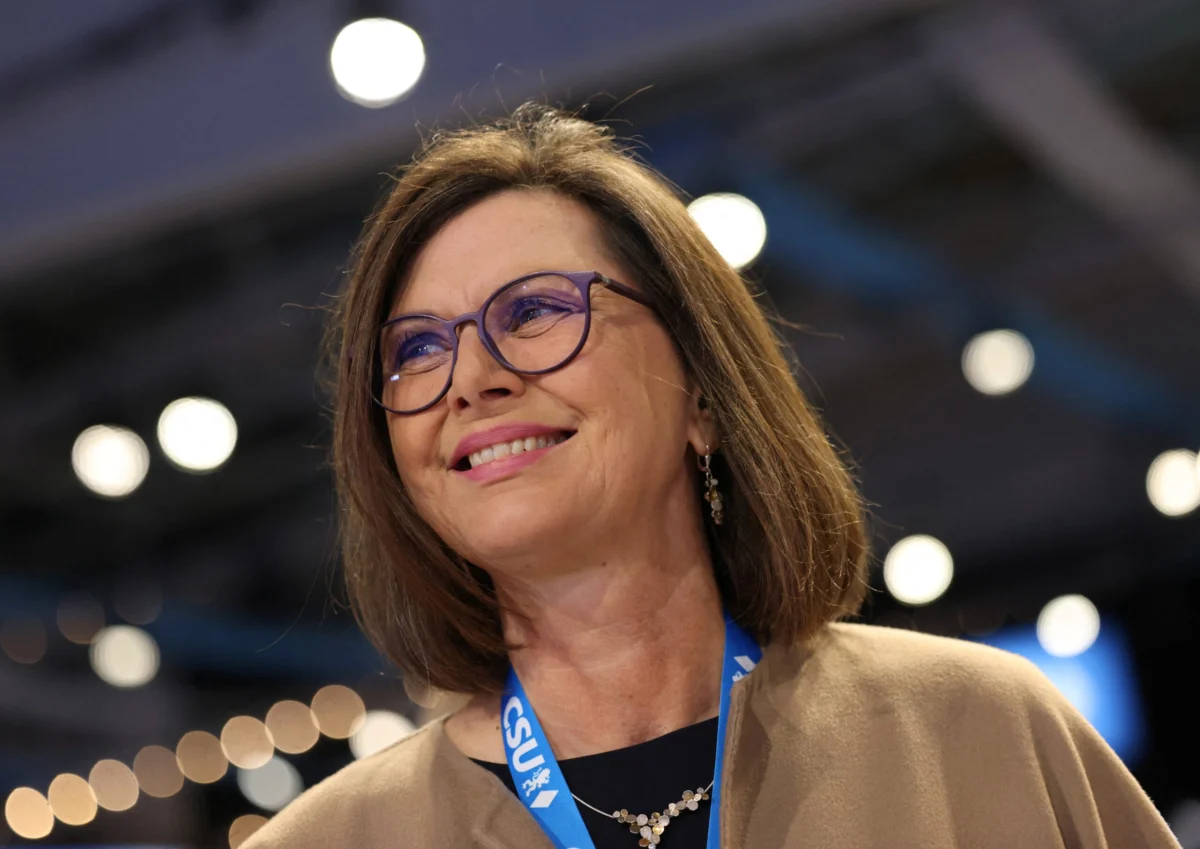
Merz revealed the significant political decision during a private dinner held for leaders of his centre-right Christian Democratic Union (CDU) party on Sunday evening. The announcement marks a major development in German federal politics, initiating a structured transition process ahead of the expiration of the current presidential mandate.
Ilse Aigner, who currently serves as the speaker of the Bavarian state parliament, is a prominent member of the Christian Social Union (CSU), which functions as the staunch Bavarian sister party to Merz’s CDU. Under Germany’s established political framework, the nomination is widely expected to be formally confirmed at an upcoming joint meeting of the CDU and CSU leadership scheduled for Monday. Once confirmed within the conservative bloc, Aigner’s path to the presidency is anticipated to be virtually secure, pending the formal electoral proceedings.
In accordance with German political practice and coalition governance dynamics, governing parties must reach a consensus on a shared candidate. The current ruling federal coalition is composed of the CDU, the CSU, and the Social Democratic Party (SPD). Notably, the SPD has frequently and publicly voiced its support for Aigner to assume the highest office in the country, indicating a smooth inter-party alignment ahead of the vote.
The ultimate selection of Germany’s president rests with the Federal Convention, a specialized constitutional body convened exclusively for the purpose of electing the head of state. This assembly is slated to convene and cast its votes to decide upon the successor to incumbent President Frank-Walter Steinmeier on January 30.
Steinmeier, a senior figure within the Social Democratic Party, first assumed office in 2017. Having served out his initial five-year mandate and subsequently winning a second term, Steinmeier will officially reach the constitutional limit of two five-year terms in March 2027, making a succession process necessary at the start of the year.
While Germany’s president occupies a position that is largely ceremonial—tasked primarily with signing federal legislation into law, ratifying treaties, and formally appointing government ministers—the office carries immense moral and constitutional weight. The president functions principally as a neutral arbiter who remains deliberately above day-to-day party politics, serving universally as a vital symbol of national unity, stability, and democratic continuity during times of political change.
The journey toward Aigner’s nomination has involved internal deliberations within the conservative alliance. The CSU originally put forward Aigner’s name earlier this year, but the CDU leadership initially held back from immediately endorsing her candidacy while Chancellor Friedrich Merz weighed various potential alternatives. This temporary hesitation created a period of delicate political balancing and briefly strained relations between the CDU and its Bavarian sister party before consensus could be reached.
At 61 years of age, Aigner brings a wealth of extensive political experience to the prospective presidency. She launched her career in local politics within Bavaria before stepping onto the national stage when she was elected to the federal parliament, the Bundestag, in 1998. During her time in federal governance, she built a strong reputation as a dedicated public servant, notably serving as the federal minister of agriculture, food, and consumer protection under former Chancellor Angela Merkel.
Following her tenure in Berlin, Aigner transitioned back to regional politics in her home state of Bavaria. She successfully navigated the state-level political landscape, culminating in her election as the speaker of the Bavarian state parliament in 2018, a high-profile role in which she has presided over regional legislative debates with procedural authority and political poise. Should her nomination be finalized and approved by the Federal Convention, Aigner will transition from leading Bavaria’s regional legislature to assuming the mantle of national unity at Bellevue Palace.
| Source | : | Finance Poetry |
| Author | : | rifanmuazin |
| Editor | : | Finance Poetry Editorial Team |