
Indian Semiconductor Startup Bharat Semi Raises $24 Million in Seed Funding to Drive AI Image Sensor Innovation
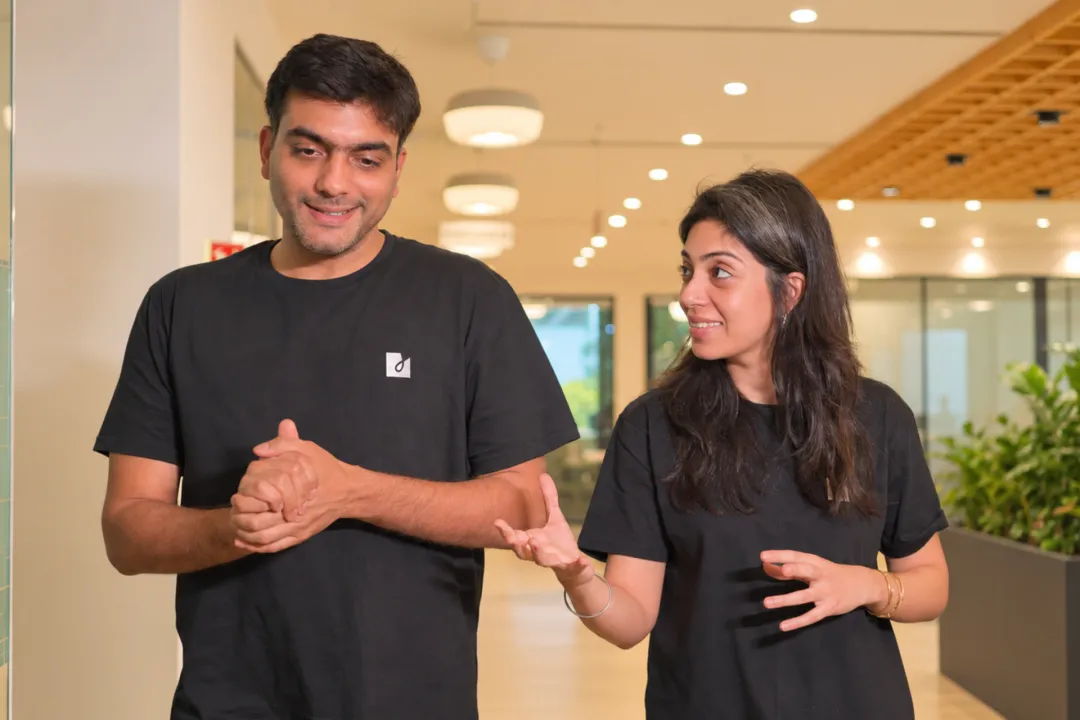
Bharat Semi, an emerging Indian semiconductor startup, has successfully raised $24 million in an all-equity seed round as it looks to accelerate the development of its advanced, AI-enabled image sensors. The fresh capital injection is designed to help the New Delhi-based company secure a foothold in lucrative international markets, with a strong focus on winning customers in the United States and other global regions.
The investment arrives at a notable milestone for the nearly five-year-old, pre-revenue startup. Bharat Semi reports that it has already secured early design wins with prominent industry players, including U.S. defense technology company General Atomics and India’s Kaynes Semicon. Despite these promising partnerships, the startup’s flagship image sensors are still actively under development. Management is currently targeting initial commercial production for the year 2027, laying the groundwork for a phased rollout that will see early prototypes tested and refined over the coming years.
The broader geopolitical and economic landscape provides a fertile backdrop for Bharat Semi’s ambitions. India has committed billions of dollars in financial incentives and policy support to build out a robust domestic semiconductor manufacturing industry. The national push aims to position the South Asian nation as a viable alternative manufacturing hub as U.S. and multinational companies actively seek to diversify their supply chains away from China. Although India is still working to establish itself as a major chip fabrication powerhouse, the explosive global boom in artificial intelligence is creating unique opportunities for specialized domestic startups like Bharat Semi to design cutting-edge chips tailored for international markets.
At the core of Bharat Semi’s technological proposition is a programmable image sensor that ingeniously integrates image capture, data processing, and artificial intelligence capabilities onto a single silicon chip. In conventional engineering setups, visual data must typically be transferred from a separate image sensor to an image signal processor and then to a system-on-chip for computing tasks. By combining these functions into a unified architecture, Bharat Semi’s technology aims to eliminate the bottleneck of moving raw visual data across multiple components.
Co-founder Vrinda Kapoor noted in an interview that this consolidated design approach could dramatically reduce overall system costs by at least 70 percent compared to traditional, multi-component architectures. The overarching vision, Kapoor explained, is to transition the industry’s approach from basic optical sensing to comprehensive sense-making solutions.
The startup is being led by a seasoned leadership team with diverse international expertise. Kapoor, a South Park Commons fellow with a background in healthcare technology, co-founded Bharat Semi in late 2021 alongside Vinayak Dalmia, who serves as the startup’s managing director after previously working at McKinsey and in private equity. Furthermore, the company’s technological trajectory is guided by Chief Technology Officer Boyd Fowler, who previously held the exact same role at prominent image-sensor maker OmniVision.
From a market perspective, Bharat Semi is initially targeting several high-value sectors, including smart homes, industrial automation, surveillance systems, and aerospace technology. While declining to disclose granular commercial specifics, Kapoor pointed to practical use cases such as advanced air conditioning units capable of intelligently detecting when a room is entirely empty to adjust power consumption automatically. Another potential application includes autonomous drones capable of processing complex visual information locally on the device, thereby removing the necessity for expensive, power-hungry computing hardware elsewhere in the system architecture.
The product development timeline is already well underway. The startup’s first-generation sensors are currently progressing through the prototyping phase. Meanwhile, second-generation sensors—which will incorporate significantly more advanced AI capabilities—are anticipated to reach the prototype stage by mid-2027. Following that milestone, Bharat Semi plans to deliver those sophisticated newer sensors directly into the hands of prospective customers by the end of 2027.
The substantial $24 million all-equity seed round was co-led by Info Edge Group, South Park Commons, and Indusbridge Ventures. The financing round also saw participation from a diverse group of institutional and strategic investors, including Valour Capital, Micromax, Gaingels, and several individual investors. Kapoor stated that the newly acquired capital will be deployed primarily to expand the startup’s engineering workforce, complete ongoing product development cycles, and successfully bring its specialized sensors to the commercial market.
Operationally, Bharat Semi currently maintains a workforce of approximately 75 employees spread across India and the United States. This includes a localized team of 10 to 12 professionals focused on engineering and business development at its U.S. operations hub in Santa Clara, California. As part of its international expansion strategy, the startup intends to scale its U.S. headcount to roughly 20 employees by mid-2027, alongside ongoing efforts to recruit specialized engineering talent across Europe.
Capturing the ambitious spirit driving the venture, Kapoor emphasized the broader cultural and economic significance of the enterprise, framing it as a testament to what emerging markets can achieve on the global stage.
Beyond its core image-sensor business, Bharat Semi has previously made headlines regarding broader infrastructural ambitions. In 2024, the startup announced plans for a separate semiconductor fabrication project in India, a venture involving a technology partnership with the U.S. Space Force. Kapoor clarified that this separate initiative remains actively in development, with the company currently working to identify suitable domestic partners capable of building and operating the proposed facility.
Kapoor reiterated that the fab project is entirely independent of Bharat Semi’s image-sensor commercialization strategy. The startup intends to maintain a fabless business model, meaning it will continue to outsource actual physical chip manufacturing to dedicated foundries while keeping its internal focus strictly centered on advanced semiconductor design and proprietary software. Consequently, none of the newly raised seed funding will be allocated toward financing the proposed fabrication facility.
| Source | : | Finance Poetry |
| Author | : | rifanmuazin |
| Editor | : | Finance Poetry Editorial Team |