
Israel Steps Up US Public Relations Efforts Amid Waning Public Support and Political Strain
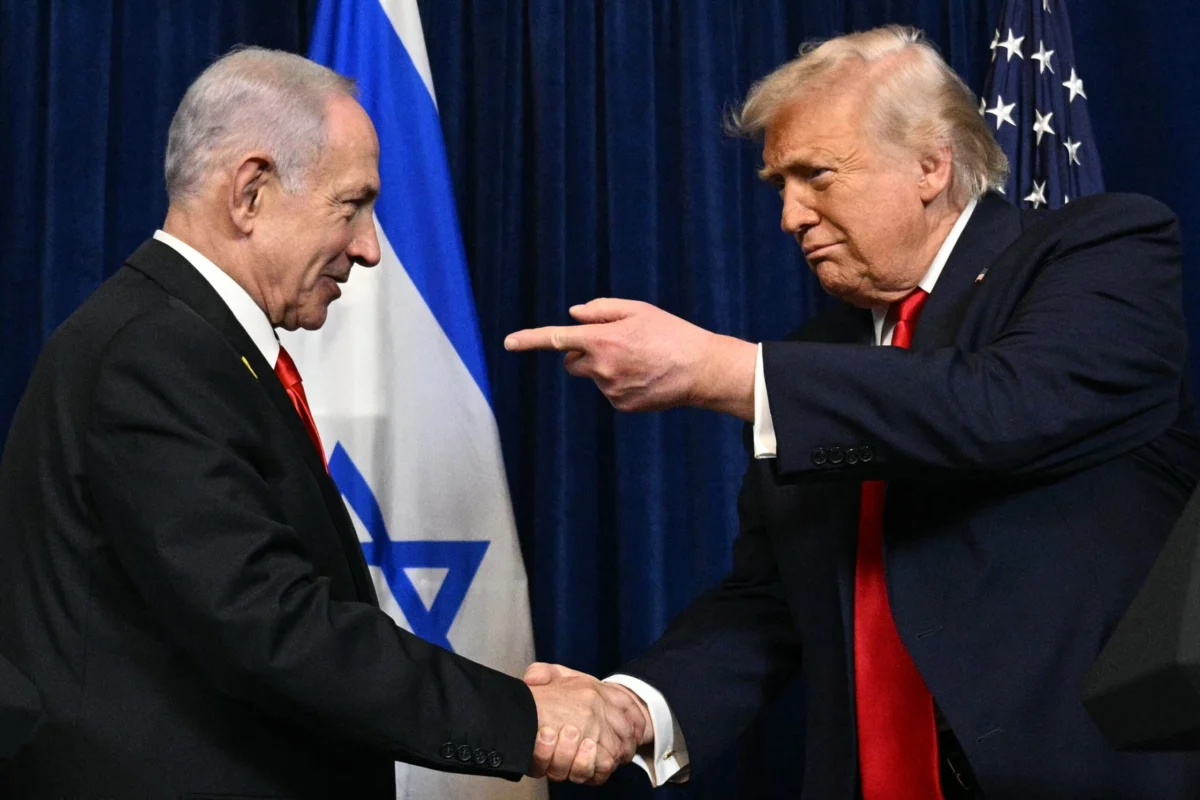
Israeli efforts to maintain the public goodwill and political backing of its principal ally, the United States, appear to be continuing despite a mounting series of strategic and diplomatic setbacks.
According to official filings submitted to the US Department of Justice under the Foreign Agents Registration Act (FARA) on October 28, the US influencing company Starboard was contracted by the Israeli firm LDRS Group LLC. The firm explicitly declares itself as acting on behalf of the State of Israel to conduct comprehensive strategic communications and public relations services inside the United States, with the primary objective of promoting the interests of the Israeli government.
This recent contracting build upon a series of extensive, well-documented historical and contemporary efforts to influence American public opinion. According to estimates by the Quincy Institute for Responsible Statecraft, more than $1 billion has been spent in direct funding for programs designed to shape US public opinion in favor of Israel since the escalation of the war on Gaza began in October 2023. This massive financial footprint operates independently of the extensive fundraising, lobbying, and political advocacy efforts undertaken by domestic US organizations supporting Israel, most notably the highly influential American Israel Public Affairs Committee (AIPAC) and its network of affiliated political action committees.
For decades, US support for the various military campaigns undertaken by Israel has remained remarkably durable and close to unconditional. In addition to the long-term annual military assistance grants originally agreed upon under former President Barack Obama in 2016, the United States has provided at least $25.5 billion in additional appropriations and at least $21.7 billion in direct military support since late 2023, according to tracking by Brown University’s Costs of War project.
Equally critical has been the unwavering diplomatic shield provided by Washington at the international level. The US has repeatedly utilized its veto power at the United Nations Security Council to block binding ceasefire resolutions and has consistently opposed full United Nations membership for Palestine, shielding Israel from international punitive measures and formal censure.

Collapsing Support
However, empirical evidence indicating that traditional US public support for Israel is eroding has grown increasingly difficult to ignore, transforming into an unavoidable political reality for lawmakers in both countries. Numerous national polls point toward a sharp rise in public hostility and skepticism toward Israel, a trend that is especially pronounced among younger demographics. Crucially, this shift has also stretched to include segments of the conservative and right-of-center electorate, many of whom hold Israel responsible for drawing President Donald Trump into a costly and unwinnable conflict with Iran that has directly fueled spikes in the domestic cost of living and soaring retail gasoline prices across the United States.
President Donald Trump’s dramatic announcement that the US would prematurely terminate a key Obama-era military assistance grant to Israel—a policy pivot timed strategically for the day of the US midterm elections—was widely interpreted by political analysts as an eleventh-hour attempt to stave off the worst electoral consequences of waning bipartisan support. Yet, the move did little to halt the broader political rout that followed. Heavy financial expenditures by AIPAC and its allied organizations, estimated at roughly $84 million deployed in support of explicitly pro-Israel candidates such as Senator Susan Collins of Maine, were ultimately viewed by political analysts as largely ineffective, with nearly two-thirds of those funds flowing to losing campaigns.
“The shift that has occurred in American public attitudes toward Israel is paradigmatic, generational, and lasting,” said Shibley Telhami, director of the University of Maryland’s Critical Issues Poll. “You cannot unsee what you saw in Gaza, over three years. Israeli public relations campaigns are thus swimming against the tide. When they are visibly connected to Israel, they are even toxic, achieving the opposite results, as we have seen in the midterm elections.”
These shifting dynamics are causing the most profound impact among traditional Republican constituencies, including the Evangelical Christian right, which has historically been one of Israel’s most reliable bedrock supporters. “But even there, there is evidence younger people are less impacted by these active and expensive campaigns,” Telhami noted.
Losing Battle
Concerns that Israel may be losing the battle for American hearts and minds extend far beyond the traditional political right. Speaking with American media

outlets in May, Israeli Prime Minister Benjamin Netanyahu attributed the erosion of US public support to the manipulation of social media by unspecified foreign states. In doing so, he largely dismissed the direct domestic and international fallout from the war on Gaza, which has resulted in the deaths of more than 70,000 people—including approximately 20,000 children—over the course of three years. Netanyahu characterized this public relations crisis as an “eighth front” in Israel’s multi-theater conflicts with regional adversaries.
In March, the Israeli government quadrupled the budget allocated for its national public diplomacy initiative, commonly known as hasbara, raising it to $730 million. A significant portion of these funds was earmarked specifically for targeted social media campaigns aimed at American audiences. By November, these efforts escalated further when the Israeli Ministry of Foreign Affairs brought more than 250 emerging US officials, journalists, social media influencers, and community leaders to Israel on organized tours of sites affected by the October 7 attacks, aiming to cement bilateral ties and build personal relationships with influential American figures.
However, these tactics have faced sharp criticism from seasoned diplomats and political insiders.
“Quadrupling the hasbara spend just means they’re more stupid than I thought they were, and I already thought they were pretty stupid,” said Alon Pinkas, a former Israeli ambassador and consul general in New York. “You change the conversation by changing the policy… So far, they haven’t let any foreign media into Gaza. Can you imagine what happens when they do? No amount of spending on their social media is going to mitigate what international journalists find there.”
Pinkas added that Israel and its strategic positioning in the Middle East had already been losing their central relevance to the United States well before the war on Gaza began. Washington has successfully achieved domestic energy independence, the historical Soviet threat has long been consigned to the past, and China has clearly emerged as the primary arena of critical national security interest for the US. Furthermore, both the American public and elected officials across the political spectrum have grown visibly fatigued by protracted foreign entanglements—fatigue only amplified by the ongoing US-backed war with Iran, which shows no signs of an imminent conclusion.

“Add to that a resentful and angry president in the White House, and you have some idea of the job any potential incoming prime minister, whether Gadi Eisenkot or whoever else, has ahead of them: One that no amount of Hasbara is really going to help,” Pinkas stated.
Long-Term Damage?
The extent to which these intensified Israeli public relations efforts—ranging from targeted social media manipulation to leadership-building tours for young American professionals—might succeed in reversing deeply entrenched negative public perceptions remains an open question. The recent US midterm elections clearly demonstrated the political potency of the shift, resulting in the election of several of Israel’s most vocal congressional critics. Moreover, the prospect of a renewed, expansive regional war with Iran, launched through a partnership between two increasingly unpopular leaders in Washington and Jerusalem, provides little momentum for winning back public trust.
“There’s no doubt that the three pillars of US support for Israel—the public, congressional, and the executive—are at an all-time low, certainly the lowest in my experience,” observed Aaron David Miller, a former State Department Middle East negotiator who now serves as a senior fellow at the Carnegie Endowment for International Peace.
Miller noted that recent tensions have manifested in unprecedented ways, pointing to indirect US diplomatic communications with Hamas and Yemen’s Houthi movement, temporary holds or adjustments on certain weapon shipments, and extraordinary public leaks regarding critical private phone calls between American and Israeli leaders.
Nevertheless, Miller cautioned that these unprecedented strains do not necessarily signal a permanent or irreversible diplomatic rupture between the two allied nations. A future Israeli government pursuing a markedly different set of domestic and foreign policies could quickly alleviate a significant portion of the current public friction and congressional anxiety.
| Source | : | Finance Poetry |
| Author | : | rifanmuazin |
| Editor | : | Finance Poetry Editorial Team |