
Chuck Schumer Faces High-Stakes Leadership Challenge From Chris Van Hollen Amid White House Friction and Intra-Party Tensions
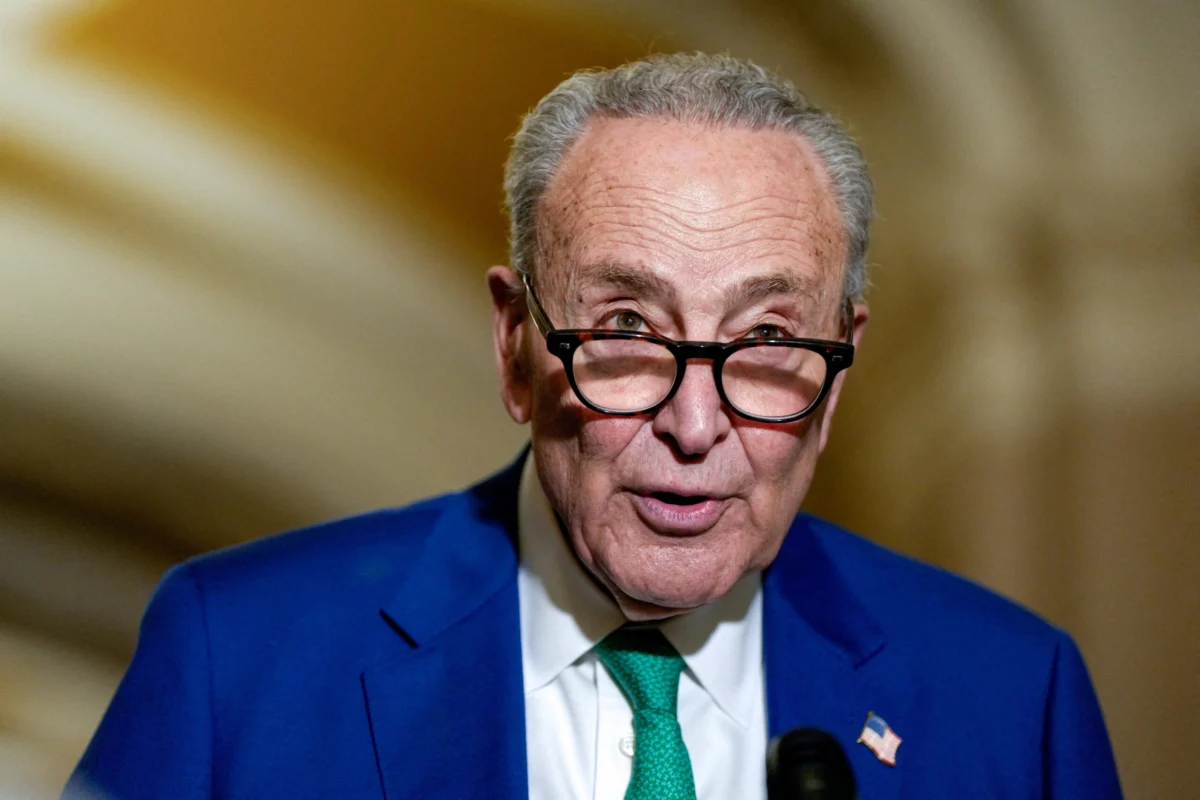
Senator Chuck Schumer, who has steered the Democratic caucus since 2017, is facing a formidable and high-profile challenge in his bid to remain the party’s top leader in the upper chamber. As Democrats prepare to assume control of both chambers of Congress following a historic set of midterm victories, Schumer’s path to securing the role of Senate majority leader has encountered significant turbulence. The veteran New York lawmaker, who has represented his state in the Senate since 1999, is now locked in a competitive internal race against Maryland Senator Chris Van Hollen.
The leadership contest has exposed underlying fractures and shifting dynamics within the Democratic Party, particularly as younger and more anti-establishment lawmakers demand a generational shift and a modernization of how the party operates. Adding external pressure to the mix, President Donald Trump weighed in on the race over the weekend, signaling that a Schumer-led Senate would likely face immediate tension and a difficult working relationship with the White House.
The brewing intra-party contest and the external pressure from the executive branch have made the upcoming Senate leadership vote one of the most closely watched internal political battles of the post-election season. While congressional leadership positions in the House and the opposing party have largely fallen into place, the Senate Democratic leadership remains the sole unresolved role among Capitol Hill’s top four positions, setting the stage for a critical closed-door decision.
White House Friction and Trump’s Criticism
The political landscape surrounding Schumer’s leadership bid shifted sharply on Sunday when President Donald Trump utilized social media to amplify criticism of the veteran senator. Trump’s remarks signaled that if Democrats choose Schumer to serve as Senate majority leader in the incoming Congress, the administration will confront immediate roadblocks and a deeply adversarial relationship with the legislative branch.
Writing on Truth Social, the president pulled no punches regarding his assessment of the New York senator’s past tenure and future prospects.
"It is going to be very hard for me to work with Chuck Schumer should he become Senate Majority Leader," Trump wrote. "He failed badly as ‘Leader’ once before, one of the worst in history, and I have little doubt that he will fail again."
This vocal opposition from the executive branch has added a layer of complexity for moderate and pragmatic Democrats who must weigh the practicalities of governing and negotiating legislation with a hostile White House. While congressional leaders routinely spar with sitting presidents, Trump’s explicit rejection of Schumer introduces a rare dynamic where the administration is actively signaling its preference in an internal legislative leadership race, further polarizing the decision facing the Democratic caucus.
Internal Party Divides and the Challenge From Chris Van Hollen
The public debate over Schumer’s future at the helm of the Senate highlights deeper ideological and generational divides within the Democratic Party following the November 3 midterm elections. Buoyed by a historic set of legislative and electoral victories, Democrats are poised to take full control of both the House of Representatives and the Senate when the new Congress convenes in January. However, success at the ballot box has also accelerated internal conversations about who is best equipped to translate those victories into lasting policy and effective governance.
Schumer, who will turn 76 on Monday, has led Senate Democrats through turbulent legislative battles, minority opposition, and complex budget negotiations. Yet, critics within his own party argue that his long tenure and traditional legislative style make him ill-suited to lead a caucus that is increasingly shaped by younger, more dynamic, and anti-establishment lawmakers who are pushing for a radical break from past congressional norms.
Sensing this appetite for change, Maryland Senator Chris Van Hollen has mounted a robust campaign to challenge Schumer for the majority leader position. Backed by progressive factions within the caucus who see an opportunity to realign party priorities, Van Hollen has argued that the Senate must adapt to the evolving expectations of the American electorate.
Appearing on NBC’s Meet the Press on Sunday, Van Hollen expressed strong confidence in his ability to upset the incumbent leader and secure the votes necessary to take charge of the caucus.
"If you look at our caucus, you can see a huge appetite for change," Van Hollen said during the broadcast. "They are seeing the American people and the Democratic Party calling for change. They also want to change the way we do business in the United States Democratic caucus and the United States Senate."
Public Sentiment and Falling Approval Ratings
Compounding the legislative and political challenges facing Schumer are declining public approval numbers among the very constituency he aims to lead. Public opinion data underscores the disconnect some rank-and-file voters and party members feel toward the long-serving incumbent.
In mid-November, a comprehensive poll conducted by the news agency Reuters and the research firm Ipsos revealed a notable softening in Schumer’s favorability among self-identified Democrats. According to the survey, just 34 percent of self-identified Democrats viewed Schumer favorably, marking a noticeable decline from the 38 percent who held a favorable view of him in February.
Furthermore, the same poll indicated that 43 percent of Democrats held an unfavorable view of the senator, pointing to a persistent vulnerability in how his leadership is perceived by the base. For critics pointing to these numbers, the polling data serves as evidence that the party would benefit from a fresh face and a new communication strategy as they prepare to set the national agenda in the upcoming congressional term.
Despite the headwinds, Schumer has maintained an outward posture of absolute confidence. Speaking to reporters last week, the New York senator insisted that he retains the firm backing of his colleagues and the necessary numerical support to secure another term as the party’s leader in the upper chamber.
"I will be elected majority leader," Schumer told reporters, brushing aside speculation about a successful insurgent campaign.
The Stakes of the Secret-Ballot Vote
The ultimate decision rests on a high-stakes, closed-door, secret-ballot vote scheduled for December 1. Because the vote will be conducted behind closed doors and without a public tally, lawmakers are free to express their true preferences without fear of public retribution or immediate political fallout from party loyalists. This format has historically empowered challengers in internal congressional elections, as discontented members can voice their desire for change anonymously.
The outcome of the December 1 vote will determine not only who speaks for Senate Democrats, but also how the party approaches upcoming legislative battles, judicial confirmations, and negotiations with the executive branch.
With the Senate Democratic leadership serving as the final unresolved piece in the broader congressional leadership puzzle, the contrast between the chambers is already stark. House Democrats moved decisively last week, nominating Hakeem Jeffries to serve as speaker in the next Congress. Meanwhile, across the aisle, leadership roles are similarly solidifying, with John Thune continuing to lead Senate Republicans and Representative Jim Jordan set to succeed Speaker Mike Johnson as the top House Republican.
As the calendar ticks down to the secret-ballot election, Schumer and Van Hollen are making their final closed-door appeals to colleagues, knowing that the outcome will redefine the trajectory of the Democratic Party in Congress for years to come.
| Source | : | Finance Poetry |
| Author | : | rifanmuazin |
| Editor | : | Finance Poetry Editorial Team |