
Rebel Group Halts Advance Toward Bunia Following Ugandan-Mediated Talks with DRC Government
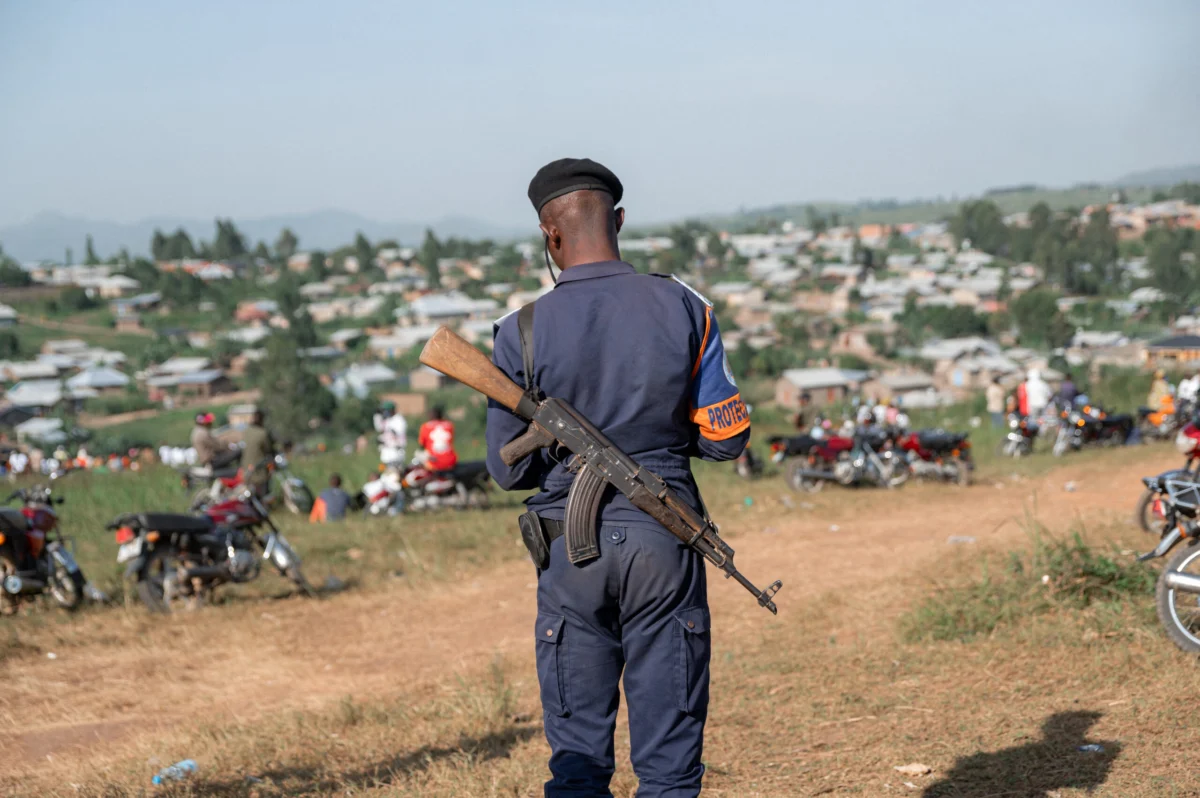
The Convention for the Popular Revolution (CRP), a rebel faction led by convicted war criminal Thomas Lubanga, has officially withdrawn from territories it recently captured in the eastern region of the Democratic Republic of the Congo (DRC). The strategic reversal comes in the wake of several days of intense, high-stakes combat with government armed forces that sent thousands of civilians fleeing toward the provincial capital.
Announcing the decision on Tuesday, the CRP stated that it had chosen to halt its aggressive military advance toward the town of Bunia, which serves as the vital capital of Ituri province in the northeastern part of the country. According to the insurgent group’s official statement, the pullback was executed out of respect for commitments forged during recent diplomatic negotiations with the Congolese government. These crucial talks were hosted and mediated by Ugandan President Yoweri Museveni, marking a significant, albeit fragile, diplomatic intervention in the volatile region.
The sudden de-escalation by the CRP comes just one day after the insurgent forces successfully seized Iga-Barriere, a critically important strategic hub located approximately 25 kilometers north of Bunia. The capture of the area had previously forced government troops to stage a tactical withdrawal southward toward the provincial capital, igniting widespread panic among local populations and humanitarian organizations alike.
The renewed conflict in Ituri province is deeply intertwined with the turbulent history of Thomas Lubanga, a prominent figure in the region’s decades of instability. Lubanga, who previously served as the leader of the Union of Congolese Patriots, was notoriously convicted by the International Criminal Court (ICC) in 2012 on war crimes charges relating to the conscription, enlistment, and active use of child soldiers in hostilities. He was subsequently sentenced to 14 years in prison and ultimately released in March 2020 after completing his full sentence. Despite serving his prison term, Lubanga remains heavily sanctioned by the United Nations for his role in fueling regional atrocities.
In a development that stunned regional analysts, Lubanga re-entered the landscape of armed opposition in 2025 by announcing the formation of the CRP. This new faction effectively opened yet another complex front in the ongoing security crisis faced by the administration of DRC President Felix Tshisekedi, compounding the government’s struggles against multiple armed groups operating across the country’s vast eastern territories.
The decision to pull back troops from the gates of Bunia was explicitly framed by the rebel leadership as a gesture of good faith. The group noted in its public communication that the withdrawal was made “out of respect for the commitments made at the State House” by both the Congolese government and the CRP delegates. This reference pointed directly to a high-level diplomatic meeting held on October 9, which was hosted by Uganda and brought Lubanga face-to-face with a delegation composed of senior Congolese government officials and military leadership.
Disrupting Ebola Response
Beyond the immediate security and political implications for the provincial capital, the resurgence of heavy fighting has generated catastrophic humanitarian consequences, severely disrupting critical public health interventions in the region.
On Sunday, the World Health Organization (WHO) issued urgent statements highlighting that intense combat had erupted perilously close to a medical facility in the Ituri province, situated north of Bunia. The severity of the firefights compelled the immediate emergency evacuation of essential health workers, medical personnel, and vital international aid partners from the area, bringing life-saving public health operations to a grinding halt.
The timing of the disruption has alarmed international health agencies, as the DRC continues to grapple with its largest and most lethal Ebola virus outbreak in history. The epidemic has persistently threatened communities across the country’s eastern and northeastern sectors, with Ituri remaining one of the primary hotspots and most severely affected provinces. Public health officials have repeatedly warned that active armed conflict severely impedes contact tracing, vaccination campaigns, and the treatment of infected individuals, creating an environment where infectious diseases can spread unchecked.
As a direct consequence of the renewed hostilities between rebel combatants and government forces over the weekend, humanitarian agencies estimate that thousands of vulnerable civilians have been forcibly displaced. Fleeing families have crowded roads and makeshift shelters as they seek safety toward the relative security of Bunia, compounding an already dire humanitarian emergency marked by widespread displacement, resource scarcity, and ongoing insecurity across northeastern Congo.
| Source | : | Finance Poetry |
| Author | : | rifanmuazin |
| Editor | : | Finance Poetry Editorial Team |