
Dell Technologies Reports Blockbuster Third-Quarter Results Driven by Exploding AI Server Demand and Raises Guidance
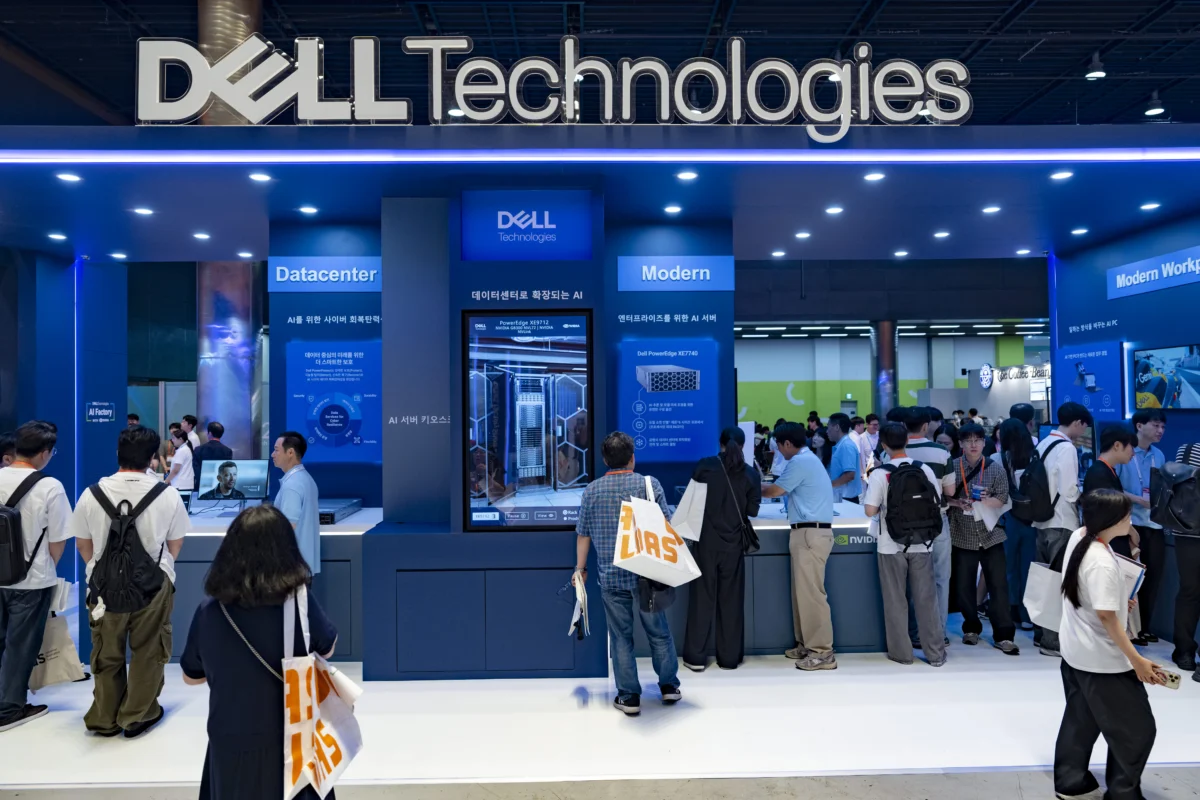
Dell Technologies shattered Wall Street expectations with its third-quarter financial results on Tuesday, reporting revenue and earnings that easily outpaced consensus estimates while issuing an extraordinarily bullish forecast for the upcoming fourth quarter. The hardware and infrastructure giant’s performance underscored the profound transformation currently sweeping through the technology sector, where enterprise demand for artificial intelligence infrastructure has fundamentally reshaped the company’s business model, profitability, and growth trajectory.
Following the announcement, Dell shares surged in extended trading, capping off a remarkable run that has seen the company’s stock climb more than 135% over the course of 2026. The financial community had been eagerly awaiting the report to gauge the health of corporate IT spending, particularly regarding high-performance hardware designed to handle heavy generative AI workloads. Dell not only delivered on those expectations but provided forward-looking metrics that signaled robust, sustained momentum heading into the final stretch of the fiscal year.
According to data compiled by LSEG, Dell’s performance was propelled almost entirely by its booming enterprise hardware division, overshadowing a softer performance in traditional consumer and commercial personal computers. For the current fourth quarter, Dell announced that it anticipates earnings of $8.40 per share on revenue of approximately $56.3 billion. These projections comfortably beat the consensus estimates of Wall Street analysts, who had been modeling for earnings of $7.50 per share on $53.61 billion in revenue.
The primary catalyst behind Dell’s explosive financial expansion is its Infrastructure Solutions Group, or ISG, which houses the company’s enterprise server, storage, and networking divisions. During the third quarter, Dell’s overall sales more than doubled on an annual basis, a breathtaking acceleration driven directly by the insatiable corporate appetite for AI servers. ISG sales for the quarter reached an astounding $41.97 billion, blowing past the LSEG consensus estimate of $35.27 billion.
Within that massive infrastructure segment, sales of AI-optimized servers—which are typically built around advanced processors from industry leaders such as Nvidia and AMD—accounted for $22 billion alone. This represented a staggering 291% surge compared to the same period in the previous year. As a result of this meteoric rise, the ISG division now accounts for a commanding 85% of Dell’s total revenue, cementing a structural shift in how the company generates its wealth.
"We are now a different company, with Infrastructure Solutions Group driving the vast majority of our profit and growth," said Jeff Clarke, Dell’s vice chairman and chief operating officer, in a statement accompanying the earnings release. Clarke noted that the company’s expanding footprint in the AI sector is supported by a growing roster of enterprise clients, revealing that Dell now counts 7,500 distinct customers purchasing its specialized AI servers.
In prepared remarks issued to investors and analysts, Clarke elaborated on the operational strengths that have allowed Dell to capture such a dominant market share in the AI hardware race. He emphasized that Dell maintains a distinct competitive advantage over rival computer equipment manufacturers due to its ability to streamline the deployment process, allowing clients to get their complex computing clusters fully operational within hours of delivery.
"That allows customers to convert backlog into revenue sooner and more reliably," Clarke explained in the prepared remarks published by the company. This operational efficiency has become a critical selling point for corporate buyers who are eager to put expensive AI infrastructure to work as quickly as possible to realize a return on their capital investments.
Capitalizing on this momentum, Dell aggressively raised its forward-looking forecast for AI-server deployment in the coming fiscal year, projecting $78 billion in related sales, up from its previous expectation of $74 billion. Furthermore, the company disclosed that it is working through a massive backlog of AI server orders valued at $132.3 billion, indicating that demand shows no immediate signs of abating.
Addressing analysts during the post-earnings conference call, Clarke shed light on the rigorous vetting process Dell employs to manage this historic wave of demand. He noted that every incoming AI order undergoes strict scrutiny to ensure financial viability and operational readiness before manufacturing and fulfillment begin.
"Every AI order is vetted for access to capital, end customer quality, trade and export compliance and access to land and power," Clarke told analysts on the call, highlighting the complex logistical and regulatory landscape surrounding large-scale data center deployments.
While Dell’s enterprise infrastructure division experienced unprecedented highs, the company’s personal computing division faced ongoing headwinds. Dell’s Client Solutions Group, or CSG—which encompasses its line of laptops, desktop computers, and consumer-facing hardware—reported sales of $12.89 billion for the quarter. This figure fell short of the L
SEG consensus expectations, which had pegged CSG revenue at $14.33 billion.
The shortfall in the PC business reflects broader, persistent challenges plaguing the worldwide hardware market. The overall personal computer industry has experienced a severe downturn, with industry trackers describing the current market lull as one of the most challenging periods in memory history. Surging component costs, particularly driven by inflation in memory chip pricing, have pushed average selling prices higher. Consequently, many consumers and businesses have chosen to extend the replacement cycles of their existing devices, opting to hang on to older laptops rather than upgrading in a high-inflation environment.
Despite the softness in traditional PC sales, Dell’s powerful profit engines in the infrastructure space allowed the company to return significant capital to its shareholders. During the third quarter, Dell allocated $4.9 billion toward share repurchases and dividend payouts. Building on this capital-return strategy, the company announced that its board of directors had authorized a new $25 billion share repurchase program, reflecting immense confidence in its ongoing cash generation and long-term financial health.
With its strategic pivot toward enterprise AI infrastructure yielding historic financial returns, Dell Technologies enters the final quarter of the fiscal year positioned as one of the chief beneficiaries of the global artificial intelligence boom. As the company continues to work through its monumental order backlog and refines its deployment capabilities, management remains focused on cementing its leadership role in the next generation of enterprise computing.
| Source | : | Finance Poetry |
| Author | : | rifanmuazin |
| Editor | : | Finance Poetry Editorial Team |