
Transcontinental Gas Pipe Line Fully Subscribes Early Service for Southeast Supply Enhancement Project
Infrastructure & Natural Gas Prices
Published in the Daily Gas Price Index | By Chris Newman
Transcontinental Gas Pipe Line (Transco), one of the major interstate natural gas transmission systems in the United States, has successfully secured commitments from shippers for the entirety of its 500,000 dekatherms per day (Dth/d) of early service capacity on its upcoming Southeast Supply Enhancement (SSE) project. According to recent updates from the pipeline operator, the landmark agreement highlights strong regional demand for natural gas transportation and sets a competitive benchmark for future capacity expansions across the southeastern energy corridor.
Under the terms of the agreements, Transco’s primary anchor customer is set to pay a fraction of the prevailing regional natural gas price spread in reservation charges. This financial arrangement reflects the complex dynamics of regional basis differentials and the economic value that dependable infrastructure brings to end-users, utilities, and marketers operating in high-demand southern markets. The early service component of the Southeast Supply Enhancement project is designed to alleviate historical bottlenecks and improve the flow of natural gas into vital consumption zones, providing much-needed operational flexibility ahead of the project’s broader completion timeline.
At a Glance:
The Southeast Supply Enhancement project represents a critical piece of modern energy infrastructure aimed at addressing capacity constraints along Transco’s expansive corridor. As natural gas demand continues to evolve across the United States—driven heavily by power generation requirements, industrial consumption, and residential heating needs—pipeline operators are increasingly looking for ways to optimize existing paths and bring incremental capacity online efficiently.
The early service offering of 500,000 Dth/d has drawn intense interest from market participants eager to secure reliable transit rights. By fully subscribing this block of capacity well in advance, Transco has demonstrated robust commercial backing for the SSE project. Market analysts note that the pricing structure agreed upon with the anchor customer—pegged at a fraction of the regional price spread—underscores the strategic calculations utilities and large-scale shippers make when locking in long-term transportation agreements against volatile spot market pricing.
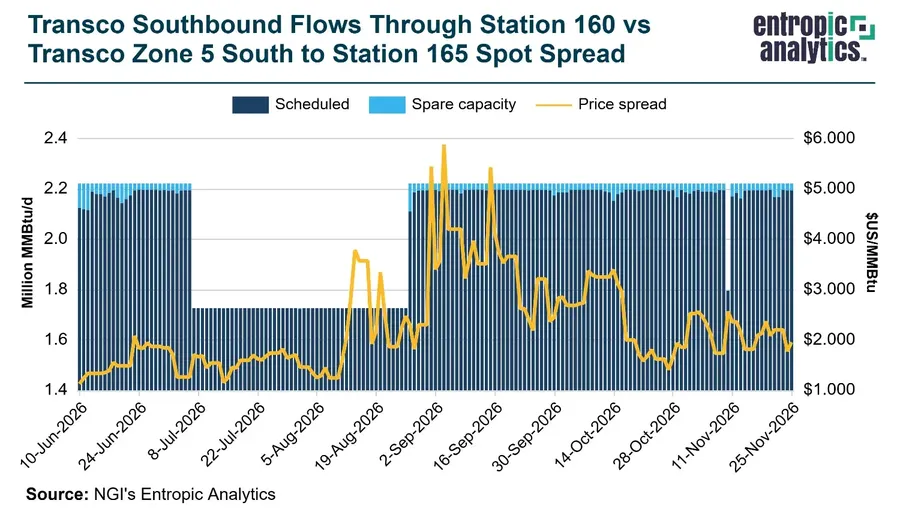
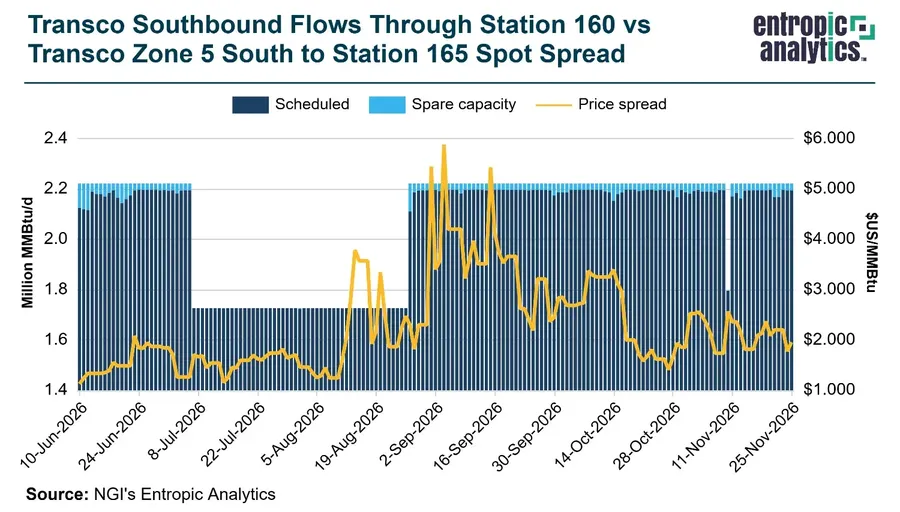
The broader Southeast Supply Enhancement project is situated within a vital geographic footprint that connects prolific supply basins to rapidly growing demand centers in the Southeast. Transco’s extensive network, which spans from Texas and the Gulf Coast up to the New York metropolitan area, plays an indispensable role in balancing regional energy markets. The specific focus on southbound and regional flows highlights how localized capacity constraints can create significant price separations between adjacent delivery zones.
Historically, regional price spreads—such as those monitored between specific zones along the Transco system—have fluctuated based on seasonal demand, weather events, and pipeline maintenance disruptions. When regional transmission corridors experience high utilization rates, spot prices at downstream delivery points can surge relative to upstream supply hubs. Infrastructure projects like the SSE are designed to bridge these gaps by enabling smoother, more predictable volumes to move to areas where the fuel is needed most.
The commercial success of the early service phase indicates that market participants are willing to commit to long-term financial obligations to secure firm capacity rights. Reservation charges, which shippers pay regardless of whether they utilize the full contracted volume, provide pipeline operators with the steady revenue streams necessary to finance capital-intensive construction and system upgrades. For the anchor customer on the SSE project, paying a fraction of the regional price spread represents a calculated hedge against potential basis blowouts and supply restrictions during peak demand periods.
As the energy landscape continues to adapt to shifting macroeconomic conditions and environmental policies, natural gas infrastructure remains a foundational element of grid reliability and energy security. The transition toward cleaner-burning fossil fuels for power generation, alongside coal plant retirements across the Southeast, has cemented natural gas as a cornerstone of regional baseload energy supply. Projects that enhance deliverability into these growing markets are closely watched by traders, utilities, and regulatory bodies alike.
Transco’s progress on the Southeast Supply Enhancement project also reflects broader trends within the midstream sector, where brownfield expansions and system optimizations are often favored over greenfield projects due to regulatory efficiencies and lower overall capital expenditures. By maximizing the throughput of existing corridors and adding targeted loops or compression facilities, operators can deliver meaningful capacity increments with reduced environmental footprints and shorter lead times.
With all early service capacity now fully subscribed, attention turns toward the next phases of development and regulatory milestones for the SSE project. The strong initial uptake confirms that market fundamentals in the Southeast remain robust, driven by sustained regional economic growth and an increasing reliance on natural gas to power modern infrastructure. As the project advances toward its operational targets, industry observers will continue to monitor how these capacity additions influence regional price spreads and physical flow dynamics across the Transco network.
| Source | : | Finance Poetry |
| Author | : | rifanmuazin |
| Editor | : | Finance Poetry Editorial Team |