
SpaceX Reports Explosive Q3 Growth Driven by AI Surge as Merger Speculation Mounts
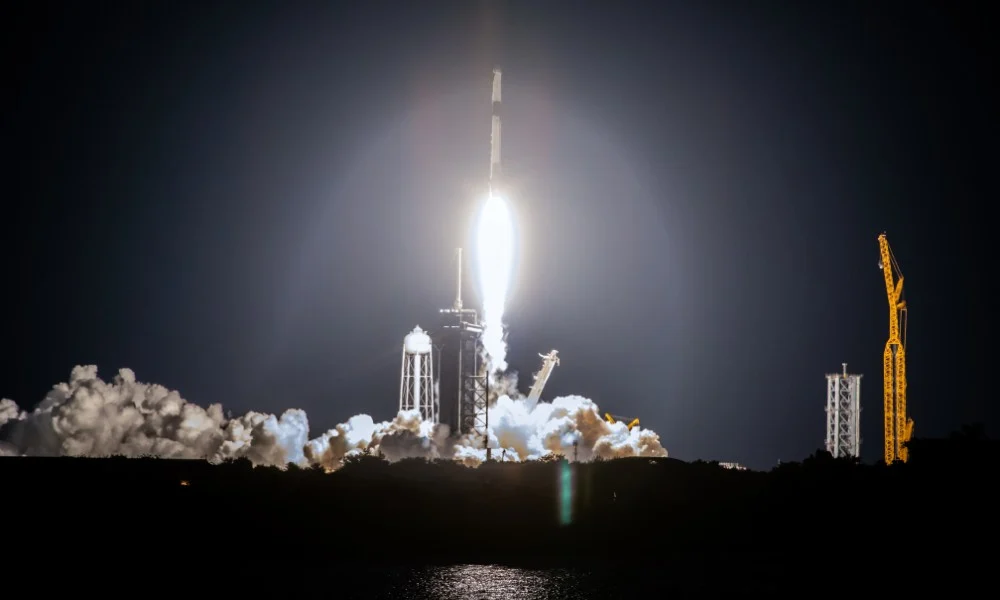
SpaceX’s latest quarterly financial results have sent shockwaves through the financial markets, cementing the aerospace giant’s transition from a high-stakes, speculative venture into a powerhouse of tangible earnings. In only its second quarter as a publicly traded company following its historic initial public offering this past June, SpaceX has delivered a performance that has significantly outperformed analyst expectations, providing a clear roadmap for investors and industry observers to follow in the coming months.
The company reported third-quarter revenue of $14.6 billion, representing a staggering 161% increase year over year. This financial milestone is anchored primarily by the meteoric rise of the company’s "Super Intelligence" (SI) division—the firm’s dedicated artificial intelligence and high-performance computing segment. The sheer scale of this growth has fundamentally altered the company’s financial profile, with net income surging to $4.4 billion for the quarter, a stark reversal from the $1.1 billion net loss recorded during the same period last year. Adjusted earnings per share reached 45 cents, obliterating the 13-cent consensus estimate previously established by IBES calculations.
The market’s reaction was swift and decisive. Following the release of these figures, SpaceX stock climbed more than 7% in a single session, handily outpacing the S&P 500’s modest 0.6% gain. This positive momentum is bolstered by a broader narrative of technical dominance, including recent excitement surrounding demonstrations of a flying Tesla roadster equipped with specialized SpaceX thruster technology, which has further solidified the perception of a deeply integrated ecosystem across Elon Musk’s various enterprises.
Industry analysts are increasingly viewing these results as a watershed moment for the company. Paul Kim, CEO and co-founder of Simplify Asset Management, shared his assessment during his firm’s "Entering The Fall" event at the New York Stock Exchange. "I think Elon and SpaceX are starting to deliver on the potential, and it has gone from a pure hype story to suddenly delivering on results," Kim noted. "Elon has been a tough guy to bet against, and days like yesterday are why."
The narrative shift toward AI is perhaps the most critical development for institutional investors. Will Rhind, founder and CEO of GraniteShares, emphasized that the company’s pivot toward high-performance computing is yielding returns far ahead of schedule. "The story now is all about AI," Rhind said. "The Super Intelligence segment grew more than 800% to $7.6 billion and is already over half of group revenue, so the compute contracts signed earlier this year are turning into revenue faster than a lot of people thought."
For investors who utilized vehicles such as the GraniteShares 2x Long SpaceX Daily ETF (Ticker: SPAL), this quarterly report serves as vital validation that the company’s strategic shift into the AI infrastructure space is not merely a theoretical ambition but a cornerstone of its current revenue model. The speed at which these compute contracts have matured suggests that SpaceX is successfully leveraging its existing technical infrastructure to capture massive demand for AI processing power.
Amidst the celebratory financial news, a more speculative but equally high-profile topic dominated the company’s earnings call: the potential for a formal merger between SpaceX and Tesla. While no imminent deal is on the table, CEO Elon Musk’s comments during the call confirmed that such a tie-up is being actively explored at the leadership level. This acknowledgment has added a new layer of complexity to the valuation of both companies, as investors weigh the potential for unprecedented vertical integration against the regulatory and structural hurdles such a merger would inevitably face.
Andrew Chanin, CEO of ProcureAM and issuer of the Procure Space ETF (Ticker: UFO), pointed to the broader strategy laid out during the conference call as evidence of a company operating with a clear, long-term vision. "Key themes were growth in revenues and capabilities, strong compute demand, a vision for competing with mobile wireless providers, and vertical integration," Chanin explained. "There is no Tesla merger that is imminent, but it is being explored."
Beyond the boardroom and the financial spreadsheets, SpaceX continues to push the boundaries of aerospace engineering. Musk used the earnings call as a platform to announce that the 15th test launch of the Starship mega-rocket is scheduled for next month. This mission is expected to be a milestone for the industry, as the company plans for the first time to attempt the recovery of both the Super Heavy rocket booster and the Starship orbital vehicle.
The success of this upcoming flight is critical to maintaining the company’s momentum in the launch sector. "A successful Starship 15 launch could help solidify them as the leader in launch," Chanin added. "Additionally, their ability to successfully vertically integrate could further set them apart from many competitors in many lines of business even beyond launch and space."
The company’s ability to control its own supply chain and service offerings has not gone unnoticed by analysts who monitor infrastructure and technology sectors. Paul Golding, a senior digital infrastructure and payments analyst at Macquarie, highlighted the resilience of the SpaceX model. "The print provides further evidence of the company’s execution and the tangible benefits of its incumbency, scale, unit economics, vertical integration, and AI compute primacy," Golding noted.
As SpaceX navigates its transition into the public markets, the dual-engine growth strategy of space exploration and AI-driven computing appears to be delivering results that satisfy even the most demanding market skeptics. The company’s ability to pivot its core competencies—specifically, using its aerospace-grade engineering to build out massive AI data centers—has created a unique value proposition that separates it from traditional space companies or standard tech firms.
The months ahead will be defined by the success of the Starship 15 mission and the ongoing development of the company’s AI infrastructure. For shareholders, the focus will remain on whether SpaceX can maintain its explosive growth rate in the Super Intelligence segment while simultaneously executing the complex technical requirements of its orbital launch schedule.
Furthermore, the dialogue surrounding a potential Tesla merger will likely remain a background narrative that influences market sentiment. While the companies currently function as distinct entities, the cross-pollination of technology—from thruster systems in automobiles to shared AI compute capacity—suggests that the two firms are already operating in a state of symbiotic development.
In summary, the third quarter has established a new baseline for SpaceX. By proving that its aggressive capital expenditure on AI and launch technology is translating into substantial, sustainable, and high-margin revenue, the company has effectively shifted the conversation from "what could be" to "what is." As the industry watches the upcoming Starship launch, the focus for investors remains on whether this level of operational excellence can be maintained as the company continues to scale its operations globally, further cementing its position as a critical node in both the aerospace and digital infrastructure economies.
| Source | : | Finance Poetry |
| Author | : | rifanmuazin |
| Editor | : | Finance Poetry Editorial Team |