
Colossal Biosciences Co-Founder Unveils Warhound: A $1.2 Billion Venture to Genetically Engineer Elite Working Dogs for Military and Law Enforcement
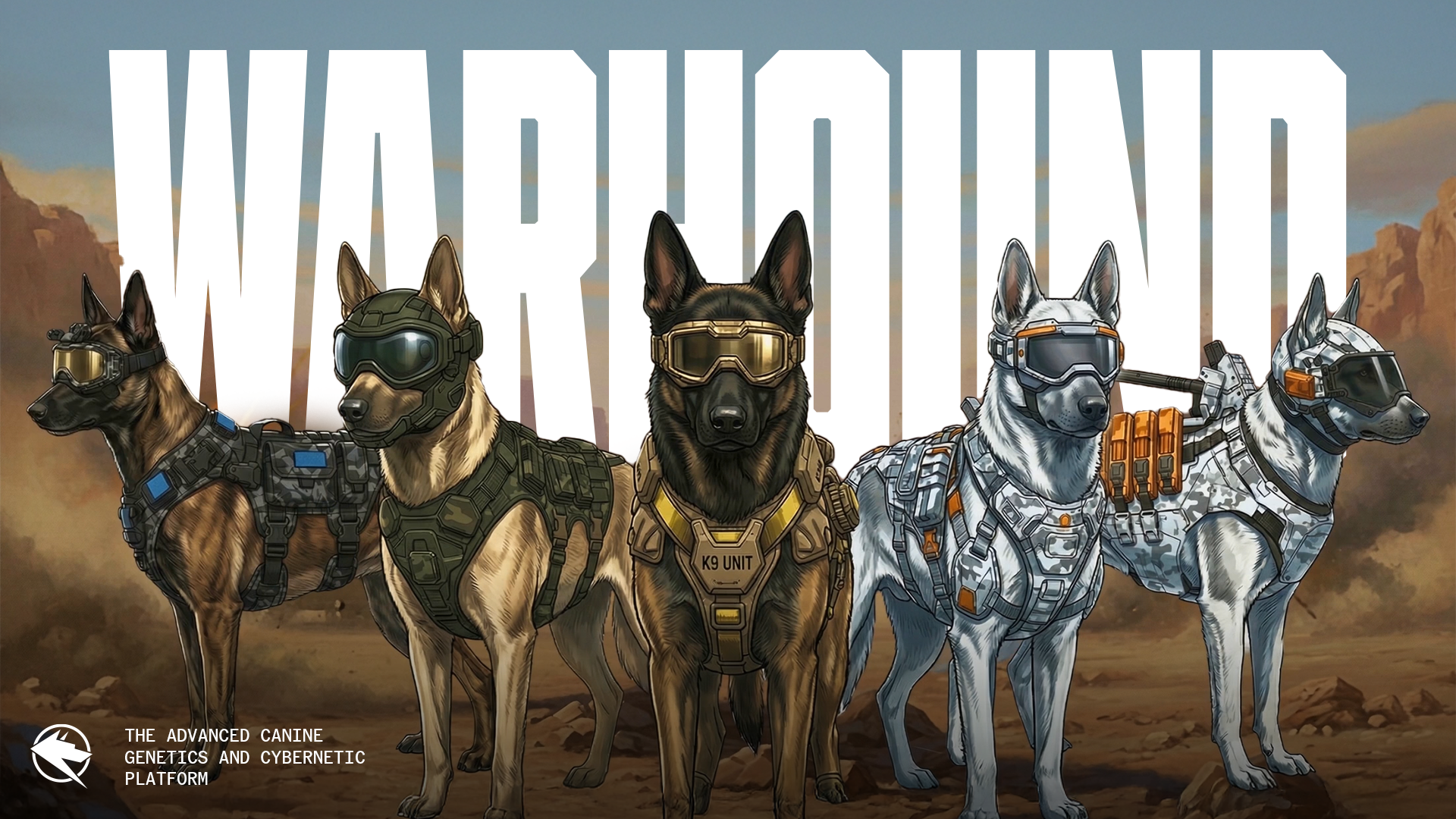
Colossal Biosciences co-founder Ben Lamm and Anduril founder Palmer Luckey have stepped out of stealth with a bold and controversial new defense-tech venture named Warhound, launching with $200 million in funding and a staggering $1.2 billion valuation. The company aims to genetically engineer and clone an advanced generation of working dogs tailored specifically for the U.S. military, law enforcement agencies, and emergency response teams.
Backed by prominent investors including Sequoia, 8VC, and In-Q-Tel—the venture capital firm backed by the Central Intelligence Agency and other U.S. intelligence agencies—Warhound enters the defense sector with significant financial backing and high-profile industry alignment. The startup seeks to fundamentally reshape how working dogs are supplied, bred, and deployed for critical national security and public safety missions.
According to Warhound’s official launch announcements, the newly formed company plans to address a mounting supply chain and operational vulnerability within the nation’s defense infrastructure. Currently, more than 80% of the working dogs utilized by the U.S. military are sourced from overseas, primarily from breeders in Europe. Furthermore, industry data cited by the company indicates that less than half of those imported dogs ultimately prove fit for active service.
This heavy reliance on foreign nations for vital defense assets creates a dwindling and increasingly unreliable supply of working dogs, which play irreplaceable roles in tactical military maneuvers, border security, and domestic law enforcement. Warhound intends to solve this supply crisis by leveraging cutting-edge biotechnology to engineer dogs equipped with specific, highly optimized characteristics suited for demanding and hazardous missions.
The genesis of the company dates back roughly a year, when Ben Lamm and Palmer Luckey crossed paths at a technology conference. During their conversation, Luckey remarked that significantly more resources and innovation should be dedicated to supporting the military’s working dogs. Following the encounter, the two entrepreneurs maintained contact, prompting Lamm to conduct a deep dive into the traditional breeding and training pipelines for tactical working dogs.
Through his research, Lamm discovered that a vast number of working dogs fail to complete rigorous training programs due to inherited genetic vulnerabilities. Many animals suffer from predispositional health issues, such as poor eyesight, high cancer rates, hip dysplasia, and muscle atrophy. Recognizing these biological bottlenecks, Lamm realized that modern genetic science could be applied not just to revive extinct species, but to enhance living animals for improved health, resilience, and operational performance.
Lamm envisioned a process where dogs could be optimized for longevity, overall health, and specific tactical attributes like speed, agility, and heightened olfactory sensors required for complex bomb detection and tracking operations. To achieve this, Warhound’s scientific team began studying top-performing working dog breeds, specifically the Belgian Malinois and the German Shepherd. The team harvested living cell lines from these elite animals, successfully growing them in a laboratory setting to establish a comprehensive biobank.
From there, the company’s geneticists plan to edit the cellular DNA, introducing beneficial genetic traits that elevate performance while stripping away undesirable predispositions, effectively creating a novel category of working dog.
While Warhound handles the biological and genetic engineering side of the equation, defense technology firm Anduril will supply complementary software and hardware components to maximize operational efficiency and safety in the field. Anduril’s contributions include specialized gear such as tactical protection vests and protective goggles designed to assist both the dogs and their human handlers with enhanced situational awareness and tactical coordination.
Lamm explained that these vests could feature integrated data sensors capable of transmitting real-time operational telemetry back to handlers, providing them with granular visibility into rapidly evolving scenarios. The philosophy centers on compound safety improvements. By making the dog biologically healthier and safer through genetics, and supplementing that foundation with cutting-edge tactical hardware worn on top of the animal rather than inside it, the overall safety of both the canine operator and its human handler is substantially magnified.
While Palmer Luckey serves as a key partner and strategic voice in the venture, Lamm noted that Luckey does not hold any equity in Warhound. Instead, Colossal Biosciences maintains equity ownership in the new enterprise and supports its ongoing operations by licensing its proprietary genetic technology.
Colossal Biosciences has previously captured global attention for its ambitious de-extinction initiatives aimed at bringing back prehistoric species, such as the woolly mammoth and the dodo. To fuel these efforts, the de-extinction company has aggressively invested in developing and acquiring advanced artificial intelligence platforms designed to streamline gene cloning and accelerate the identification and replication of complex animal genomes.
Capitalizing on this existing technological infrastructure, Warhound is already preparing to bring its vision to life. Lamm revealed that the first generation of genetically engineered dogs is slated to be cloned and incubated in the near future, with initial births anticipated early next year. If development timelines proceed according to schedule, the company hopes to see the first wave of enhanced dogs deployed into active service within two years.
The cloning process itself will be executed in partnership with Viagen, a cloning specialist firm also owned by Colossal. Lamm emphasized that Viagen boasts a proven track record of high-success-rate cloning technology, which Colossal already utilizes in its ongoing biodiversity and endangered species conservation programs.
Regarding commercialization and market strategy, Warhound has not yet finalized pricing structures for the animals. However, the company anticipates selling its specialized canine force primarily to the Department of Defense, broader military service branches, municipal and federal police forces, and emergency response first responders. When questioned about regulatory oversight and government permissions, Lamm confirmed that the company has already engaged in extensive briefings with numerous government stakeholders to outline its business model and operational objectives.
Addressing potential public concerns regarding the deployment of genetically enhanced animals in civilian environments, Lamm assured that every dog produced by Warhound will undergo the exact same rigorous tactical and obedience training regimens required of traditional military working dogs, remaining strictly managed and supervised by their respective institutional buyers.
To ensure ethical oversight and robust animal welfare standards, Warhound is actively collaborating with the American Humane Society. The partnership is designed to help certify Warhound’s comprehensive training programs for the new breed of dogs. Furthermore, the organizations hope to establish pathways ensuring that when these specialized military dogs ultimately reach retirement age, they can seamlessly transition into the Humane Society’s Military Working Dog Reunification Program—an initiative dedicated to finding loving homes for retired service dogs—or alternative care programs facilitated by the organization.
| Source | : | Finance Poetry |
| Author | : | rifanmuazin |
| Editor | : | Finance Poetry Editorial Team |