
Navigating the Series A Landscape: VCs Warn of Market Froth, "Tranchopalooza," and a Potential 2027 Correction
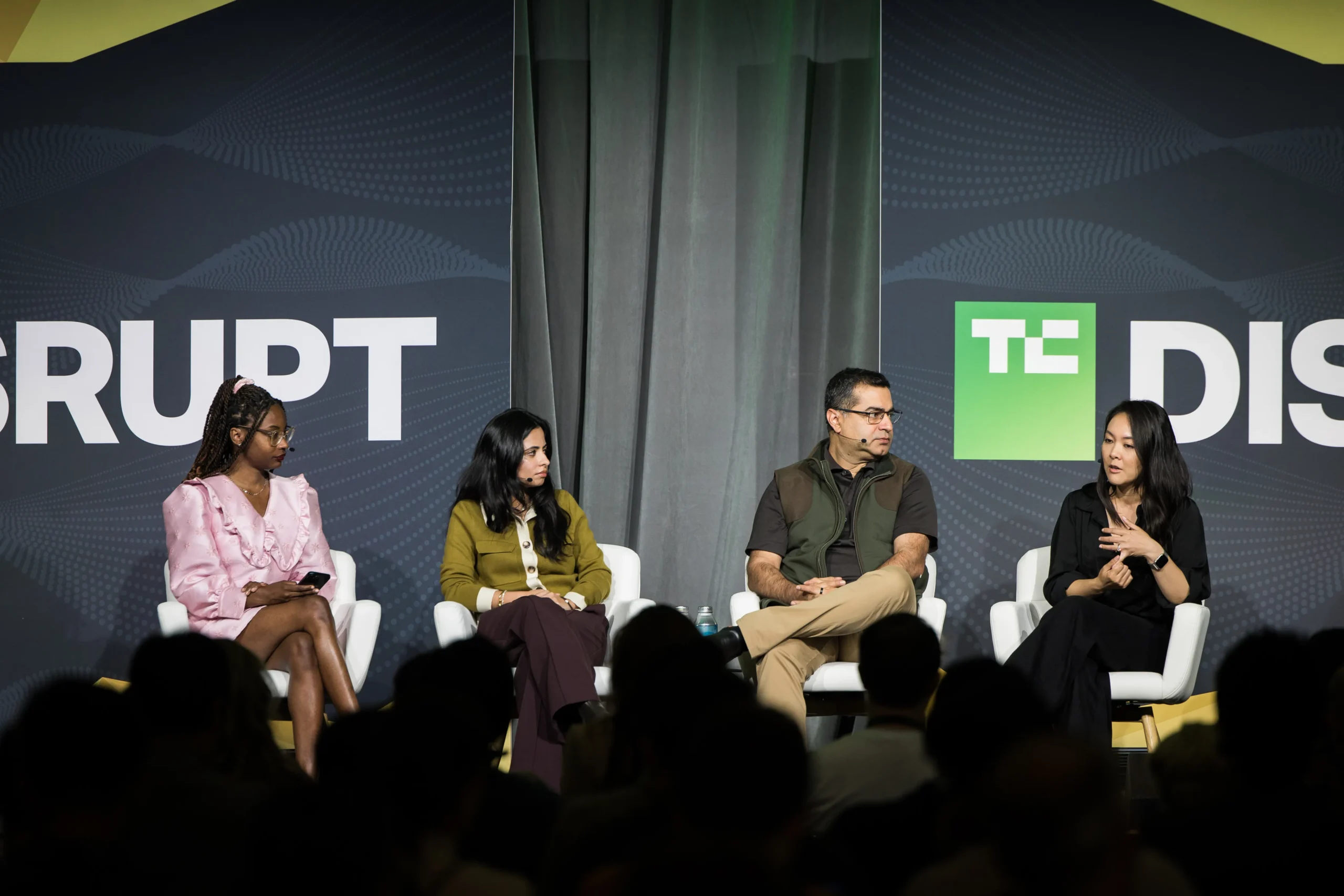
In today’s fast-moving venture capital market, no single metric defines what a Series A round is, nor is there a universal playbook for how to successfully raise one. At this year’s TechCrunch Disrupt conference, three prominent venture capitalists took the stage to offer startup founders candid advice on navigating the current funding environment, while simultaneously issuing a sobering warning about the state of the industry. With billions of dollars continuing to pour into artificial intelligence and revenue numbers frequently being inflated to justify sky-high company valuations, some investors believe a market correction could arrive as early as 2027.
The stark warning came from Shailendra Singh, a managing director at Peak XV, who participated in the panel discussion alongside Jahanvi Sardana, a partner at Index Ventures, and Jenelle Teng Wade, a partner at Bessemer Venture Partners. Reflecting on the current economic climate for early-stage companies, Singh did not mince words regarding the challenges founders face today.
"Seed and venture, I’ve never seen it as dysfunctional as it is now," Singh said, adding that the contemporary market is undoubtedly one of the hardest environments to raise capital in that he has witnessed throughout his career.
The pressure on founders to prove their viability has never been more intense. According to Singh, the burden of proof is exceptionally high for anyone trying to convince a top-tier venture firm that they belong to the rare echelon of special companies capable of breaking out from the pack. Furthermore, the dispersion in deal terms, valuation caps, and total capital raised has widened dramatically. It has become increasingly common in the current market to observe a company attempting to close a single funding round with as many as three different valuation prices simultaneously, depending on the investor or the tranche.
"It’s a crazy sign of market froth," Singh noted, pointing to these complex deal structures as symptoms of a broader systemic issue within early-stage venture funding.
Sardana echoed these sentiments, highlighting the creative and often convoluted mechanisms being utilized to get deals across the finish line in a frothy market. "We’re calling it the ‘tranchopalooza,’" Sardana remarked, using the term to describe the prevalent trend of breaking financing rounds into separate tranches or chunks to manage risk, bridge valuation gaps, or accommodate cautious investors.
Beyond issuing warnings about market dysfunction, the panel of investors outlined the specific attributes they look for when evaluating a Series A pitch. First and foremost, they emphasized the importance of a persuasive narrative that clearly explains why a founder has a genuine shot at building a massive, category-defining company. Exceptional storytelling must be backed by execution capability, particularly when it comes to human capital.
"Founders who can attract very high-quality talent have an advantage," Singh explained, emphasizing that a team’s ability to recruit top-tier engineers, researchers, and operators serves as a powerful signal of future success.
What a founder chooses to build matters immensely in the current climate as well. Teng Wade pointed out that capital is aggressively flowing into high-growth sectors such as defense technology, robotics, and artificial intelligence infrastructure. She also observed that foundational model companies are increasingly moving toward vertical integration, taking on a larger portion of the technology stack themselves.
Despite the dominance of massive foundational model labs, Teng Wade noted that there is still plenty of room in the ecosystem for newer players. This includes emerging neo-clouds that specialize in renting out critical AI computing power, as well as specialized neo-labs focused heavily on cutting-edge artificial intelligence research.
When it comes to financial and operational metrics, traditional benchmarks still help investors evaluate a business, but they are far less standardized than they used to be. This is especially true in an era defined by artificial intelligence, where running a high-powered tech company is incredibly capital-intensive. To illustrate this shift, Teng Wade shared an early example from Bessemer’s investment history: how her firm evaluated Anthropic during its early days when its profit margins were deeply negative and the company was spending heavily on raw compute infrastructure.
She recalled that one partner on her team firmly believed artificial intelligence was going to be "bigger than everything we’ve ever expected in terms of price premium on the frontier models," predicting that these models would eventually become a widespread substitute for other types of traditional software. The core investment logic was straightforward: even with money-losing margins in the short term, the addressable market would ultimately expand enough to pay off handsomely if the company successfully positioned itself as one of the top three players globally.
That early bet has matured significantly. Anthropic is now reportedly preparing for an initial public offering at a staggering valuation of around $2 trillion. Furthermore, the company informed its investors this month that it had turned profitable on an adjusted basis, though that specific financial metric excludes certain operating costs.
The conversation among the panelists also turned to the critical importance of intellectual honesty in a market environment where inflated annual recurring revenue (ARR) figures and headline-grabbing valuations swirl constantly. In an overheated market, the temptation to massage data to look more attractive to venture capitalists is high, but experienced investors know how to spot the red flags.
"I tell founders, if you ever show a chart which shows cumulative revenue or cumulative ARR, that is a massive red flag," Singh warned. "It means that your time series data is not good because cumulative data is a big lie."
Singh stressed that it is vital for any company to maintain intellectual honesty in how they present their metrics and engage with investors during bull market cycles. He warned that the current ecosystem is currently flooded with "false positives" because basic market probability dictates that not every startup can possibly succeed.
"This is as optimistic as I’ve seen the venture world in two decades, and normally that’s a sign," Singh observed. "I think 2027 will be different. I think we will see a correction."
As the panel discussion drew to a close, the moderators asked the investors to share at least one piece of parting advice for early-stage founders watching the market closely. Singh went first, reminding the audience that building a startup is widely considered one of the most excruciatingly difficult endeavors a person can undertake. His blunt advice for handling those inevitable hardships was simple: "deal with it." He also urged founders not to rush blindly into execution, to watch out for the dangers of weak product-market fit, and to always hold an uncompromisingly high bar for the problems they are trying to solve.
Sardana focused her advice on the art of the pitch and the danger of letting external capital dictate product vision. While acknowledging that knowing how to pitch effectively is crucial, she cautioned founders against letting fundraising dynamics dictate what they choose to build.
"It feels like [founders are] deciding what to build based on what’s getting funded, which is really scary," Sardana said, warning against chasing venture trends merely because a specific sector is currently in vogue.
Teng Wade, meanwhile, reflected on her traditional advice to founders, noting that standard recommendations to remain conservative with financial projections and capital requests no longer necessarily apply in the current fast-paced environment.
"I would say just be audacious in your ask," she advised, encouraging founders to test the market with bold ambitions and then tailor their approach based on how investors respond.
| Source | : | Finance Poetry |
| Author | : | rifanmuazin |
| Editor | : | Finance Poetry Editorial Team |