
Saab Beats Third-Quarter Estimates as New Orders More Than Triple on Major Defense Deals, Led by Ukraine Fighter Jet Contract
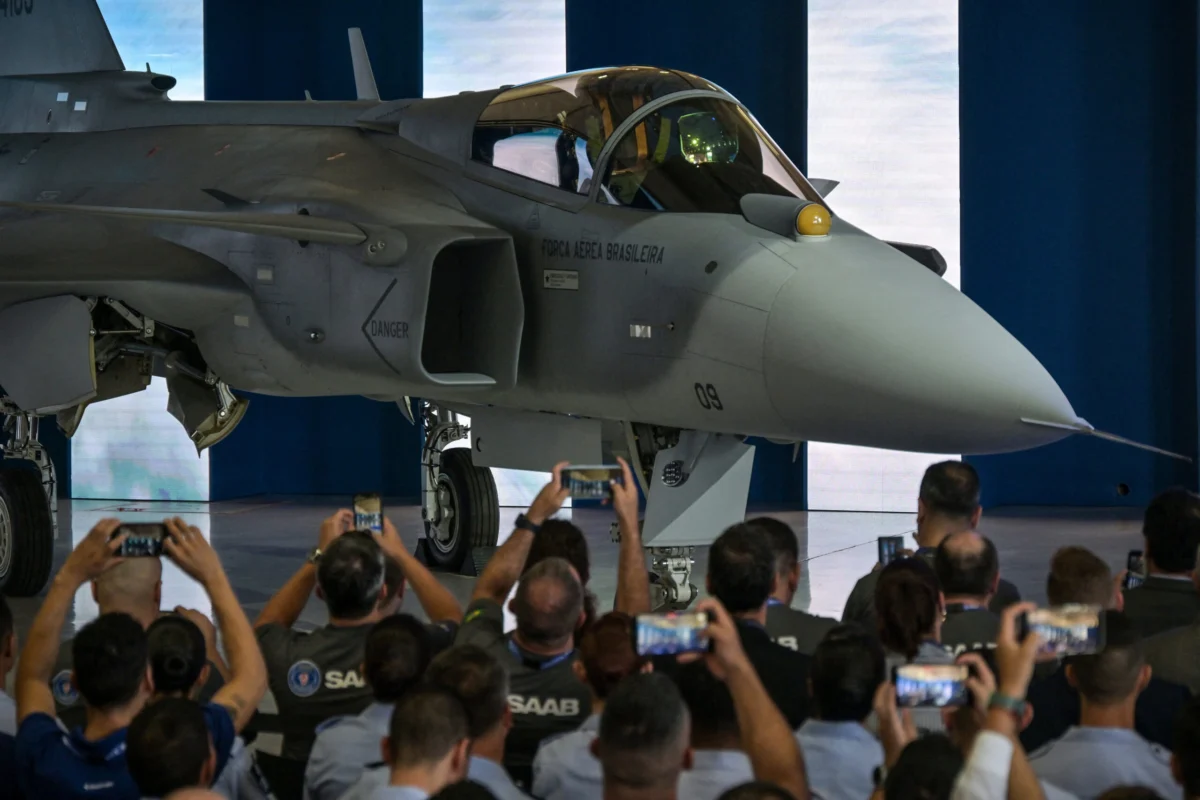
Swedish defense and aerospace giant Saab has reported better-than-expected third-quarter earnings and revenue, bolstered by a monumental surge in new orders that more than tripled compared to the same period a year earlier. The robust financial performance was primarily propelled by a high-profile defense agreement to supply Gripen fighter jets to Ukraine, underscoring the accelerating pace of European military rearmament amid persistent geopolitical friction.
New orders booked during the third quarter reached 65.8 billion Swedish kronor, equivalent to roughly $6.6 billion. This impressive figure represents a dramatic leap from the 20.9 billion kronor recorded in the corresponding period a year prior, comfortably outstripping the consensus expectations compiled by FactSet, which had anticipated new orders of around 56.4 billion kronor.
Financial performance for the quarter also exceeded Wall Street forecasts. Third-quarter sales climbed to 20.6 billion kronor, beating FactSet expectations of 20 billion kronor. Meanwhile, earnings before interest and taxes (EBIT) came in at 1.95 billion kronor, edging past the forecasted 1.9 billion kronor.
Despite the positive earnings report, market reaction was somewhat subdued within a mixed broader defense sector. Stockholm-listed shares of Saab closed 1.8% higher on Friday. By comparison, the broader European Stoxx 600 index ended the trading session down 0.3%. The market dynamics arrive as European governments race against time to translate ambitious defense spending pledges into tangible, deployable military capabilities.
The stellar order intake was anchored by a major 24.6 billion kronor contract for 16 Gripen E fighter jets destined for Ukraine. The deal was formalized through the Swedish Defence Materiel Administration, signed in June, and officially booked into Saab’s order books during the third quarter. Deliveries for this crucial aerospace contract are formally scheduled to take place between 2029 and 2030.
Saab Chief Executive Officer Micael Johansson highlighted the expanding global demand in a statement accompanying the financial release. He noted that growing customer requirements are directly reflected in major contract awards, pointing specifically to the Gripen agreement for Ukraine, ongoing work involving the GlobalEye surveillance platform, and substantial orders tied to Germany’s new naval frigate program.
In addition to the Ukrainian fighter jet contract, orders booked during the quarter included a 10.1 billion kronor agreement for Saab’s advanced GlobalEye military surveillance aircraft from an undisclosed customer located in the Middle East. Furthermore, the company secured an 8.7 billion kronor order focused on equipping advanced systems for warships commissioned by the German Navy.

Growing Order Book
Saab manufactures a comprehensive array of defense equipment, ranging from Gripen fighter jets and submarines to sophisticated missiles and advanced electronics. The company has experienced exponential order growth since Russia launched its full-scale invasion of Ukraine in early 2022, which fundamentally altered the European security landscape and triggered a massive wave of defense spending.
Even with an ever-growing order book, booming sales, and steadily increasing profitability, Saab stock—alongside many of its industry peers—has faced periodic downward pressure in recent months. Some market participants and investors have questioned whether equity valuations have temporarily run ahead of the defense manufacturing sector’s physical ability to execute deliveries and scale operations quickly enough.
Addressing these operational realities, CEO Micael Johansson noted that rising geopolitical tensions, including recent airspace violations, uncrewed aerial vehicle incidents, and ongoing international conflicts, continue to drive urgent demand for advanced defense capabilities. He emphasized that Saab is proactively expanding its production capacity and stepping up capital investments to help satisfy growing customer requirements across multiple continents.
The long-term market outlook remains exceptionally favorable, Johansson said. Saab’s financial disclosures revealed that the staggering order growth was heavily driven by a more than sixfold surge in large-scale contracts, which totaled 52.1 billion kronor during the quarter. Meanwhile, small orders rose by 84%, whereas medium-sized orders experienced a modest decline of 16%.
Driven by this sustained influx of capital and procurement agreements, Saab’s total order backlog swelled to 364.2 billion kronor at the end of September. This is a significant increase from the 274.5 billion kronor recorded at the beginning of the year, marking the sixth consecutive quarter of continuous order book expansion for the Swedish firm.
Earlier in July, Saab management indicated that the company was actively exploring strategies to boost its production capacity for fighter jets, aiming to scale output from roughly 15 aircraft per year to a target range of between 20 and 30 jets annually. Johansson noted at the time that the company could push production limits even further if it successfully engages industrial partners in a more substantial and formalized capacity.
Beyond manufacturing logistics, Johansson has consistently emphasized that European governments must fundamentally rethink how they procure military hardware. He has advocated for a systemic shift away from fragmented, individual national procurement strategies and toward long-term, collaborative industrial partnerships capable of supporting sustainable, continent-wide defense readiness.
| Source | : | Finance Poetry |
| Author | : | rifanmuazin |
| Editor | : | Finance Poetry Editorial Team |