
The Legacy of "King Bibi": How Benjamin Netanyahu Remade Israel’s Politics, Institutions, and Society
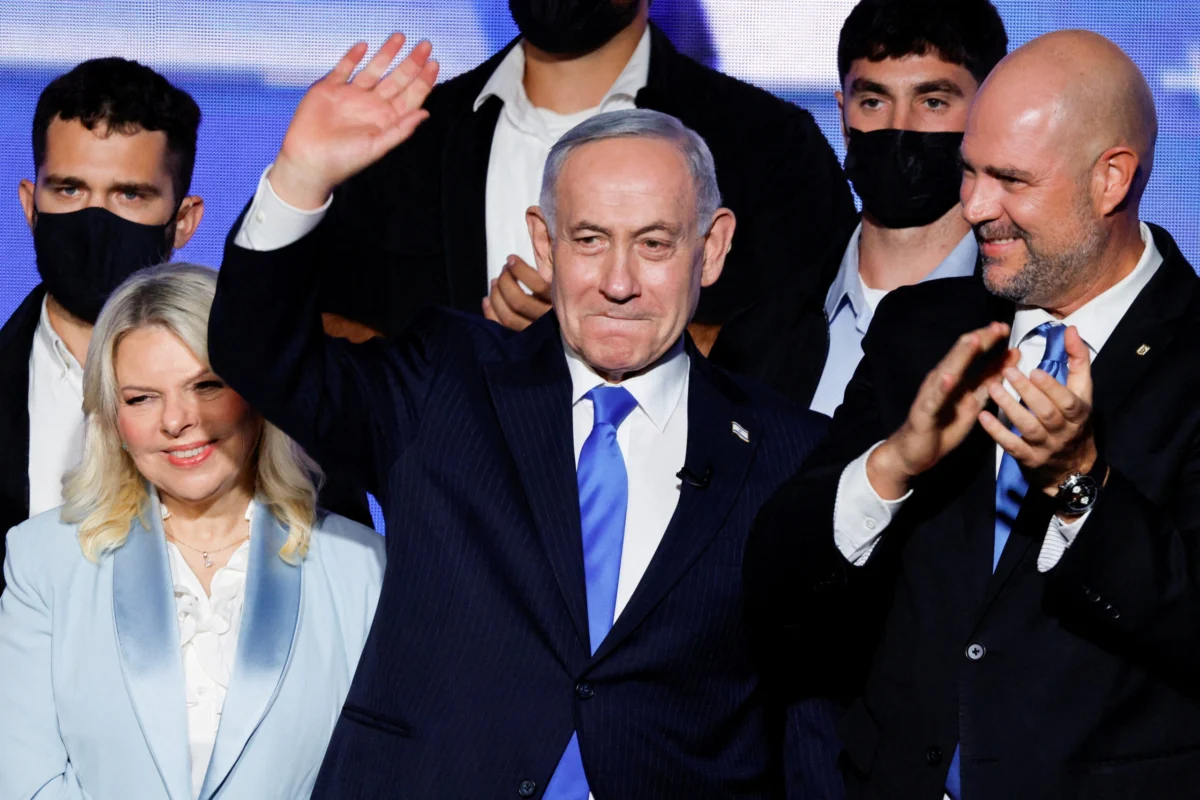
To his fervent supporters, he is known simply as “King Bibi,” a towering figure of strength, resilience, and nationalist pride. To his detractors, however, he is the king of security failures and political corruption, a divisive leader who has pushed the nation to the brink. Disputes over nicknames aside, what remains entirely beyond question is that Benjamin Netanyahu, Israel’s longest-serving prime minister, has permanently transformed the country’s institutional framework, political landscape, and social attitudes during a decades-long career defined by a relentless rightward shift.
As he seeks re-election in Israel’s upcoming October 27 polls, political analysts observe that his most enduring domestic legacy may well be the right-wing, militaristic opposition that he has helped forge and now ultimately faces. Born in 1949, Netanyahu first erupted onto Israel’s central political stage in the early 1990s by masterfully fueling public anger and anxiety over potential peace deals with the Palestinians and Syria. His aggressive political entry set a tone that would characterize his entire trajectory.
Israeli political leaders past and present have long accused him of leading a campaign of incitement that directly motivated the tragic 1995 assassination of then-Prime Minister Yitzhak Rabin. Rabin was leading crucial, high-stakes negotiations with the Palestine Liberation Organization when he was gunned down by an ultranationalist Israeli. Prior to his murder, Netanyahu had led inflammatory political rallies in which participants prominently depicted Rabin in a Nazi SS uniform and held unsettling signs showing him in the crosshairs of a gun, while crowds shouted “traitor.”
While the Likud Party leader has consistently denied any personal responsibility for the killing, historical records and Israeli media reports note that former security officials warned Netanyahu directly before the assassination. They reportedly asked him to dial down his harsh rhetoric, only for him to refuse.
By 1996, Netanyahu’s populist tactics and sharp political instincts succeeded spectacularly at the ballot box, propelling him to office as Israel’s youngest-ever prime minister. His distinct transactional leadership style quickly gave unprecedented prominence to extreme-right and religious political parties. Over the years, these factions have grown from fringe groups into an indispensable, core component of his right-wing governing alliances.
Under his watch, religious courts have steadily expanded their powers, gaining sweeping authority over civil and business disputes that were once secular domains. State institutions have been systematically adapted to accommodate religious agendas, allocating record-breaking levels of public funding to ultra-Orthodox schools and institutions at the expense of other educational sectors.
Netanyahu successfully inscribed his distinct political ideology—particularly regarding the fundamental identity of the state and the legal status of Palestinian citizens of Israel—directly into the nation’s foundational laws. In 2018, the Knesset passed the highly controversial Nation-State Basic Law. The legislation explicitly states, among other provisions, that Israel is the exclusive nation-state of the Jewish people and elevates the advancement of illegal settlements to a matter of national priority.
Human rights organizations within Israel promptly petitioned the High Court to halt the legislation before it could go into effect, but the legal challenge was ultimately rejected. Today, international experts and prominent human rights groups frequently cite this specific law, alongside other state policies, as core evidence of Israel committing the crime of apartheid in its treatment of Palestinians.

Beyond ideological legislation, Netanyahu systematically re-engineered state institutions, including Israel’s vast security structures, by appointing loyalists and close political allies to senior leadership positions. He frequently clashed with security chiefs whom he deemed antagonistic or insufficiently loyal to his vision. In the devastating aftermath of the Hamas-led October 7, 2023 attack—an event that triggered Israel’s ongoing, brutal war against Palestinians in the Gaza Strip—Netanyahu consistently sought to deflect blame and personal responsibility away from his office and onto the security establishment itself. This maneuver prompted Ronen Bar, who was serving as the chief of the Shin Bet security agency in 2023, to take the extraordinary step of suing Netanyahu for defamation.
A major institutional change spearheaded by Netanyahu during his 19 on-and-off years in power targeted the judiciary, which is currently examining lingering corruption charges that could see him serve significant time in prison if convicted. Netanyahu, who faces three separate corruption cases filed originally in 2019, denies any wrongdoing whatsoever.
Under his leadership, the Knesset adopted deeply contentious legislation that altered the composition of the Judicial Selection Committee to guarantee significantly greater political influence for the governing coalition. Netanyahu consistently framed the changes as a necessary “judicial reform” designed to stop what he frequently described as a “judicial dictatorship” ruling arbitrarily over elected officials.
Conversely, his opponents labeled the move a direct “coup,” sparking months of massive, widespread protests across the country. Citizens took to the streets in their tens of thousands to push back against an initiative aimed at curtailing the independence of the High Court and granting politicians sweeping control over judicial appointments and ministerial legal advisers. In line with his broader pattern of attempting to subvert independent oversight, Netanyahu tried repeatedly, though ultimately unsuccessfully, to fire the sitting attorney general.
However, he did succeed in dismissing the military’s advocate general after an incident involving the leaking of a security video showing Israeli soldiers allegedly gang-raping a Palestinian detainee. Following the political fallout, the implicated soldiers were released and completely cleared of all criminal charges.
Concurrently, the prime minister remains heavily dogged by the aforementioned corruption cases dating back to 2019, which continue to hover over his political future and threaten prison time if he is ultimately convicted. Furthermore, Netanyahu is wanted by the International Criminal Court on grave charges of war crimes committed in Gaza. Despite these unprecedented legal pressures, the prime minister insists his political work is far from finished. He routinely promises his core supporters that, if re-elected, he will complete his long-sought overhaul of judicial review and press forward with other highly controversial domestic and regional policies.
Netanyahu’s supporters and political allies view him as an exceptionally effective leader who consistently delivers results and achieves what others deem impossible. His opponents, meanwhile, pledge to thoroughly undo the deep institutional damage they argue Netanyahu has caused over the past decades, pointing to systemic corruption, fracturing social divisions, and a growing level of international isolation as the direct outcomes of his prolonged rule.
Yet, untangling and undoing such formative, structural changes—many of which have now been firmly codified into Israeli law—may prove to be considerably easier said than done.
| Source | : | Finance Poetry |
| Author | : | rifanmuazin |
| Editor | : | Finance Poetry Editorial Team |