
Republican Rift Deepens in Ohio Governor’s Race as Vivek Ramaswamy Refuses to Withdraw Controversial Ad Targeting Amy Acton
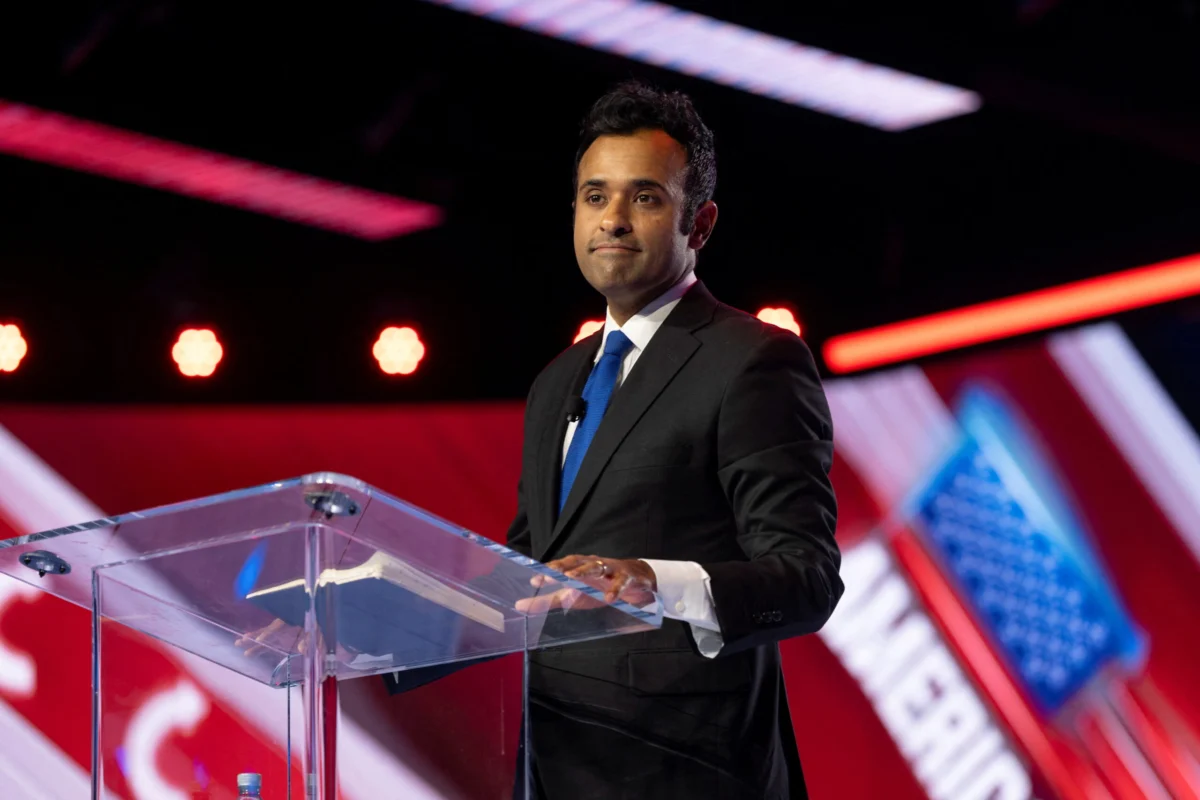
With less than two weeks remaining before the crucial November 3 midterm elections across the United States, an aggressive and unprecedented attack advertisement launched by Republican Ohio gubernatorial candidate Vivek Ramaswamy has triggered a severe fracture within his own party. The campaign spot, which targets Democratic nominee Amy Acton, has drawn sharp rebukes from senior conservative leaders even as it has received high-profile backing from the highest echelons of the Republican Party, setting off a fierce debate over political ethics, family boundaries, and the tactical limits of modern campaigning.
The controversy centers on a digital advertisement that began circulating online, featuring Acton’s estranged mother, Donna Arthur. In the video, Arthur launches a blistering personal attack against her daughter, accusing her of fabricating details about her upbringing and alleging that she suffers from a mental illness. "It’s not easy for a mother to say this, but Amy has a serious problem. She is a liar. She lies about her past," Arthur states in the broadcast, specifically disputing Acton’s well-documented accounts of experiencing childhood homelessness and living in a tent. Arthur ultimately uses the platform to urge voters across the state to cast their ballots against her daughter.
Yet, the explosive advertisement omits a critical, deeply painful context that has since dominated the political discourse: the mother and daughter have been entirely estranged since 1978. At the time, Acton was just 12 years old and was officially removed from her mother’s custody after her stepfather was formally charged with raping her. Although the stepfather pleaded not guilty, he subsequently failed to appear in court and was never brought to trial. Both Acton and her brother have since spoken publicly about the severe trauma and abuse they endured during their formative years.
Contemporaneous court records and historical news reports strongly corroborate key facets of Acton’s account of her childhood. Furthermore, independent investigations by organizations such as FactCheck.org have uncovered official records explicitly linking her stepfather to the specific campground where Acton stated her family lived in a tent, directly contradicting Arthur’s assertions that the family never resided there. Public records also indicate that Arthur remained legally married to Acton’s stepfather until the time of his death. Despite the public exposure of these judicial and historical records, Ramaswamy’s campaign formally confirmed its authorship of the advertisement and committed a staggering $4 million to its continued promotion across media channels.
The decision to elevate Acton’s traumatic family history into the center of a high-stakes political contest has raised profound questions regarding the boundaries of acceptable political strategy. On Tuesday, Acton’s campaign issued a comprehensive statement detailing her harrowing childhood, accompanying the release of a responsive advertisement featuring her brother, Phil Stearns. In the video, Stearns defends his sister and corroborates the gravity of their shared past. "I received a lot of abuse, but Amy always got the worst of it," Stearns states in the ad. "She continued to receive that abuse because she knew she had to protect me."
Political scientists and communication experts have expressed astonishment at the unprecedented nature of the strategy. David Niven, a political science professor at the University of Cincinnati, noted that while political campaigns have occasionally involved candidate relatives in the past, utilizing them in this manner crosses a dramatic threshold. "We’ve seen family members used before, but not in such a deeply personal way," Niven observed, explaining that while past disputes typically centered on differing political ideologies or minor family disagreements, this advertisement represents a degree of direct personal destruction that has no modern precedent in Ohio politics.

The fallout from the campaign advertisement has exposed a widening chasm within the Republican Party, cleaving traditional conservatives from the populist, Trump-aligned wing of the movement. While senior figures within the state have recoiled from the spot, national leadership has rallied strongly behind Ramaswamy. President Donald Trump publicly praised the commercial, describing it as "very powerful" and confirming that he personally encouraged Ramaswamy to keep the ad on the airwaves. Concurrently, Vice President JD Vance publicly dismissed the backlash, telling fellow Republicans to "stop whining" about the controversy and to maintain their focus entirely on securing victory at the ballot box.
In stark contrast, several prominent Ohio Republicans have distanced themselves from the tactic. State Governor Mike DeWine, who has maintained his formal endorsement of Ramaswamy, condemned the advertisement as "deeply, deeply troubling" and publicly urged its immediate withdrawal. Ohio Senator Jon Husted similarly distanced himself from the messaging. According to analysts like Niven, this public split highlights an ideological rift between the traditional standards of the historic Republican establishment and the uninhibited approach championed by the contemporary party leadership. Despite mounting pressure from within his own state ranks, Ramaswamy has remained steadfast, refusing all calls to pull the controversial spot.
Vivek Ramaswamy, a 41-year-old businessman and former biotechnology executive, entered the race for the governor’s mansion following an unsuccessful bid for the 2024 Republican presidential nomination, after which he threw his support behind Trump. Born and raised in Ohio, Ramaswamy is running with the presidential endorsement in his first bid for public office. His opponent, 60-year-old Amy Acton, is a physician and former director of the Ohio Department of Health who achieved national prominence guiding the state’s public health response to the COVID-19 pandemic alongside Governor DeWine. Raised in Youngstown, Acton has frequently spoken about her early struggles with poverty, homelessness, and abuse, and like Ramaswamy, she has never previously held elected office.
As the controversy continues to reverberate, political analysts are sharply divided on how the gambit will ultimately impact the electorate. Jerry Miller, a professor of communication studies and political advertising expert at Ohio University, noted that while aggressive campaign strategies are occasionally deployed to energize a candidate’s core base, they invariably carry the structural risk of alienating crucial independent and moderate voters. Furthermore, Miller suggested that the ad carries a high probability of generating significant public empathy for Acton, particularly among survivors of sexual assault and domestic trauma who deeply understand the complexities of familial abuse.
While President Trump has historically demonstrated a unique capacity to navigate multiple overlapping controversies without losing the steadfast loyalty of his base, political observers caution that Ramaswamy may not possess the same political armor. Niven pointed out that Trump’s political survival has often relied on a constant churn of simultaneous crises, allowing one controversy to quickly eclipse another in the public consciousness. For Ramaswamy, however, the intense focus on this single, highly polarizing advertisement threatens to dominate the closing weeks of the campaign without the benefit of distractions.
The timing of the controversy is particularly critical for the trajectory of the Ohio governor’s race, as Acton has held a lead in several recent polling aggregates, though other surveys continue to depict a competitive, tightening contest. In response to the unfolding fallout, the Cook Political Report officially shifted the race classification from a toss-up to leaning in favor of Acton, citing the immediate aftermath of the advertising controversy as a reinforcing factor in an already shifting political landscape. The backlash has also translated into a tangible surge in financial support for the Democratic nominee, including a notable $500,000 campaign contribution from MK Pritzker, the wife of Illinois Governor JB Pritzker.
With hundreds of thousands of Ohio voters already casting their ballots through early voting systems, the definitive impact of the controversy on undecided voters remains to be fully seen. What is already apparent, however, is that the bitter dispute has completely transformed the closing weeks of the gubernatorial contest, establishing itself as a central narrative of the election independent of the political advertisement that originally ignited the firestorm. As a historically pivotal battleground that has solidly supported Republican presidential candidates in recent cycles, Ohio stands as a crucial test of political strategy as the November 3 midterm elections rapidly approach.
| Source | : | Finance Poetry |
| Author | : | rifanmuazin |
| Editor | : | Finance Poetry Editorial Team |