
Boeing Narrows Third-Quarter Loss on Strong Defense Sales, But CEO Cautions ‘More Work to Do’
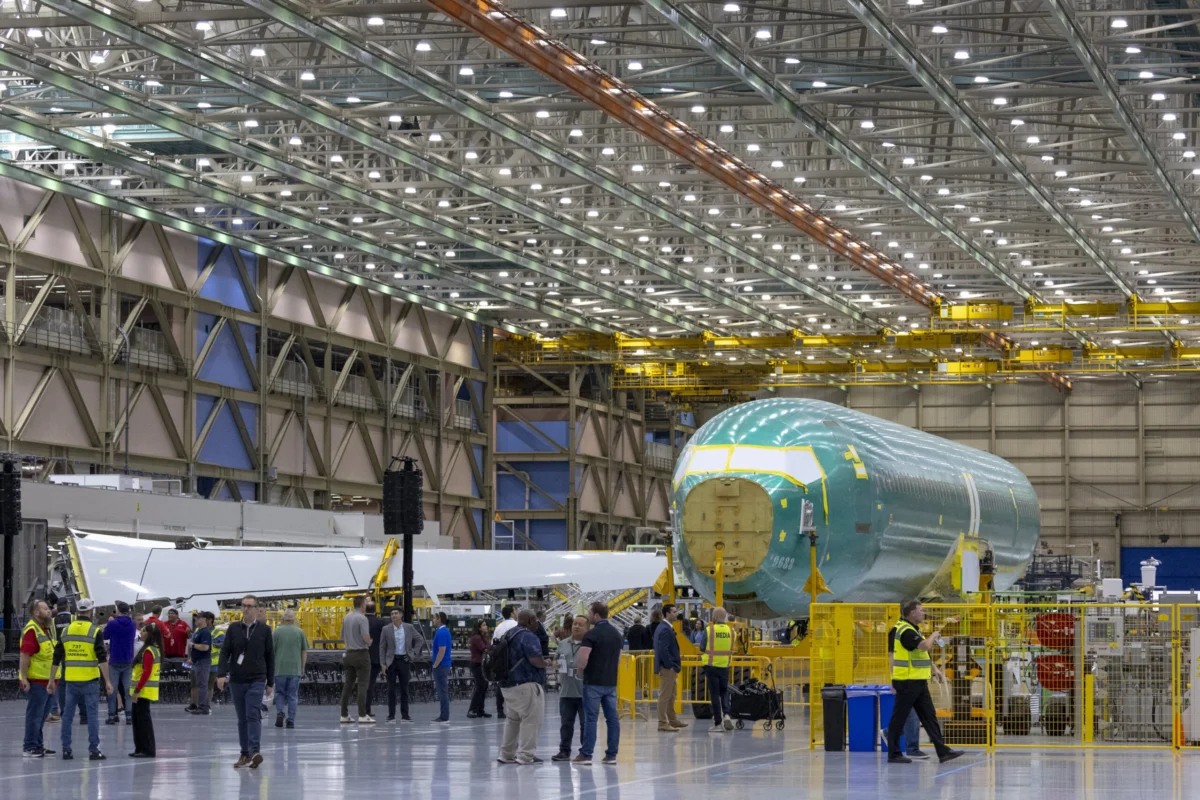
Boeing significantly narrowed its net loss in the third quarter, buoyed by a robust performance in its defense division and steady commercial deliveries, though leadership remains cautious about the road ahead. During the opening ceremony for the company’s new North Line assembly line at the Boeing Everett Factory in Washington, where the manufacturer is scaling up production for its 737 MAX aircraft family, executives emphasized that stabilization and operational recovery will take time.
For the three months ended Sept. 30, Boeing reported a net loss of $116 million, or 26 cents a share. This represents a dramatic improvement compared with the same period a year earlier, when the company posted a staggering net loss of $5.34 billion, or $7.14 per share. When adjusting for one-time items, Boeing reported an adjusted loss of 34 cents a share for the recent quarter. By comparison, the results from the previous year were heavily impacted by a nearly $5 billion pre-tax charge tied to the company’s long-delayed 777X widebody aircraft program, an expense that severely weighed on its financial footing at the time.
Top-line figures also showed positive momentum. Boeing’s total revenue climbed 4% year-over-year to reach $24.19 billion for the quarter. Free cash flow, a critical metric closely watched by Wall Street analysts and credit agencies to measure the company’s liquidity and operational health, rose to $464 million, up from $238 million in the third quarter of 2025.
The financial lift was driven in large part by the manufacturer’s defense, space, and security segment. Revenue in Boeing’s defense unit rose 15% in the third quarter compared to the same period a year earlier, totaling $7.94 billion. This surge in defense revenue provided a vital counterbalance to some of the persistent headwinds facing the commercial airplane manufacturing business.
On the commercial front, Boeing delivered a total of 161 commercial airplanes during the third quarter, representing a modest increase of one jet compared to the 160 commercial airplanes delivered a year earlier. However, despite the steady delivery volume, revenue in the all-important commercial aircraft business fell 3% to $10.72 billion.
More concerning for investors was the profitability of the commercial division. The unit posted a negative operating margin of 6.5% during the quarter. Boeing attributed this margin pressure to a less favorable delivery mix, higher projected costs associated with future production rate adjustments, and elevated estimated supply chain costs that continue to ripple through the aerospace manufacturing ecosystem.
Aircraft production and deliveries remain the ultimate engine of Boeing’s ongoing financial recovery, given the mechanics of the commercial aviation market where the vast majority of an aircraft’s purchase price is paid by the airline customer upon formal delivery. Because of this dynamic, Wall Street and industry observers are closely monitoring how quickly the company can ramp up its factory output in the coming months.
Boeing executives are scheduled to provide a comprehensive update to investors on production timelines during a quarterly earnings conference call. The manufacturer has been producing roughly 47 of its single-aisle 737 MAX planes per month, but leadership has made it clear that they are aiming for higher output targets. However, stabilizing and expanding production has proven to be a complex undertaking. Boeing CEO Kelly Ortberg informed investors last month that the production ramp-up is taking "a little bit longer" than initially anticipated, though the company still expects to increase its output of the popular jets next year.
In a note to employees, Ortberg acknowledged both the recent progress and the significant challenges that still lie ahead for the storied aerospace giant. "Looking ahead, expectations are rising, and they should," Ortberg said in his message to staff. "That means elevating our performance through lean, productivity and efficiency improvements in our day-to-day work while upholding our high levels of safety and quality."
Despite the operational hurdles and the ongoing supply chain friction, Boeing has secured several major strategic wins in recent weeks that provide a strong foundation for its future portfolio. Most notably, the U.S. Navy tapped Boeing to develop its next-generation fighter jet, securing a major defense contract that cements the company’s role at the forefront of military aviation technology for decades to come.
On the commercial side, the regulatory landscape has also shifted favorably. The Federal Aviation Administration officially signed off on the certification of the 737 MAX 10, the largest variant in the MAX family. This crucial regulatory milestone followed the FAA’s approval of the smaller 737 MAX 7 in August, bringing the lengthy and rigorous certification process for the entire core 737 MAX aircraft line to a successful conclusion.
| Source | : | Finance Poetry |
| Author | : | rifanmuazin |
| Editor | : | Finance Poetry Editorial Team |