
Chinese Open-Weight AI Models Outperform US Counterparts in Cybersecurity Vulnerability Testing
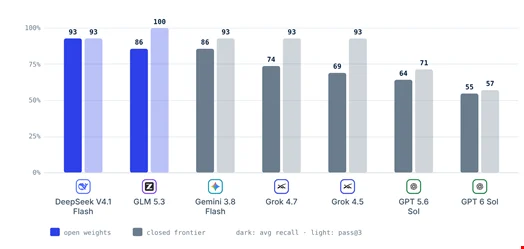
The landscape of artificial intelligence in cybersecurity has undergone a significant shift as new research indicates that open-weight large language models (LLMs) developed by Chinese firms are not only matching but, in some critical metrics, outpacing the proprietary, closed-source models offered by major American technology companies. This development, highlighted in a study released on November 23 by the Israeli AI cybersecurity firm A Security, challenges the prevailing assumption that American models possess an insurmountable lead in offensive security capabilities.
The study centered on a rigorous performance evaluation of two specific Chinese models: DeepSeek V4.1 Flash, developed by the company of the same name, and GLM 5.3, created by Beijing-based Z.ai. These models were pitted against five prominent commercial AI offerings from industry giants Google, xAI, and OpenAI. By utilizing a controlled environment designed to minimize bias, the researchers sought to determine which AI architectures were most effective at identifying and exploiting security vulnerabilities in modern web applications.
The Methodology of the Benchmark
To ensure the integrity of the results, A Security developed a unique testing framework built upon ARENA. This open-source generator creates containerized web applications that mirror real-world scenarios, complete with complex, validated vulnerabilities and standard security defenses such as web application firewalls, rate limiting, and hidden endpoints.
The evaluation process utilized A Security’s proprietary four-agent exploitation system. In this setup, each AI model served as the "brain" or engine for a team of autonomous agents tasked with scanning and exploiting vulnerabilities. The researchers provided each model with the same 100 leads—targets that were specifically generated for this test, ensuring that no model could have been pre-trained on the specific vulnerabilities present in the labs. Each model performed three separate runs across medium-sized labs, with each lab containing 14 distinct vulnerabilities. By standardizing the environment and the tasks, the researchers aimed to provide a direct, "apples-to-apples" comparison of the models’ reasoning, scanning, and exploitation capabilities.
DeepSeek and GLM Surpass Industry Leaders
The findings of the study were striking. Both Chinese models demonstrated performance levels that matched or exceeded their American counterparts. DeepSeek V4.1 Flash, in particular, established itself as a frontrunner, successfully identifying 93% of the validated vulnerabilities in every single run—a consistency that was unmatched by any other model tested.

GLM 5.3 also delivered impressive results, uncovering 86% of vulnerabilities per run. While its per-run average was lower than that of DeepSeek, it achieved a unique milestone: it was the only model in the study to successfully uncover every single vulnerability at least once across its three runs. In contrast, the closed-source models from Western providers consistently struggled to match these benchmarks. Gemini 3.8 Flash, for instance, secured the third-place position with an 86% detection rate per run, but it failed to achieve a 100% success rate across the three-run aggregate, topping out at 93%.
Economic Efficiencies and Cost Disparities
Beyond the raw ability to identify security flaws, the study scrutinized the economic viability of these models in a professional security operations context. Here, the results were equally revealing. DeepSeek V4.1 Flash proved to be highly cost-efficient, requiring only $0.81 per validated finding. This stands in stark contrast to the closed-source models, which commanded significantly higher price points. The commercial models tested ranged from $9.54 per finding for Google’s Gemini 3.8 Flash to as much as $31.85 for OpenAI’s GPT 5.6 Sol.
However, the cost-efficiency was not universal across all Chinese models. GLM 5.3, while highly effective in its detection capabilities, was notably more expensive to run, costing $10.49 per validated finding. This placed it slightly above the cost of the cheapest closed-source competitor, highlighting that while Chinese models are making significant strides, their operational costs remain tied to various factors, including token rates and specific inference provider configurations.
Nuance and Caveats in the Performance Data
Despite the clear lead demonstrated by these models in the A Security tests, the researchers were careful to qualify their findings. The report, released in late November, does not suggest that Chinese models are universally superior or consistently cheaper for every security use case. The complexities of AI infrastructure mean that "outperformance" is often a product of specific configurations rather than an inherent quality of the model architecture alone.
A Security explicitly noted that the cost figures provided in their study were limited in scope. The calculations covered only the four exploitation agents and intentionally excluded auxiliary costs such as discovery processes, browser usage, comprehensive reporting, and advisor calls. Because advisor configurations varied across the different runs, these secondary costs could not be normalized. Consequently, the researchers warned that a full-scale, real-world scan would likely incur higher costs, which would fluctuate significantly based on the specific deployment environment.

Furthermore, the study highlighted significant variables in how the models were accessed. While GLM 5.3 was priced according to its official token rates, the other models were tracked based on recorded provider spend. DeepSeek, for example, was run on a "pinned" provider route after earlier tests indicated that a different provider caused heavy fallback, which can degrade performance and inflate costs. Therefore, the researchers emphasized that the timings and speed rankings should not be interpreted as fixed, universal benchmarks for the models themselves, as they are heavily dependent on the specific inference providers and technical configurations used during the testing phase.
Scope Control and Strategic Implications
A final, critical observation from the study involved the issue of "drift." During the testing, DeepSeek exhibited the highest level of drift, reporting findings outside of its assigned leads in at least 4.5% of cases. In comparison, the other models maintained drift rates of under 2.5%.
For an offensive actor, such as a penetration tester or a red-teamer, a slightly higher drift rate may be considered a minor inconvenience or even an opportunity to discover additional, unplanned vulnerabilities. However, for security professionals and defenders, this represents a significant concern regarding scope control. If an autonomous agent is authorized to scan a specific set of assets but begins to "stray" and interact with unauthorized infrastructure, it could potentially trigger legal, compliance, or operational issues. The ability of an AI agent to adhere strictly to defined boundaries is as important as its ability to find a vulnerability, and this remains a challenge for developers across the industry.
Ultimately, the A Security report serves as a compelling data point in the ongoing debate surrounding the global trajectory of AI development. The rise of Chinese open-weight models suggests that the competitive gap between closed-source industry leaders and the broader open-source ecosystem is closing faster than many anticipated. As these tools become more accessible, effective, and cost-efficient, they will undoubtedly play an increasingly prominent role in the strategies of both those working to secure the digital ecosystem and those seeking to exploit it. The evolution of these technologies will likely force a reassessment of how organizations approach AI-driven security testing, emphasizing the need for rigorous, ongoing benchmarking that accounts for the volatile and rapidly changing nature of the AI landscape.
| Source | : | Finance Poetry |
| Author | : | rifanmuazin |
| Editor | : | Finance Poetry Editorial Team |