
EIA Slashes Winter Natural Gas Price Forecast Amid Mild Weather and Surging Production
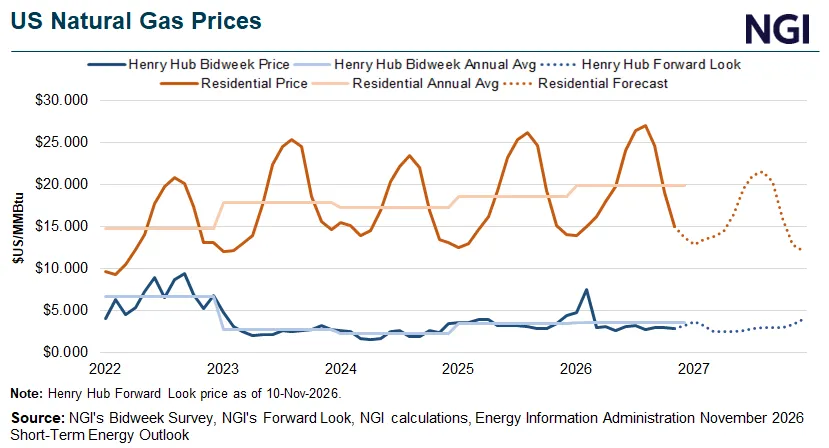
Despite robust and surging international demand for liquefied natural gas (LNG), the U.S. Energy Information Administration (EIA) has significantly lowered its natural gas price expectations for the upcoming winter heating season. According to the federal agency’s latest market outlook, the downward revision is being driven primarily by a combination of unusually mild weather patterns, steadily rising domestic storage expectations, and a resilient production pace that continues to outpace overall consumption.
The juxtaposition of record-setting LNG export volumes against a backdrop of falling domestic price projections highlights the complex balancing act currently at play within North American energy markets. While overseas demand for U.S. natural gas remains exceptionally strong—fueled by geopolitical supply shifts, European energy security needs, and expanding liquefaction capacity along the Gulf Coast—domestic fundamentals are exerting a powerful downward pressure on benchmark prices. Mild meteorological forecasts for the peak heating months have softened the anticipated residential and commercial demand, leaving domestic markets well-supplied and tempering the bullish sentiment that typically characterizes the approach of winter.
At a Glance:
The energy sector has experienced heightened volatility over the past several quarters, navigating shifting weather anomalies, regulatory changes, and infrastructure developments. The EIA’s updated outlook underscores how quickly supply-demand dynamics can shift in the domestic market, even as structural export capacity continues to grow. Market participants, utilities, and industrial consumers are closely monitoring inventory reports and weather models as the heating season approaches, balancing the bullish pull of international markets against the bearish realities of robust domestic supply and subdued weather-driven demand.
The surplus in storage inventories heading into the core winter months has provided a substantial buffer for the market. Throughout the injection season, production levels have consistently tested historical highs, driven by efficiency gains in major shale plays across the United States. Even as drillers have occasionally signaled capital discipline and moderated rig counts in response to low spot prices, productivity per well and associated gas production from oil-focused basins have kept overall supply robust. This continuous influx of new supply has steadily eroded the deficit concerns that plagued previous years, allowing storage operators to head into winter with healthier inventory cushions than many analysts had initially anticipated.
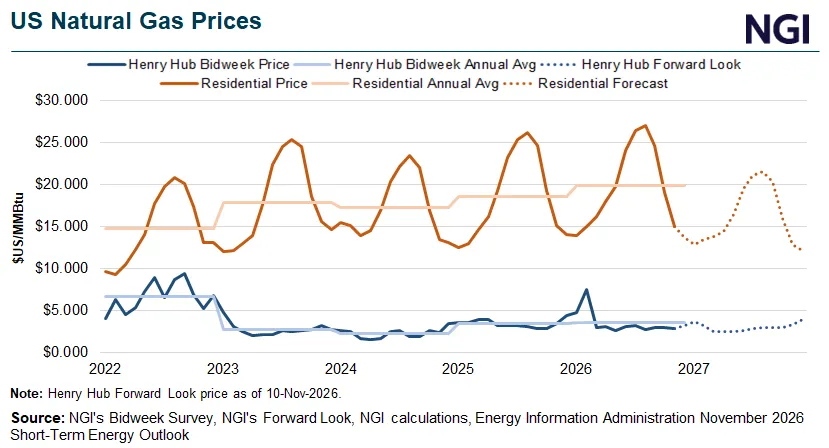
At the same time, weather forecasts have dealt a blow to bulls hoping for a return to severe winter weather extremes. Extended meteorological models pointing toward a milder-than-average winter across key population centers mean that residential and commercial heating demand is projected to fall below historical baselines. Because space heating accounts for a massive share of domestic natural gas consumption during the winter months, any sustained deviation toward warmer temperatures immediately translates into reduced burner-tip demand. This reduction leaves more gas trapped within the domestic grid, further weighing on regional spot prices and futures contracts alike.
The role of LNG exports remains the primary counterweight to these bearish domestic fundamentals. U.S. export terminals have been operating near maximum capacity, feeding global markets where natural gas commands a significant premium over domestic Henry Hub prices. Facilities along the Gulf Coast and the Eastern Seaboard continue to draw substantial volumes of feedstock gas to supply long-term international buyers in Europe and Asia. However, the sheer volume of domestic production has proven capable of satisfying both this heavy export demand and the needs of domestic power generators and industrial users, while still leaving surplus volumes to build and maintain comfortable storage margins.
Energy market analysts note that this dynamic creates a unique trading environment where domestic prices may remain relatively subdued even as global markets experience tightness or price spikes. The decoupling of domestic prices from international parity points out the logistical and infrastructure bottlenecks that still limit the complete globalization of natural gas markets, as well as the sheer volume of the resource available beneath North American soil.
As the winter season progresses, market participants will remain hyper-sensitive to any sudden shifts in medium- and long-range weather forecasts. A sudden polar vortex or prolonged cold snap could quickly alter the supply-demand balance, sparking rapid inventory draws and potentially forcing a reevaluation of price forecasts. Conversely, persistence in mild weather combined with unabated production growth could keep downward pressure firmly entrenched through the remainder of the heating season, testing the cost thresholds of domestic producers and influencing capital allocation strategies for the upcoming year.
| Source | : | Finance Poetry |
| Author | : | rifanmuazin |
| Editor | : | Finance Poetry Editorial Team |