
Federal Government Clashes with Arkansas Over Regulation of Event Contract Markets
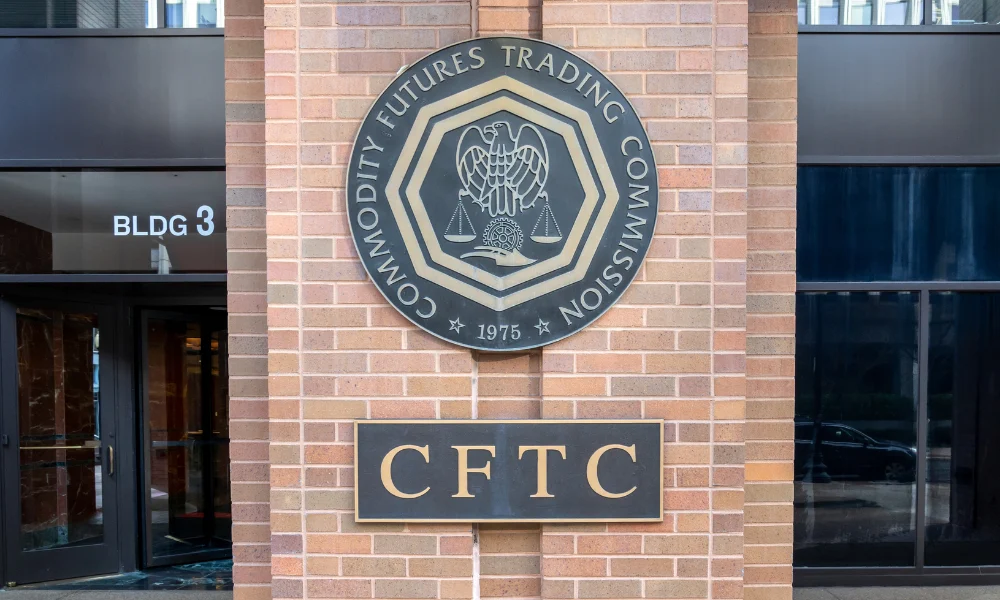
The ongoing tug-of-war between state regulators and federal financial authorities over the legality of prediction markets reached a new inflection point on November 12, 2026. In a significant legal maneuver, the United States government, acting in concert with the Commodity Futures Trading Commission (CFTC), filed a lawsuit in the U.S. District Court for the Eastern District of Arkansas. The action seeks to prevent the state of Arkansas from classifying federally regulated event contracts as illegal gambling, setting the stage for a high-stakes constitutional confrontation over jurisdiction.
At the heart of the dispute are "event contracts"—financial derivatives that allow participants to speculate on the outcomes of real-world occurrences, such as election results, fluctuations in weather patterns, or the final scores of athletic competitions. While proponents view these instruments as legitimate tools for hedging risk and price discovery, state regulators in Arkansas and elsewhere have increasingly scrutinized them as thinly veiled alternatives to traditional sports betting and casino gaming.
The federal complaint specifically targets Arkansas’s recent enforcement efforts against KalshiEX LLC, a New York-based firm that secured designation as a contract market from the CFTC in November 2020. On November 4, 2026, the state of Arkansas initiated an enforcement action against Kalshi, characterizing the platform as "a straightforward gambling platform." The state’s filing argued that regardless of the terminology used by the company, the underlying activity remains identical to age-old gambling practices: consumers risking capital on the uncertainty of an athletic contest in the hopes of securing a financial windfall.
The federal government, however, rejects this characterization in its entirety. The CFTC’s complaint asserts that event contracts are legally classified as "swaps" under the Commodity Exchange Act (CEA). By defining these products as swaps, the federal government argues that they fall squarely under the purview of the CFTC’s exclusive jurisdiction. According to the filing, the CEA was explicitly designed to supersede state-level restrictions, providing the commission with the sole authority to regulate commodity futures, options, and swaps traded on federally sanctioned exchanges. The federal government maintains that this authority is paramount, rendering state-level attempts to classify these regulated financial products as prohibited gambling activity legally invalid under the Supremacy Clause of the U.S. Constitution.
This confrontation in Arkansas is merely the latest chapter in a broader, nationwide effort by the federal government to defend its regulatory territory. The CFTC’s complaint highlights a growing list of similar preemption actions filed against states including Arizona, Connecticut, Illinois, Kentucky, Minnesota, New Mexico, New York, Rhode Island, Utah, and Wisconsin. The federal strategy has already seen some success in the judiciary; courts in Arizona, Illinois, and Minnesota have issued preliminary injunctions against their respective states, effectively blocking them from enforcing local gambling statutes against CFTC-regulated exchanges while the underlying federal challenges proceed.
The history of this friction dates back decades, tracing a century of tension between localized gambling laws and the evolution of federal derivatives oversight. Congress established the CFTC in 1974 with the specific intent of dismantling a fragmented "patchwork of state-by-state regulation" that federal lawmakers concluded was actively hindering the growth and efficiency of national commodity derivatives markets. This federal oversight was further solidified by the 2010 Dodd-Frank Act, which extended the commission’s "exclusive jurisdiction" to include swaps traded on designated contract markets and swap execution facilities. The current lawsuit argues that state enforcement actions, such as the one in Arkansas, threaten to undo this decades-long effort to standardize financial markets.
For operators like Kalshi, the stakes are not merely regulatory but existential. The complaint details the stark financial reality of the industry: Kalshi earns a modest transaction fee, typically ranging from $0.07 to $2.63 per 100 contracts facilitated. Conversely, Arkansas’s Deceptive Trade Practices Act allows for civil penalties of up to $10,000 per individual violation. The federal filing warns that if Arkansas were to successfully apply these per-violation penalties to Kalshi’s volume of business within the state, the financial liability would "dwarf Kalshi’s income from its activities in Arkansas and could reach the hundreds of millions of dollars." This potential for massive financial exposure underscores why the industry is relying on federal intervention to shield it from what it views as aggressive state-level litigation.
While the CFTC is moving to protect the legal status of these markets, it is simultaneously working to address concerns regarding market integrity. The commission has not been passive regarding potential abuses, having launched multiple enforcement actions against individuals accused of trading event contracts based on nonpublic, insider information. These include a high-profile civil action concerning trades tied to the ouster of Venezuelan President Nicolas Maduro, as well as a separate investigation into trades linked to Google’s "Year in Search" data. Furthermore, the Department of Justice has pursued criminal charges for insider trading in this emerging asset class, signaling that the federal government intends to police these markets with the same rigor it applies to traditional securities.
Beyond litigation and enforcement, the CFTC has been actively fostering partnerships with major professional sports leagues to maintain the legitimacy of sports-related event contracts. The commission has signed formal Memoranda of Understanding with the NBA, MLB, and NHL to facilitate the exchange of information and safeguard the integrity of sports-linked derivatives. In a move to further clarify the regulatory landscape, the commission issued an Interim Final Rule in October 2026. This rule explicitly "affirms and codifies the Commission’s longstanding position that casino-style gambling products, including sports-wagering contracts entered into on a sportsbook and casino games, are not swaps and do not fall within the CFTC’s jurisdiction." By establishing this distinction, the commission aims to create a bright-line rule that separates legitimate financial derivatives traded on regulated exchanges from the traditional, state-regulated gambling industry.
The scale of the current market is significant, with 30 exchanges currently holding active CFTC designations to operate as contract markets. This roster includes newer, specialized entrants like Kalshi, as well as established, multi-billion-dollar operators such as the North American Derivatives Exchange (Nadex) and CME Group. The presence of these institutional-grade players highlights the importance of the legal battle; a loss for the CFTC could potentially force these entities to alter their business models or withdraw from numerous states, creating a fractured market that Congress initially sought to prevent in 1974.
The federal lawsuit rests on a single count under the Supremacy Clause. It asks the U.S. District Court to issue a declaratory judgment that Arkansas law is preempted by federal authority and to grant a permanent injunction preventing the state from enforcing its gambling laws against transactions occurring on CFTC-regulated exchanges.
As it stands, the complaint represents the position of the federal government, and no court has yet issued a ruling on the merits of the case. The outcome will likely serve as a pivotal precedent, determining whether the federal government’s authority over financial derivatives is broad enough to shield emerging prediction markets from the long-standing and varied gambling regulations of individual states. Until a ruling is reached, the conflict remains a high-stakes test of the balance of power between federal financial oversight and state consumer protection laws.
| Source | : | Finance Poetry |
| Author | : | rifanmuazin |
| Editor | : | Finance Poetry Editorial Team |