
Frank Lloyd Wright’s Historic Taliesin West Reopens in Scottsdale Following Fatal Weather Accident and Safety Overhaul
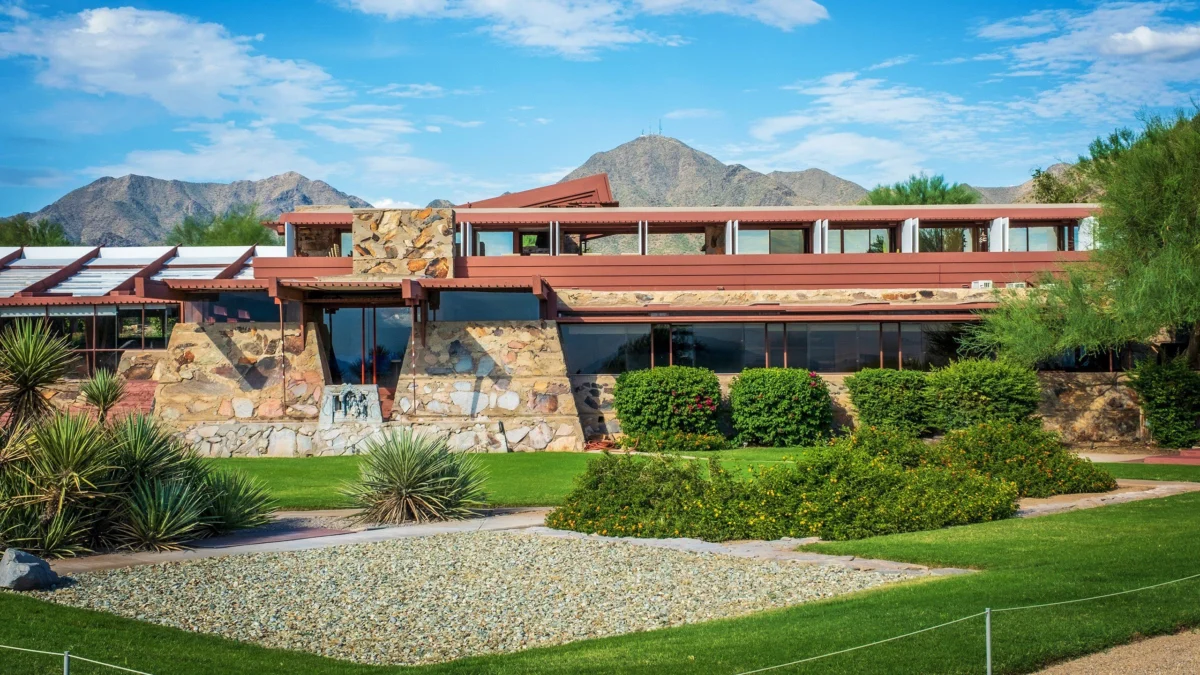
The iconic Scottsdale, AZ, desert estate and former winter home of legendary architect Frank Lloyd Wright has officially reopened its doors to the public following a brief, solemn closure triggered by a freak weather-related accident that claimed the life of a visiting international dignitary.
Taliesin West welcomed visitors back on Saturday, October 24, marking a cautious return to operations exactly eight days after 55-year-old Rogério Renato Mateucci suffered fatal injuries during a guided walking tour of the sprawling architectural masterpiece on October 16. Mateucci, a distinguished academic serving as a top official at the Pontifical Catholic University of Paraná in Brazil, was struck by a piece of roofing material that had been violently dislodged by strong, erratic desert winds, local authorities have officially confirmed.
According to data recorded by the National Weather Service, the Scottsdale area experienced sustained east winds averaging 22 mph on the day of the tragic incident, with severe gusts reaching speeds of up to 32 mph. Scottsdale Police Department Sergeant Allison Sempsis told local reporters that the debris responsible for the tragedy was a piece of acrylic glass. Throughout the subsequent investigation, Sempsis noted that the Frank Lloyd Wright Foundation fully and transparently cooperated with local law enforcement and safety officials to determine the exact sequence of events.
In the wake of the tragedy, the leadership of the Frank Lloyd Wright Foundation expressed profound grief over the sudden loss. Joseph Specter, President and CEO of the Foundation, released a formal statement addressing the community and extending deepest sympathies to the victim’s family, colleagues, and loved ones.
“The Foundation mourns the loss of Rogério Renato Mateucci, who tragically died on October 16 in an accident at Taliesin West,” said Specter in the statement provided to real estate and news outlets. “We continue to hold Mr. Mateucci and his loved ones in our hearts and continue to offer our deepest condolences.”
While the world-famous property remained entirely closed to the general public, law enforcement officials and safety inspectors worked to determine the cause of the incident. Investigators ultimately concluded that the tragedy was entirely weather-related, driven by the powerful desert gusts that swept through the valley that afternoon. Taking advantage of the temporary closure, the Foundation initiated a comprehensive, rigorous safety inspection of the entire Taliesin West campus, paying meticulous attention to its complex roofing systems, historical structures, and overall structural integrity, according to Specter’s official announcements.
As part of its commitment to preventing any future incidents and ensuring the absolute protection of staff, scholars, and visitors alike, the Foundation leveraged modern technology to upgrade its site monitoring infrastructure. Advanced weather station technology has now been permanently integrated into the campus to significantly enhance existing safety protocols. This new meteorological equipment is designed to continuously assess critical environmental factors, including localized temperature, wind speed, barometric air pressure, and rainfall, providing real-time data directly to site administrators.
“This will offer the Foundation localized safety data to further inform the daily practice of opening our site to the public,” Specter explained, emphasizing that the new measures represent a proactive approach to historical property management in an unforgiving desert environment.
With the comprehensive safety inspections successfully completed and these advanced monitoring systems fully operational, Specter confirmed that leadership was thoroughly confident in the security of the grounds. Declaring that Taliesin West was once again safe for visitors, the campus prepared to reopen its gates to tourists, architectural enthusiasts, and scholars on Saturday morning.
Taliesin West holds a monumental place in the history of American architecture. The desert campus was originally established back in 1937, serving as a seasonal winter sanctuary and creative retreat for Frank Lloyd Wright and his dedicated community of apprentices. Situated deep within the rugged McDowell Mountain foothills, the sprawling desert compound was purposely designed to blend seamlessly into the harsh, striking beauty of the surrounding landscape. In its earliest iterations, the structures famously utilized canvas panels for roofs rather than conventional, heavy building materials, capturing a temporary, organic relationship with the natural elements.
Following Wright’s passing in 1959, the historic property underwent significant architectural modifications to accommodate year-round occupation by both the Frank Lloyd Wright Foundation and the Taliesin Institute. Among the most notable updates made during those decades was the complete replacement of the original deteriorating canvas roofing systems with insulated acrylic panels, the intentional enclosure of various open-air interior spaces, and the installation of modern air conditioning to combat the blistering Arizona heat.
In recent years, the Taliesin Institute has actively explored innovative ways to honor Wright’s legacy by potentially returning to a fabric-based roofing system. However, preservationists have been looking toward advanced, modern materials that possess significantly greater durability than the textiles available during Wright’s own lifetime. Rebecca Barron, Director of Preservation at the Taliesin Institute, discussed these forward-thinking initiatives in an interview earlier this year, shedding light on the complex philosophy guiding the property’s management.
The exploration of advanced modern materials forms a core component of the Taliesin Institute’s broader framework of values-based preservation. Under this guiding philosophy, preservationists carefully balance the physical preservation of the built structure and its distinct aesthetic qualities with the safeguarding of the site’s rich “intangible heritage.”
“In this way, the fabric roof project continues the ongoing process of innovation and experimentation that was always at the heart of this place,” Barron noted.
Despite the ongoing discussions and research surrounding alternative roofing materials, local authorities and Foundation officials have explicitly stated that there is no connection between the October 16 accident and the Institute’s ongoing preservation and research work. Furthermore, the exact structural origin of the specific acrylic panel that dislodged and struck Mateucci remains under review as part of the broader administrative follow-up to the police investigation.
As Taliesin West resumes its daily tours and educational programming, staff and leadership remain focused on honoring the memory of Rogério Renato Mateucci while maintaining the delicate balance between preserving a historic architectural landmark and ensuring the safety of the thousands of visitors who journey to the Arizona desert each year.
| Source | : | Finance Poetry |
| Author | : | rifanmuazin |
| Editor | : | Finance Poetry Editorial Team |