
Fusion Startup Helion Secures $175 Million in Federal CHIPS Act Funding to Advance Power Electronics and Semiconductors
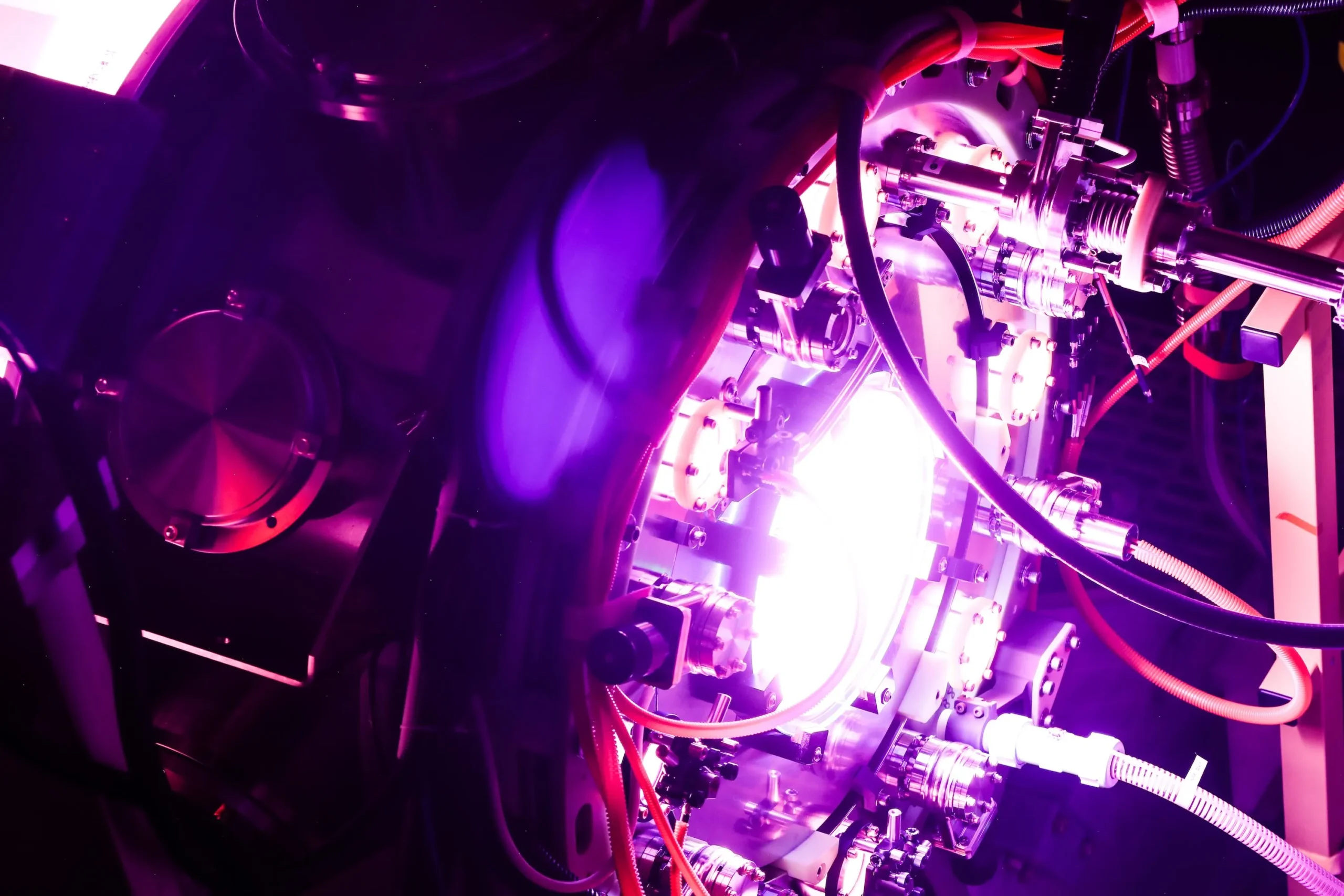
Fusion energy startup Helion has been awarded $175 million in federal funding to research, develop, and manufacture advanced semiconductors and power electronics destined for its commercial fusion power plants, the company announced on Thursday.
The three-year award was granted by the Department of Commerce under the CHIPS Act, a bipartisan legislative framework designed to bolster semiconductor research, development, and domestic manufacturing capabilities across the United States. Alongside this substantial federal backing, Helion also announced an additional $50 million in fresh private investment, though the company opted not to disclose the identity of the investor. With this latest injection of capital, Helion has raised more than $3.2 billion in total funding, cementing its position as the second-best-funded fusion startup in the global race to commercialize clean nuclear energy.
The newly awarded federal funds will be strategically distributed across multiple states to accelerate technological development. More than $100 million will be dedicated to semiconductor and advanced packaging research and development in Washington State. Meanwhile, approximately $80 million will support specialized R&D efforts in Vermont, focusing on advanced semiconductor tooling, design, and process development in partnership with GlobalFoundries. Separately, GlobalFoundries has secured more than $80 million from the federal government to advance the domestic manufacturing of gallium-nitride semiconductors, a specialized class of chips widely utilized in heavy-duty power electronics.
As part of the federal award structure, the U.S. government will receive a $175 million non-voting interest in Helion, calculated based on the startup’s Series G valuation. This public-private partnership underscores the strategic national importance of developing domestic supply chains for high-voltage, pulsed power components that serve not only the emerging fusion industry but also broader technological sectors.
Fresh Funding and National Manufacturing Goals
The funding arrives as Helion races to complete its pioneering commercial power plant, dubbed Orion, in time to meet an aggressive 2028 deadline to supply electricity directly to Microsoft from the electrical grid. Financial support from the federal award will enable Helion to construct automated semiconductor module, packaging, and testing capabilities specifically tailored to supply the advanced fusion machine currently under construction.
The planned production line, which will be built in Washington State, represents a historic milestone for American manufacturing. It will be the first facility of its kind in the United States dedicated to producing this specific class of advanced semiconductor. Beyond fusion power plants, these specialized components are essential for a wide array of advanced industrial and technological applications, including manufacturing operations, wastewater treatment systems, medical technologies, and national defense infrastructure.

David Kirtley, co-founder and CEO of Helion, emphasized the critical gap in the current domestic supply chain that the new facility aims to fill. "There are no U.S. manufacturers right now that do it," Kirtley said during an interview. "This is absolutely enabling going from zero to 100 for advanced, high-voltage, and pulsed semiconductors here in the United States."
While Kirtley acknowledged that the specific research and development funded by this federal award will not arrive in time to be integrated into the initial launch of the Orion power plant—largely due to the lengthy negotiation timelines typical of federal contracts—he stressed that the innovations promise to significantly enhance the efficiency of subsequent Helion power plants. Improving these core metrics will ultimately bolster the company’s competitiveness within cutthroat regional and national electricity markets.
Efficiency is Everything in Direct Energy Conversion
Semiconductor efficiency sits at the very heart of Helion’s unique technological approach to nuclear fusion. Unlike traditional nuclear fission reactors or proposed magnetic confinement fusion concepts that rely on the heat of the reaction to generate steam to spin massive turbines, Helion’s systems harvest electricity directly from the fusion reactions themselves.
The startup is currently developing a specialized magnetic confinement reactor known as a field-reversed configuration. During operation, fusion fuel is injected into both ends of an hourglass-shaped chamber, where powerful electrical currents heat the atoms to form a superheated plasma. These distinct plasmas are then rapidly accelerated toward each other using powerful magnetic fields. When they collide in the center of the chamber, an additional magnetic field compresses the resulting ball of plasma even further, driving temperatures skyward to over 100 million degrees Celsius.
At these extreme temperatures and pressures, atoms within the fusion fuel begin to fuse together, releasing immense amounts of energy in the process and pushing the plasma violently outward. This explosive outward force pushes directly against the surrounding magnetic field. That kinetic energy is subsequently captured by the reactor’s surrounding magnets and capacitor banks, where it is directly converted into usable electricity. The mechanism is conceptually similar to how modern hybrid and electric vehicles recapture energy during braking, utilizing electric motors to slow the vehicle down while recharging the onboard battery.
Helion maintains that this method of direct energy conversion will enable its future commercial reactors to consistently produce significantly more power than they consume to operate—a critical threshold that any nuclear fusion power plant must successfully cross if it is to achieve long-term commercial viability. Highly efficient power electronics are an indispensable component of this complex energy recovery loop.
"One of the enabling parts of our technology that allows us to do this direct electricity recovery—putting electricity into fusion and at a very high efficiency, recovering it at high speed—is the modern semiconductor," Kirtley explained. "We’re going to take that to the next level here, increase the efficiency."

The engineering challenge centers on mitigating inherent energy losses within the system. Currently, standard power electronic devices lose approximately 5% to 10% of the electricity that flows through them during operation. While those percentage losses may appear modest on paper, they can rapidly compound across the intricate electrical architecture of a complex system like Helion’s fusion reactor.
"If we can cut that loss in half, that’s actually twice the power output of the fusion system," Kirtley noted, highlighting how marginal hardware improvements can yield exponential gains in overall power generation capacity.
Broader Industrial and Defense Implications
The technological advancements funded by the federal award extend far beyond the energy sector. Advanced power electronics are increasingly vital to a wide cross-section of modern industries, with electric vehicles representing the largest commercial market today. Consumer electronics could also benefit from more efficient power management, although the scale and voltage demands in consumer devices are vastly lower than those required by heavy industrial power generation or fusion systems.
The national defense industry is expected to be another primary beneficiary of domestic semiconductor manufacturing capabilities. Directed-energy weapons, for instance, have garnered renewed interest and funding as military analysts observe unmanned aerial drones swarming modern battlefields and frequently overwhelming traditional, kinetic air defense systems. Bill Frauenhofer, who leads semiconductor investment and innovation at the Department of Commerce, noted in a public statement that the federal award will help "convert and deliver power to critical applications in defense, grid transmission, and advanced energy generation."
Despite the significant potential for lucrative defense contracts and cross-sector technology licensing, Kirtley emphasized that Helion remains resolutely committed to its primary commercial mission: generating clean, reliable baseload electricity for the power grid.
"Domestic energy supply, national security through energy dominance, and energy security—that’s our main focus," Kirtley concluded.
| Source | : | Finance Poetry |
| Author | : | rifanmuazin |
| Editor | : | Finance Poetry Editorial Team |