
Global Natural Gas and LNG Markets Face Evolving Infrastructure Dynamics and Supply Shifts
The international energy landscape continues to experience profound shifts as market participants closely monitor the intricate interplay between global natural gas supplies and liquefied natural gas (LNG) export dynamics. Industry stakeholders rely heavily on real-time data tracking systems to evaluate the pulse of international energy trade, particularly as infrastructure developments reshape how fossil fuels traverse oceans and continents. A comprehensive examination of the global natural gas and LNG markets by the numbers reveals a complex ecosystem driven by shifting supply fundamentals, terminal utilization rates, and the expanding footprint of North American export capabilities.
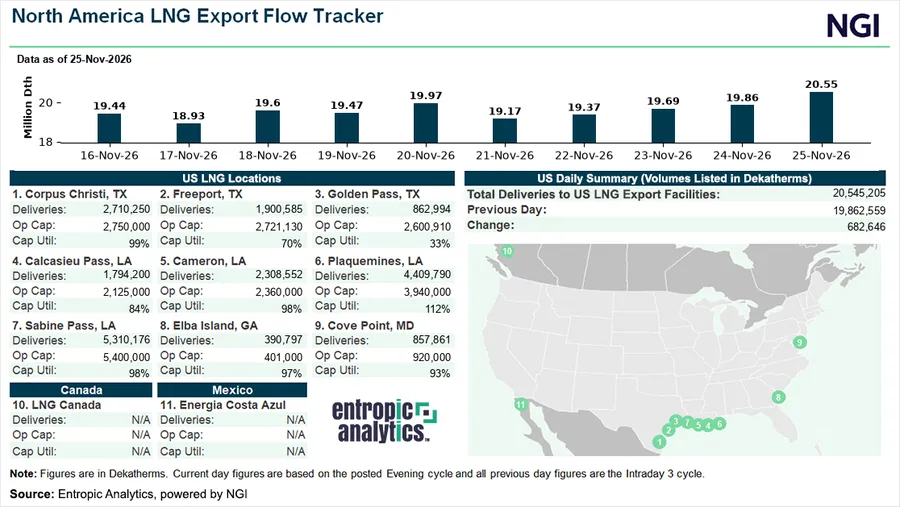
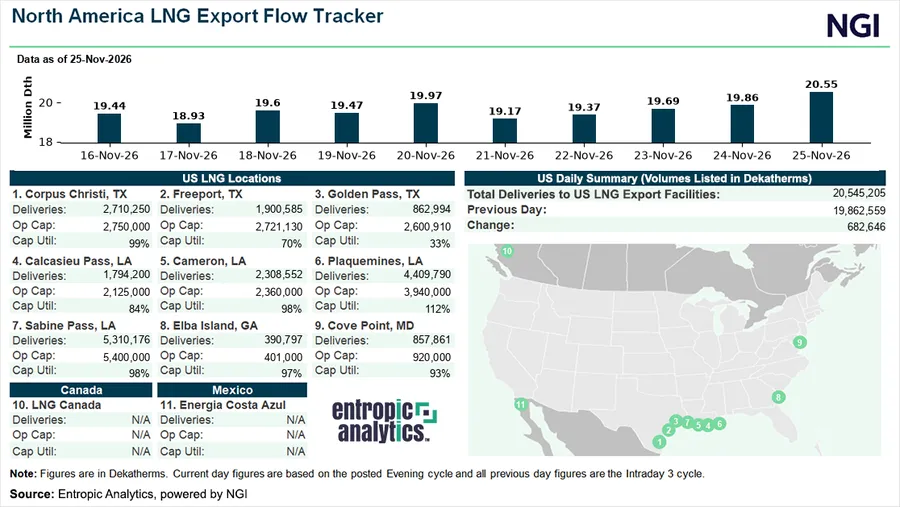
At the heart of this evolving market infrastructure is the continuous monitoring of North American export terminals and feedgas deliveries. Market intelligence tracking systems, such as NGI’s North American LNG Export Flow Tracker, provide crucial visibility into day-to-day operations across key coastal facilities. These operational metrics offer a clear window into how efficiently domestic natural gas production is being processed, liquefied, and loaded onto carriers bound for international destinations. As global demand centers in Europe and Asia navigate their respective seasonal consumption cycles, the reliability and throughput of North American liquefaction facilities remain a primary focal point for energy traders, analysts, and infrastructure developers alike.
The significance of these infrastructure data points extends far beyond regional supply and demand balances. International energy markets are increasingly interconnected, meaning that minor fluctuations in feedgas deliveries to a handful of major terminals along the U.S. Gulf Coast can reverberate across global pricing hubs. Feedgas volumes serve as a direct indicator of terminal utilization, reflecting whether facilities are operating near full nameplate capacity or experiencing maintenance-related slowdowns. Understanding these operational cadences is essential for market participants attempting to forecast cargo availability and price volatility in an interconnected global marketplace.
Against this backdrop, the broader discourse surrounding natural gas infrastructure and international LNG trade highlights the strategic importance of continuous market transparency. As new liquefaction trains are developed, permitted, and eventually brought online, the logistical complexity of managing global gas flows increases proportionally. Industry analysts emphasize that tracking these movements requires sophisticated analytical tools and up-to-date reporting to capture the rapid pace of change within the sector.
The reporting and analysis of these complex market movements are anchored by dedicated industry experts. Senior Editor of LNG Jacob Dick brings extensive experience to the coverage of these critical energy sectors. Having joined the Natural Gas Intelligence staff in January 2022 and subsequently stepping into the role of Senior Editor for LNG in February 2024, Dick has built a robust background in business and energy reporting. Prior to his tenure covering national and international gas markets, he focused on the oil and gas industry in Southeast Texas for the Beaumont Enterprise, a Hearst newspaper. A native of Kentucky, Dick holds a bachelor’s degree in journalism from Western Kentucky University, providing a strong foundation for the rigorous, fact-based reporting required to make sense of the modern LNG landscape.
As the international energy sector looks toward future supply-demand balances, the ongoing tracking of LNG export flows, infrastructure utilization, and global pricing dynamics remains indispensable. Market observers will continue to lean on detailed quantitative assessments and expert reporting to navigate the challenges and opportunities presented by an increasingly globalized natural gas market.
| Source | : | Finance Poetry |
| Author | : | rifanmuazin |
| Editor | : | Finance Poetry Editorial Team |