
Historic Breakthrough in Michigan: Abdul El-Sayed Wins US Senate Seat, Defying Xenophobic Attacks and Setting Progressive Milestones
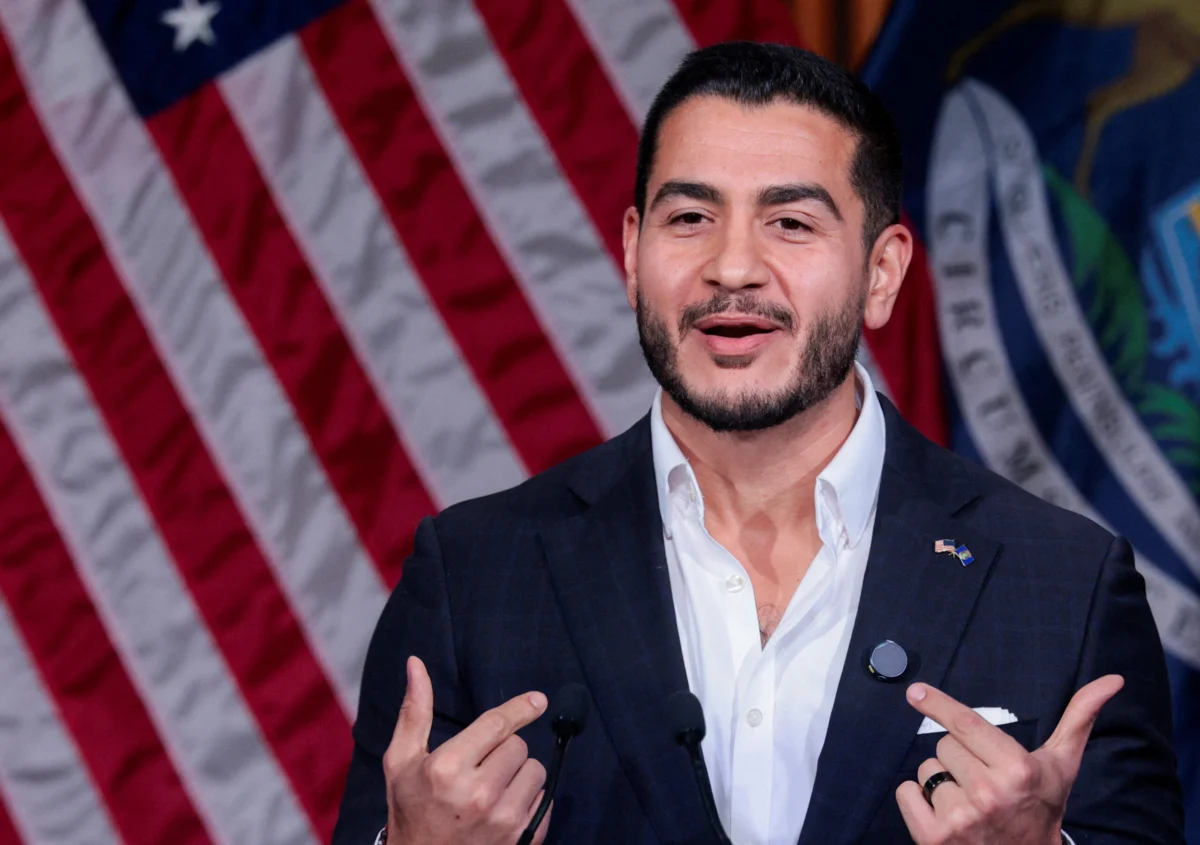
DETROIT — Celebrating a watershed political victory that reshapes both the Michigan political landscape and the national Democratic Party, Abdul El-Sayed delivered a sharp and defiant message to US President Donald Trump and Vice President JD Vance early Wednesday morning.
Addressing a roaring crowd of jubilant supporters shortly after he was projected to win a fiercely contested race, the 42-year-old physician and former public health official highlighted the striking irony awaiting the incoming administration in Washington. El-Sayed defeated Trump’s handpicked Republican candidate, Mike Rogers, to secure the Michigan Senate seat, making history as the first Muslim ever elected to the United States Senate.
The victory capped a bitter, highly polarized campaign characterized by intense personal attacks, accusations of religious extremism, and millions of dollars in outside spending. Yet, as El-Sayed took the stage alongside his wife, Dr. Sarah Jukaku, his tone shifted effortlessly from the grievances of a hard-fought battle to the institutional reality facing executive leadership.
“JD, habibi [Arabic term of endearment], it is an irony — you are constitutionally obligated to swear me in in January,” El-Sayed told the cheering crowd, directly addressing Vice President Vance. Turning his attention to the commander-in-chief, he added, “Donald, I know you struggle with my name, so when JD swears me in, you can call me ‘senator.’ May we never have to see the likes of you in Michigan again.”
Ahead of the midterm elections, both Trump and Vance had repeatedly deployed racist labels and inflammatory rhetoric against El-Sayed. Trump openly mocked his name, asserting during campaign appearances that as president, he could call the Michigan physician anything he wanted. At various points, Trump labeled El-Sayed a “jihadist,” while Vance characterized him as a “psychopath.”
Despite this rhetoric, El-Sayed secured more than 52 percent of the vote, holding a commanding lead with over 95 percent of ballots tallied. His triumph in Michigan—a crucial swing state that Trump won comfortably just two years prior—serves as a massive breakthrough for progressives within the Democratic Party who have increasingly challenged the political establishment over economic inequality, escalating living costs, and traditional foreign policy doctrines, particularly Washington’s unwavering support for Israel.
“To all the parents who struggled to explain why the president openly mocks someone for their name or how they pray, let them know tomorrow that the bad guys lost,” El-Sayed declared during his victory address.
Beyond the undeniable historic weight of his election, El-Sayed focused the core of his remarks on the kitchen-table economic anxieties burdening everyday Americans. Pointing to the struggles of working families across the state, he emphasized his commitment to fighting economic inequality, lowering the cost of living, and overhauling the healthcare system.

“Michigan, it just shouldn’t be this hard. It shouldn’t be this hard to buy a second bag of groceries or to fill your tank,” he told supporters. “It shouldn’t be this hard to pay your taxes and know that that money is going to be spent on you and your kids instead of dropping bombs on somebody else and their kids.”
Early Life and Public Service
Born and raised in the Detroit metropolitan area to a family of Egyptian descent, El-Sayed often describes his formative years within the context of a typical immigrant household where academic excellence and high achievement were paramount expectations.
He pursued his undergraduate education at the University of Michigan, graduating as the valedictorian of the class of 2007. At his commencement ceremony, guest speaker and former President Bill Clinton singled out El-Sayed, praising an address that centered heavily on themes of inclusivity and social equality.
“I wish every person in the world who believes that we are fated to have a clash of civilisations, and cannot reach across the religious divides, could have heard you speak today,” Clinton remarked at the time.
Following his undergraduate studies, El-Sayed attended the University of Oxford in the United Kingdom as a Rhodes Scholar before earning his medical degree from Columbia University in New York. Rather than entering electoral politics immediately, he established a career dedicated to public health and epidemiology. He served as the executive director of Detroit’s Health Department before later taking the helm as director of the Wayne County Department of Health, Human and Veteran Services. He is married to Sarah Jukaku, an Indian-American psychiatrist, and the couple has two daughters.
Early Political Career and Policy Platform
El-Sayed first ventured into electoral politics during the 2018 cycle, launching a progressive bid for governor of Michigan. Running on a platform centered on expanding healthcare access and curbing corporate influence in government, he finished second in the Democratic primary to Gretchen Whitmer, who ultimately went on to win the governorship. Although unsuccessful, that initial statewide run cemented his status as a prominent voice within Michigan’s progressive movement.
In his subsequent campaigns, El-Sayed continued to champion universal healthcare, specifically advocating for a government-funded "Medicare for All" program designed to decouple medical coverage from employment status and personal income. He has consistently argued that healthcare is a fundamental human right rather than a market commodity.
Domestically, his political platform heavily emphasizes economic populism, targeting corporate monopolies and the rising costs of fuel and groceries. He has maintained that ordinary citizens are bearing the brunt of economic policies designed to benefit corporate interests.
On the international stage, El-Sayed has distinguished himself as a vocal opponent of conventional US foreign policy, particularly American military interventions in the Middle East. He strongly criticized the US-Israeli conflict against Iran, labeling it a "stupid" war that directly exacerbated domestic inflation and spiked gasoline prices through unwarranted geopolitical escalation. Furthermore, he has been an outspoken critic of Israeli government policies, arguing against the ongoing military campaign in Gaza and contending that American taxpayer funds should be redirected toward domestic investments in education, healthcare, and childcare rather than foreign military aid.

“They tried to call you hateful if you believe that Palestinian kids should get to grow up in the land of their forefathers without being murdered by our tax dollars,” El-Sayed told the crowd after declaring victory. “If you believe in equal rights to peace, dignity and self-determination, that’s not hate, it’s love.”
In addition to his Middle East stance, El-Sayed has criticized trade policies such as Trump’s tariff wars with Canada, arguing that protectionist measures actively harm Michigan’s deeply integrated cross-border economy.
The 2026 Senate Campaign
El-Sayed launched his campaign for the US Senate in 2026 to succeed retiring Democratic Senator Gary Peters. The primary battle proved to be an intense and expensive contest. In August, El-Sayed defeated U.S. Representative Haley Stevens in the Democratic primary, delivering a notable rebuke to the American Israel Public Affairs Committee (AIPAC), which had poured massive financial resources into supporting Stevens.
During the primary cycle, total spending surpassed $50 million, with AIPAC alone contributing at least $30 million in backing for Stevens. Despite initial pledges of unity, Stevens’s subsequent endorsement of Republican opponent Mike Rogers in the final days before the general election drew widespread criticism from within Democratic circles.
Throughout the general election, El-Sayed’s campaign was repeatedly forced to navigate Islamophobic attacks and allegations questioning his loyalty and national security stance. Following his primary win, far-right political commentators seized upon his occasional use of the Arabic phrase inshallah—meaning "God willing"—to frame him as an ideological threat to the United States.
Meanwhile, Trump asserted that El-Sayed harbored animosity toward Jewish people and Israel, while Republican challenger Mike Rogers alleged during debates that the candidate maintained ties to the Muslim Brotherhood. In the final televised debate in October, Rogers went as far as suggesting that El-Sayed shared a base of supporters with militant groups like Hamas, implications that El-Sayed strongly and repeatedly denied.
Addressing these concerted efforts to weaponize his faith and ethnicity during his victory speech, El-Sayed reflected on the linguistic journey of his campaign.
“We don’t want our money sent to do apartheid, or genocide, or war,” he said. He noted that throughout the campaign, his team had invoked inshallah to express their hopes for a political breakthrough.
“But today, tonight, we can turn that inshallah into alhamdulillah [praise be to God].”
| Source | : | Finance Poetry |
| Author | : | rifanmuazin |
| Editor | : | Finance Poetry Editorial Team |