
Intel Shares Plummet Over 20% After Weak Q4 Forecast Cites PC Market Softness and Fab Shutdown
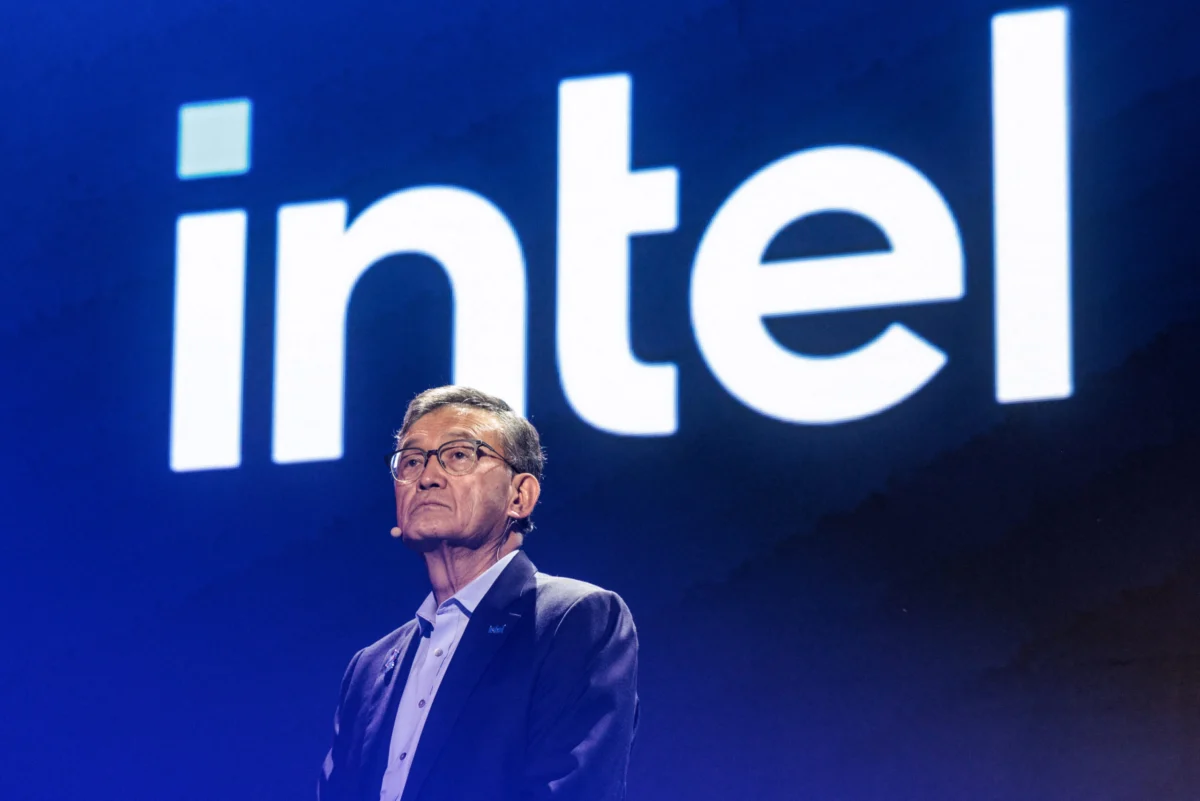
Intel shares plunged more than 20% in extended trading on Thursday after the storied chipmaker issued a disappointing fourth-quarter forecast, pointing to ongoing softness in the global personal computer market and the lingering operational fallout from a fatal industrial accident.
The sharp drop in after-hours trading abruptly interrupted a strong run for Intel’s stock, which had surged approximately 150% earlier in the year before pulling back roughly 23% in October amid broader market anxieties regarding the sheer scale of global artificial intelligence infrastructure spending.
During the third quarter, Intel posted a 21% rise in overall revenue compared to $13.7 billion during the same period a year earlier. However, the top-line growth masked underlying division-level strains. Revenue inside Intel’s client computing and physical AI group fell 5% year-over-year to $8.1 billion, missing Wall Street expectations. This decline contrasted sharply with the company’s data center and AI business, where revenue jumped an impressive 78% to $7.3 billion.
The broader personal computer sector has faced mounting headwinds. According to data from Counterpoint Research, global PC shipments declined 4% in the second quarter compared to the previous year, driven largely by soaring costs for memory components and other essential hardware supplies.
Looking ahead to the final quarter of the year, Intel projected adjusted earnings per share of 25 cents on total revenue between $15 billion and $16 billion. Those figures fell well short of consensus estimates compiled by LSEG, where analysts had anticipated revenue of $17.1 billion and earnings of 43 cents per share.
"We see the PC slowdown continuing at least through the first half of next year," Intel finance chief David Zinsner said in a press release accompanying the results. "We will continue making disciplined investments in capacity and working capital to increase supply and support future growth."

Compounding the near-term financial pressure is the aftermath of an explosion earlier this month at an Intel fabrication plant in Israel. The tragic incident resulted in the deaths of two workers and left a third seriously injured. Addressing analysts and investors on Thursday’s earnings call, Zinsner noted that the accident would cost the company approximately $600 million in lost revenue spread across two quarters. CEO Lip-Bu Tan described the explosion as an "unfortunate and tragic accident" that forced an "extended shutdown" at the facility, directly impacting shipments of 10-nanometer chips.
Despite the near-term turbulence, company leadership emphasized a commitment to disciplined capital allocation. Zinsner told analysts that the company will remain highly selective with its expenditures. "We will remain disciplined as we invest, and we will not spend $1 of capital unless we have confidence in the health of our products and process technologies, and clear evidence of customer demand," Zinsner said.
The earnings report arrives just as the broader semiconductor sector enters its peak reporting season. Nvidia, which has climbed to become the world’s most valuable company on the strength of its dominance in graphics processing units, or GPUs, is scheduled to report its financial results in mid-November. Meanwhile, Advanced Micro Devices, a major competitor that manufactures both GPUs and central processing units, or CPUs, is set to report its earnings the following week.
Intel, historically known best for its industry-leading CPUs, has found new footing as a beneficiary of the rise of agentic AI. While conventional chatbots and large language models rely heavily on graphics processors from firms like Nvidia and AMD, emerging agentic applications—such as Meta’s Muse and OpenAI’s Dots—lean heavily on CPUs to help orchestrate complex tasks and manage data originating from computers operating within the cloud.
"Despite near term headwinds affecting the broader PC industry, we continue to see robust demand for CPUs and more broadly, for all our computing platforms in the long term," CEO Lip-Bu Tan said in the press release.
At the same time, Intel’s ambitious pivot into the contract manufacturing, or foundry, business has faced structural and market hurdles. As the sole U.S.-based manufacturer capable of producing advanced logic chips at scale, Intel is currently engaged in high-volume production of its advanced 18A chip out of a newly constructed fabrication facility in Arizona. This initiative is designed to offer a domestic alternative to Taiwan Semiconductor Manufacturing Co., commonly known as TSMC, with an additional Arizona fab slated to begin operations by the end of 2028.
However, the foundry unit currently lacks major external customers for its bleeding-edge nodes. "We’re going to have a couple of customers ready to announce the next two quarters," Tan said on the earnings call, adding that the company is making "tremendous progress" on its upcoming 14A generation of chips.

The federal government took a 10% stake in Intel last year after the corporation fell behind competitors on critical 7-nanometer and 10-nanometer manufacturing technologies. Major technology sector players also moved to shore up the company, with Nvidia and SoftBank injecting billions of dollars into Intel last year.
Inside the boardroom, Tan has adopted a noticeably more cautious approach to foundry capital expenditures than his predecessor, Pat Gelsinger, who initially launched the aggressive revitalization strategy for the manufacturing business.
Progress continues on domestic infrastructure expansions, nonetheless. Last week, Intel announced that construction crews successfully installed the first structural truss at its massive Ohio fabrication site, a facility that was originally projected to begin delivering chips in 2025.
Furthermore, reports surfaced in September indicating that SK Hynix, the world’s leading manufacturer of high-bandwidth memory chips, has held discussions with Intel regarding a potential partnership to lease foundry space at the Ohio site to manufacture memory chips domestically. While neither company has formally confirmed the arrangement, Tan acknowledged that evaluations are ongoing. "We continue to evaluate unique and highly differentiated opportunities to accelerate our Ohio build out, and I hope to share more on this in the near future," Tan told listeners on the call.
The discussions follow Intel’s completion of a $23 billion equity offering in August, a move executed as global technology giants continue spending trillions of dollars to satisfy unrelenting market demand for artificial intelligence capabilities and the foundational data center infrastructure required to power them.
Reflecting on the company’s immediate operational missteps against the backdrop of broader strategic shifts, Tan expressed frustration with the quarter’s execution. "I am disappointed that we were not able to meet strong customer demand in this quarter," he said.
| Source | : | Finance Poetry |
| Author | : | rifanmuazin |
| Editor | : | Finance Poetry Editorial Team |