
IRS Announces 2027 Retirement Contribution Limits: Higher 401(k) Caps and Expanded Planning Opportunities
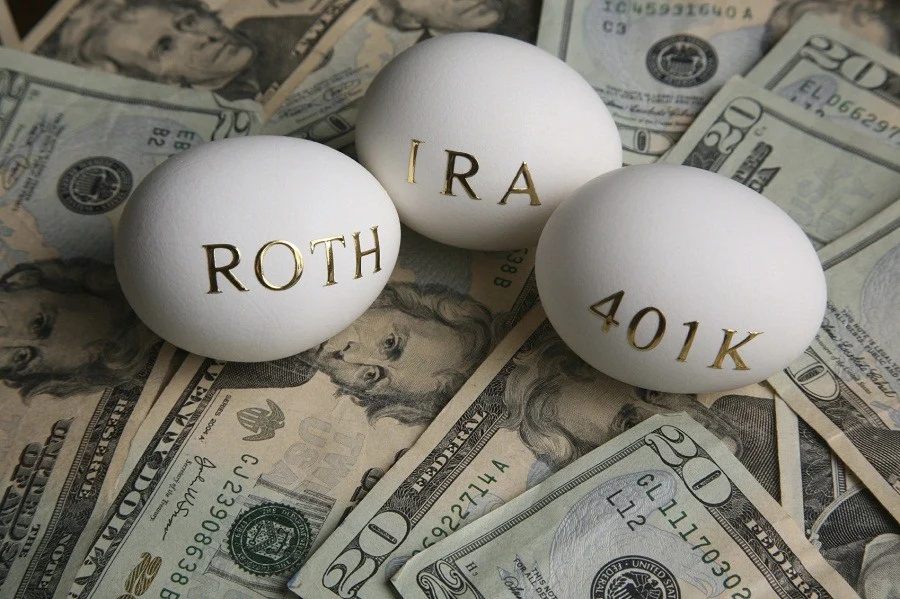
The Internal Revenue Service has officially released its updated contribution limits for retirement accounts for the 2027 tax year, providing financial advisors and individual savers with the definitive figures necessary to begin their strategic planning for the upcoming calendar. While some limits remain static, significant adjustments to 401(k) deferrals, catch-up provisions, and income phase-out thresholds offer a expanded landscape for tax-advantaged saving as the retirement planning industry navigates the ongoing implementation of the SECURE 2.0 Act.
The most prominent change for the average worker is an increase in the elective deferral limit for 401(k), 403(b), and most 457 plans, as well as the federal Thrift Savings Plan. In 2027, participants will be permitted to contribute up to $25,500, a $1,000 increase from the $24,500 limit currently in effect for 2026. This adjustment acknowledges the need to allow workers to shelter more of their income from taxation as they prepare for their post-career years, though it stands in contrast to the status quo for Individual Retirement Arrangements (IRAs).
According to the latest technical guidance, the contribution limit for IRAs will remain frozen at $7,500 for 2027. Similarly, the catch-up contribution allowance for IRA savers aged 50 and older will hold steady at $1,100. This pause in growth follows a period of aggressive inflation-based adjustments in recent years, including the increase implemented for the 2026 tax year. By finalizing these numbers well in advance, the IRS aims to provide taxpayers, plan sponsors, and financial professionals the stability required to adjust payroll withholdings and contribution strategies for the year ahead.
Catch-up contribution limits rise for older savers
One of the most complex areas of retirement planning remains the management of catch-up contributions, which are designed to allow older workers to accelerate their savings as they approach retirement. For 2027, the standard catch-up contribution limit for participants aged 50 and older in most defined contribution plans is set to increase to $8,500, up from the current $8,000. When combined with the standard elective deferral, this brings the total potential contribution for eligible older workers to $34,000.
Furthermore, the IRS has addressed the specialized "super catch-up" provision introduced by the SECURE 2.0 Act. This provision specifically targets workers in the 60-to-63 age bracket, offering them a higher catch-up allowance to encourage deeper savings during those final years of labor force participation. For 2027, this specific limit will rise to $11,750, up from the $11,250 cap in 2026. This tiered approach to catch-up contributions reflects the evolving legislative philosophy of incentivizing retirement readiness among older demographics through higher permissible deferrals.
Strategic management of these contributions has also become more nuanced due to income-based requirements. Under the rules mandated by SECURE 2.0, participants whose wages from the previous year exceed a specific indexed threshold are required to make their catch-up contributions on a Roth basis, meaning the contributions are made with after-tax dollars rather than pre-tax. The IRS has adjusted this threshold upward to $155,000 for 2027, up from $150,000. Consequently, any worker earning more than $155,000 in 2026 will be mandated to utilize the Roth option for all catch-up contributions in 2027.
Beyond individual contribution limits, the IRS also announced an increase in the ceiling for total contributions to defined contribution plans. This cap, which aggregates both employee elective deferrals and employer matching or profit-sharing contributions, will climb to $75,000 in 2027, up from $72,000. This $3,000 increase provides employers with more flexibility to incentivize employees through robust matching programs, particularly for high-earning individuals who may have previously hit the contribution ceiling.
IRA phase-outs by filing status
The IRS has also provided updated income phase-out ranges for both traditional IRA deductions and Roth IRA eligibility. These ranges are essential for high-income earners to understand, as they dictate the tax-deductibility of traditional IRA contributions and the ability to contribute directly to a Roth IRA. As these bands are indexed for inflation, they have shifted upward for 2027, effectively protecting more taxpayers from being pushed out of these tax-advantaged vehicles by cost-of-living salary adjustments.
For single filers and heads of household who are covered by a retirement plan at work, the phase-out range for deducting traditional IRA contributions will move to between $83,000 and $93,000, compared to the 2026 range of $81,000 to $91,000. This $2,000 upward shift in both the start and end of the phase-out band provides a larger window for middle-income earners to claim full or partial tax deductions on their retirement contributions.
For married couples filing jointly where the contributing spouse is covered by a workplace retirement plan, the phase-out range has been adjusted to $133,000 to $153,000. A different dynamic exists when only one spouse is covered by a workplace plan; in that scenario, the phase-out range for the non-covered spouse’s deductible IRA contributions remains significantly higher, now beginning at $250,000 and phasing out at $260,000.
The income eligibility requirements for Roth IRA contributions have also seen a corresponding increase. For single filers and heads of household, the ability to contribute to a Roth IRA will now phase out between $158,000 and $173,000, a move up from the $153,000 to $168,000 range seen in 2026. For married couples filing jointly, the phase-out range is now set at $250,000 to $260,000. Notably, the IRS guidance confirms that for married individuals filing separately, the phase-out range remains fixed at $0 to $10,000, as this provision is not subject to inflation-based indexing.
Charitable and long-term care limits
The IRS updates also include changes to specialized distributions, most notably for Qualified Charitable Distributions (QCDs). QCDs allow individuals aged 70½ and older to donate directly from their IRA to a qualified charity, effectively excluding the amount from their gross income. The annual cap on these distributions will rise to $114,000 for 2027, an increase from $111,000. Additionally, the once-in-a-lifetime election to make a QCD to a split-interest entity—such as a charitable gift annuity or a charitable remainder trust—will increase to $57,000, up from $55,000.
These adjustments are particularly relevant for retirees who are looking to satisfy their Required Minimum Distributions (RMDs) while simultaneously supporting charitable causes, as the QCD effectively lowers their adjusted gross income and can mitigate the tax impact of RMDs on Medicare premiums and other income-tested obligations.
Furthermore, the IRS has increased the limit on qualified long-term care distributions from defined contribution plans. These distributions, which allow for the tax-advantaged payment of certified long-term care insurance premiums directly from retirement assets, will rise to $2,700 in 2027 from $2,600.
Finally, the agency noted significant changes for lower-income savers. The Saver’s Credit, a tax credit available to low-to-moderate-income taxpayers who contribute to retirement plans, will see a structural shift. After 2026, the current iteration of the credit will be replaced by the "Saver’s Match" program, a federal matching contribution for qualifying individuals. The IRS notice indicates that the credit will apply exclusively to ABLE account contributions after 2026, with the new Saver’s Match framework taking over for retirement plans and IRAs. This transition marks a broader federal effort to shift from a tax-reduction incentive to a direct-subsidy model to encourage retirement savings among those with lower disposable income. As these changes take effect, financial planners will be tasked with re-evaluating the long-term projections and tax strategies for a wide spectrum of clients, from those just starting their careers to those managing significant retirement portfolios.
| Source | : | Finance Poetry |
| Author | : | rifanmuazin |
| Editor | : | Finance Poetry Editorial Team |