
Israeli Opposition Leader Gadi Eisenkot Tasked With Forming New Government, Threatening Netanyahu’s Tenure
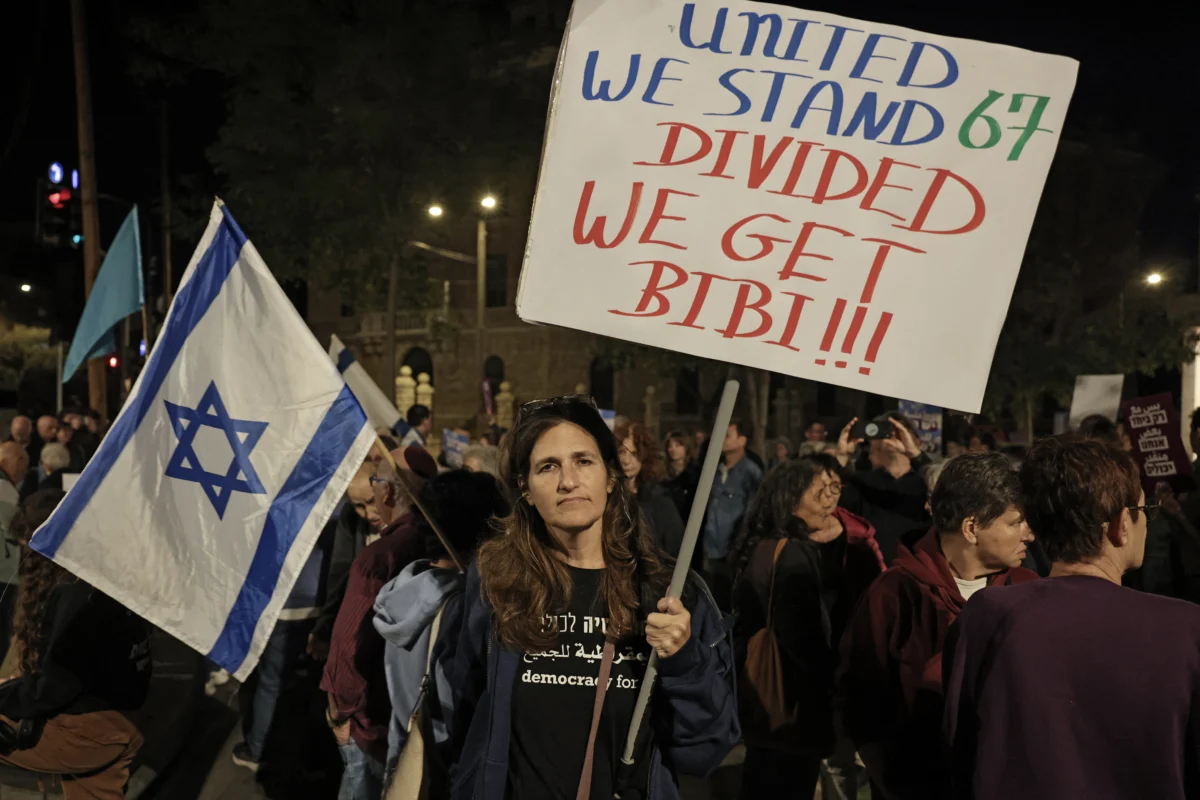
Israeli opposition leader Gadi Eisenkot has been given the critical opportunity to form a new government after Prime Minister Benjamin Netanyahu’s ruling coalition lost its parliamentary majority in the October elections, raising the possibility of an end to his long tenure in power. President Isaac Herzog selected the former military chief on Saturday following comprehensive consultations with political parties across the spectrum.
Eisenkot now has a mandatory 28-day window to cobble together a working coalition to form a government. If he fails to form a new administration within that initial period, he holds the option to seek a 14-day extension from the president.
"Now is the time to form a national emergency government. I will do everything to ensure we are worthy," Eisenkot, the leader of the Yashar party, posted on the social media platform X following his designation.
However, the 66-year-old political figure faces a deeply difficult and complex challenge. Many of the opposition parties that must unite to unseat Netanyahu hold sharply conflicting positions on crucial domestic and foreign matters, including national security, religious policies, and the ongoing Israeli occupation of Palestinian territory.
Neither Eisenkot nor Netanyahu currently commands an absolute 61-seat majority in Israel’s 120-member parliament, known as the Knesset. As a result, Arab-led parties hold a potentially decisive role in determining who governs Israel, even as Eisenkot and his prospective partners publicly refuse to rely directly on their formal support.
Political analysts are closely watching to see what paths remain open to Eisenkot and whether he can successfully navigate the fractured landscape to unseat Israel’s long-serving leader.
Can Eisenkot unite Israel’s divided opposition?
Eisenkot’s potential coalition framework spans a diverse ideological range. It encompasses his own Yashar party, the centre-left Democrats led by Yair Golan, Naftali Bennett’s centre-right Together party, and Avigdor Lieberman’s right-wing Yisrael Beiteinu, which translates to Israel Our Home.
Combined, these core opposition factions control 48 seats in the Knesset, which is well short of the 61-seat majority required to govern.
However, Arab-led parties—specifically Ra’am, also known as the United List, and the Joint List, which comprises Hadash, Ta’al, and Balad—jointly hold 19 seats. These parties have formally endorsed Eisenkot’s attempt to form a government. Their backing brings the broader anti-Netanyahu camp to a combined total of 67 seats.
The individual components of the Arab-led bloc represent distinct constituencies and political philosophies. Hadash operates as an Arab-Jewish party, Ta’al actively advocates for the political and civil rights of Palestinian citizens of Israel, and Balad demands equal rights for all citizens within the state.
Despite this numerical boost, Eisenkot has explicitly ruled out bringing Arab-led parties directly into his government as coalition partners. Meanwhile, Lieberman has repeatedly rejected the prospect of forming a minority administration that is dependent on their parliamentary support to survive. By contrast, Golan’s Democrats have shown a greater willingness to partner pragmatically with Ra’am and the Joint List.
"We must no longer accept Netanyahu’s racist division between Jewish votes and Arab votes," Golan stated in the wake of the national election.
How many seats does Netanyahu’s coalition have now?
Netanyahu’s religious-nationalist coalition has suffered a severe electoral decline, falling from the 64 seats it secured in the 2022 elections down to just 53 seats. This leaves his bloc eight seats short of a working majority in the Knesset.
Within this diminished bloc, Netanyahu’s Likud remains the largest individual party, capturing 27 seats, while Eisenkot’s Yashar won 21.
Netanyahu’s efforts to remain in power suffered an additional, critical setback when United Torah Judaism, a longtime ultra-Orthodox ally, declined to endorse him or any other candidate during the consultations held by President Herzog.
While this unexpected move significantly damages Netanyahu’s immediate prospects of regaining power, it did not completely rule out the ultra-Orthodox party supporting him in future coalition negotiations. Such support would depend on whether their specific political and religious demands are met, particularly regarding exemptions from compulsory military service for ultra-Orthodox religious students—an exemption that the party staunchly defends and fiercely rejects altering.
What is a minority government?
If Eisenkot ultimately proves unable to put together a traditional, majority coalition, an alternative path involves leading a minority government backed by Arab parties from outside the formal cabinet structure.
A minority government is formed when the political parties holding cabinet ministerial positions do not collectively control a majority of seats in the parliament. Instead, they must depend on external support from lawmakers sitting outside the governing coalition to remain in power and pass vital legislation.
Eisenkot could theoretically establish such an administration with his core four-party bloc, relying instead on external parliamentary support from Ra’am and the Joint List. Under this specific arrangement, the Arab-led parties would not receive cabinet portfolios or formally join the coalition government.
Instead, they could negotiate specific policy concessions in exchange for providing the necessary parliamentary votes. A similar precedent was set in 2021, when Ra’am joined a government led by Naftali Bennett, marking a historic milestone as the first independent Arab party to participate directly in an Israeli governing coalition.
That administration ultimately collapsed after just 18 months, largely driven by deep disagreements over illegal Israeli settlements in the occupied West Bank and the broader question of Palestinian statehood. The vast majority of Israeli political parties do not support the creation of a sovereign Palestinian state under a two-state solution framework.
Netanyahu, who has remained in power for most of the past two decades, has openly and consistently rejected Palestinian statehood while aggressively pushing for settlement expansions, which international bodies view as the primary obstacles to Palestinian self-determination. Under international law, all Israeli settlements in the occupied territories are considered illegal.
What are the other possible paths to forming a government?
Beyond the prospect of a minority administration, Eisenkot could attempt to secure a traditional parliamentary majority by bringing Israel’s two ultra-Orthodox parties, Shas and United Torah Judaism, into his governing coalition.
Combined, Shas and United Torah Judaism hold 13 seats. Integrating them would provide Eisenkot’s bloc with precisely the 61 seats required for an absolute majority in the Knesset.
However, forging such an alliance would necessitate difficult compromises regarding the military conscription exemptions currently granted to ultra-Orthodox religious students—an issue that has historically fractured Israeli politics. Eisenkot and his key allies, particularly Lieberman, have long criticized these sweeping exemptions. Even so, Lieberman has recently indicated a potential openness to political compromise on the matter.
While United Torah Judaism declined to endorse Netanyahu during the presidential consultations, Shas remained loyal, backing the embattled prime minister.
Another theoretical option is the formation of a broader unity government. This arrangement would involve Eisenkot’s Yashar, Bennett’s Together party, Lieberman’s Israel Our Home, and Netanyahu’s Likud.
Such a grand alliance would command a comfortable 67 seats in parliament, but it would require Eisenkot and his partners to abandon their central, defining election pledge to remove Netanyahu from office.
If Eisenkot fails to build a government within the designated 28-day period and is unable to secure an extension, President Herzog could turn to Netanyahu and give him the opportunity to form a governing coalition.
Should both leaders ultimately fail to produce a viable administration, the parliament could nominate an alternative candidate. If no government successfully emerges after a total process lasting 100 days, Israeli citizens could find themselves heading back to the polls for fresh elections.
Why does this matter?
The ongoing negotiations will determine much more than just who occupies the office of Israel’s next prime minister. They will decide which political parties control critical government ministries and actively shape national policies regarding the economy, military conscription, and the occupied Palestinian territory.
Several prominent members of Eisenkot’s opposition bloc have previously held senior government positions, including roles in the diverse coalition that temporarily removed Netanyahu from power in 2021.
Naftali Bennett, who served as prime minister from 2021 to 2022, has a long record of opposing the establishment of a Palestinian state and has actively advocated for the formal annexation of large parts of the occupied West Bank. During Israel’s 11-day military campaign in Gaza in May 2021, Bennett—acting then as an opposition politician—publicly backed Netanyahu’s military offensive in the Palestinian enclave, a conflict that resulted in the deaths of more than 250 Palestinians.
Meanwhile, Avigdor Lieberman served as finance minister in Bennett’s government and previously held the crucial defence portfolio under Netanyahu. Lieberman has previously proposed swapping certain Arab communities living inside Israel proper for Israeli Jewish settlements located in the occupied West Bank as part of a final-status peace agreement with the Palestinians.
Lieberman’s party strongly backs illegal settlement expansion, including the contentious E1 project, and the full annexation of Area C, which constitutes 60 percent of the occupied West Bank and is already under full Israeli military control. The E1 project, designating a 12-square-kilometer corridor with thousands of planned housing units, is designed to physically cut the West Bank into two separate geographical parts.
Gadi Eisenkot himself served inside Netanyahu’s wartime cabinet before ultimately stepping down from the government following deep disagreements over the conduct of the military campaign in Gaza. While Eisenkot has not opposed the military operations, he has openly criticized Netanyahu for prioritizing personal political survival over broader national security considerations.
Regarding the political future, Eisenkot has previously dismissed the concept of a Palestinian state as "delusional," while signaling his support for "strengthening" illegal settlements in the occupied territories.
| Source | : | Finance Poetry |
| Author | : | rifanmuazin |
| Editor | : | Finance Poetry Editorial Team |