
Rheinmetall shares plunge 16% after outlook cut as military contracts stall
The announcement marks the second time this year that the Dusseldorf-headquartered firm has had to lower its outlook. The turbulence follows an earlier setback in August when the German government abruptly scrapped plans to build naval warships in what would have stood as Rheinmetall’s single largest procurement order since the Second World War.
Under the newly revised projections, Rheinmetall now anticipates that its sales will climb to approximately 13.2 billion euros, equivalent to roughly $14.9 billion, for the 2026 financial year. This represents a downward adjustment from its previously communicated outlook range, which had targeted between 13.7 billion and 14.2 billion euros. Furthermore, the company expects to post an operating margin of roughly 18.5%, down from the 19% margin previously anticipated by management.
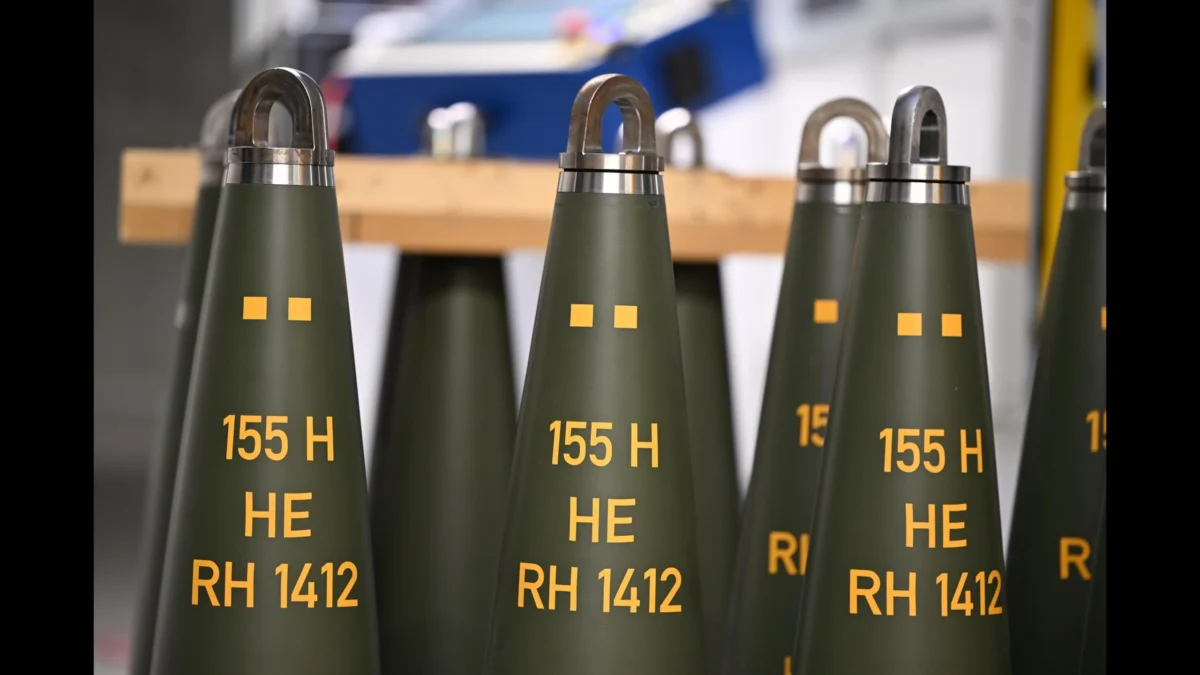
Company officials explained that the decision to revise the 2026 guidance stems primarily from administrative and technical hurdles. Specifically, Rheinmetall pointed to delays affecting the German military’s Arminius project, a high-profile military procurement initiative centered around the acquisition of Boxer armored vehicles, alongside persistent setbacks encountered during acceptance testing for artillery ammunition.
The Arminius contract, which is now formally expected to be commissioned next year, involves combat and support vehicles manufactured by ARTEC. The enterprise operates as a joint venture between Rheinmetall and the prominent Franco-German defense group KNDS.
The market reaction to the guidance cut was swift and severe. Rheinmetall shares closed down 16.1% on Thursday, extending a brutal downward trajectory that has wiped out roughly half of the company’s market value over the course of the year.
This steep correction represents a dramatic reversal of fortune for the defense contractor. Over the prior four years, Rheinmetall enjoyed an average annual share price gain of 119%, transforming into one of the prime corporate beneficiaries of sharply ramped-up military spending by governments across Europe following Russia’s full-scale invasion of Ukraine in 2022.
Financial analysts were quick to assess the broader implications of the announcement. Analysts at RBC characterized the development as "clearly negative," highlighting deep concerns regarding the timing and scope of the Boxer program and the potential drag it could exert on the company’s medium-term trajectory. They warned that the news risks amplifying broader anxieties among institutional investors regarding traditional defense technology hardware versus emerging defense paradigms.
"We suspect bears will see this negatively as part of the ongoing ‘new-tech vs old-tech’ sector debate," the RBC analysts noted in a research note.
Beyond top-line sales and operating margins, Rheinmetall acknowledged that the delays plaguing the Boxer contract will inevitably push expected advance payments further out, deferring them into 2027. This shift will inevitably impact the company’s previous cash conversion target of over 40%, although management maintained that it still expects to generate a positive operating free cash flow by the close of the current year.
Compounding these pressures, the defense contractor also flagged supplementary delays affecting expected fourth-quarter revenue streams derived from newer business operations. In particular, management pointed to headwinds within its ongoing partnership with Destinus, a Dutch defense technology firm specializing in high-speed aerospace and drone innovations.
Ironically, the gloomy guidance revision coincided with the release of otherwise improving operational financial metrics. In its latest earnings report, Rheinmetall posted third-quarter sales that surged 32% year-on-year to reach 3.15 billion euros. Concurrently, the company’s operating profit jumped by an impressive 62% to hit 553 million euros.
Commercial momentum also remained robust on the booking front. New order intake for the quarter came in at 2.89 billion euros, propelling Rheinmetall’s total order backlog to a staggering 78 billion euros by the conclusion of the third quarter.
While the rosy operational numbers were largely overshadowed by the subsequent downgrade to forward guidance, analysts at Citi still acknowledged the fundamental strength of the underlying business, describing the quarterly numbers as "a strong set of Q3 results."
| Source | : | Finance Poetry |
| Author | : | rifanmuazin |
| Editor | : | Finance Poetry Editorial Team |