
Natural Gas Spot Prices Split Sharply as Appalachia and Northeast Slump While Midwest and Texas Rally
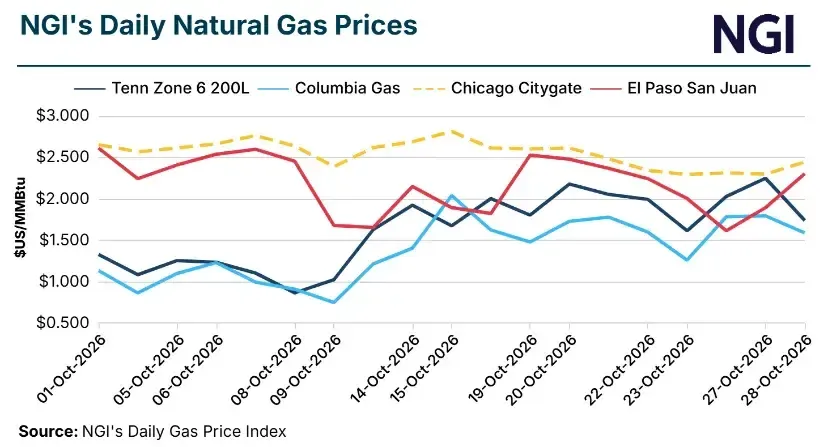
Natural gas spot prices experienced a dramatic split in trading on Wednesday, with regional market conditions pulling in opposite directions across the United States. While severe downward pressure slammed values in the nation’s premier producing basins in Appalachia and major demand centers in the Northeast, robust upward momentum materialized across the Midwest, the Rockies, and large swathes of Texas. The stark regional divergence ultimately balanced out the broader macroeconomic picture, leaving the national average virtually unchanged for the session, according to data from the Daily Gas Price Index.
The mid-week trading session underscored the localized nature of natural gas pricing dynamics, where pipeline constraints, regional weather patterns, storage inventories, and localized supply-demand fundamentals can create vastly different outcomes within the same national grid. Market participants tracking the Markets Report and Natural Gas Prices sections noted that while some regions suffered deep losses amid sluggish demand and ample local output, others saw strong buying interest drive substantial market rallies.
At a Glance:
The overarching narrative of Wednesday’s trading session was one of extreme polarization. In the Northeast and the Appalachian basin—regions historically known for prolific shale gas extraction and substantial production volumes—spot prices took a severe beating. Sellers in these areas faced intense downward pressure as production remained robust, regional takeaway capacity was tested, and near-term weather forecasts failed to inspire robust heating or cooling demand. Without immediate catalysts to absorb the heavy volumes being pumped out of the ground, regional basis differentials widened significantly to the downside, dragging down cash markers across Pennsylvania, West Virginia, and surrounding delivery points.
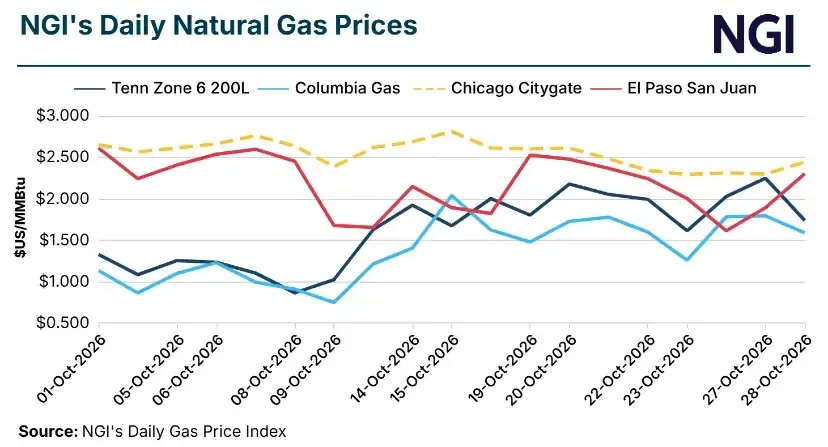
Conversely, market conditions presented a starkly different picture as traders looked toward the Midwest, the Rocky Mountains, and the Texas market hubs. In these regions, spot prices rallied visibly. In Texas, robust burns for power generation, combined with steady industrial demand and localized pipeline maintenance or logistical adjustments, helped underpin firmer pricing. Meanwhile, the Midwest and the Rockies benefited from their own localized supply-demand balances, keeping regional numbers in positive territory and offsetting the heavy losses registered in the eastern half of the country.
This geographic tug-of-war prevented the broader national market from establishing a clear directional trend. Because the sharp sell-offs in the East were neatly counterbalanced by the impressive gains seen in the central and southern corridors, the composite national average ended the day essentially flat. For energy market analysts, the session served as a clear reminder of how localized pipeline footprints and regional weather deviations can decouple regional pricing from the broader futures curve on any given day.
As the market digested Wednesday’s price movements, energy traders and analysts continued to monitor fundamental drivers heading into the latter half of the week. Regional storage builds, shifting weather models, and pipeline operational updates remain at the forefront of traders’ concerns. In Appalachia and the Northeast, market participants will be watching closely to see if production shut-ins or recovering seasonal demand can staunch the bleeding, while operators in Texas and the Midwest assess whether their recent price strength has legs to carry through the remainder of the business week.
The report was compiled by Jodi Shafto, a Senior Natural Gas Reporter based in Charleston, South Carolina. Shafto, who joined NGI in October 2023, has covered United States energy markets extensively since 2005, serving in various capacities as a reporter, editor, and market analyst. Her extensive background in covering complex energy market structures provides ongoing depth to the daily tracking of natural gas pricing movements across North America.
| Source | : | Finance Poetry |
| Author | : | rifanmuazin |
| Editor | : | Finance Poetry Editorial Team |