
Navigating the Complex Landscape of U.S. Housing Construction: Who Is Building and Who Is Falling Behind
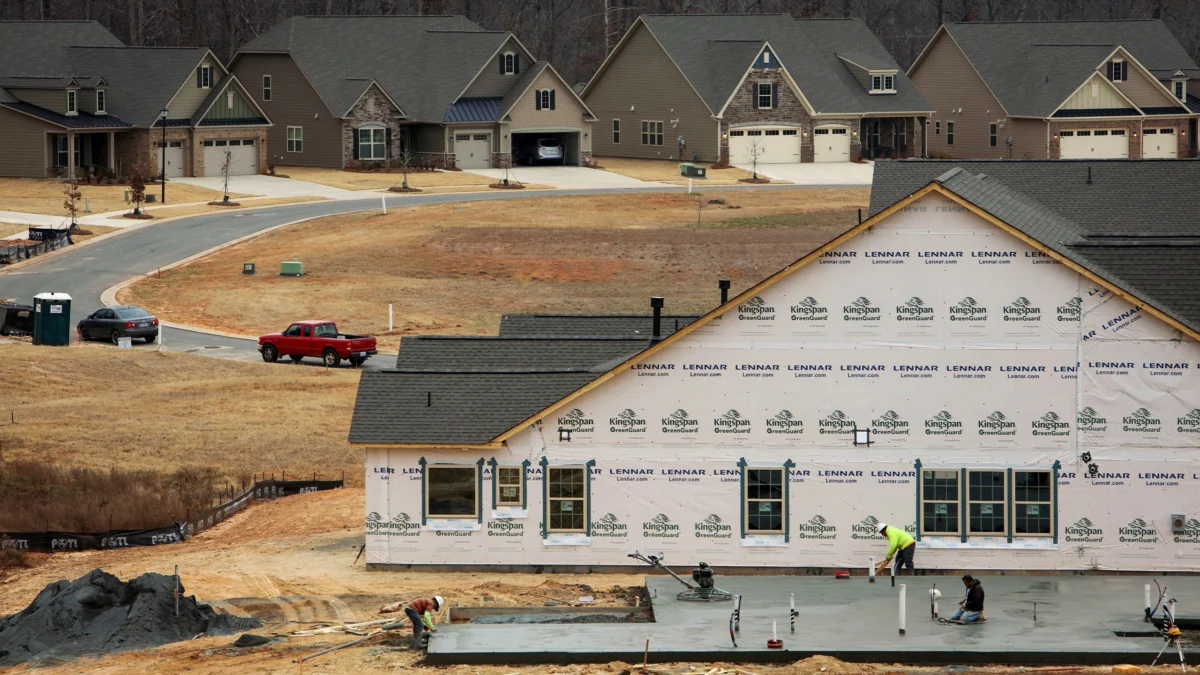
In an era defined by deeply strained housing affordability and a chronic shortage of inventory, new-home construction stands out as one of the primary mechanisms for easing the market crunch. Yet, as the real estate sector grapples with high interest rates and shifting economic currents, the pace of development varies wildly across the country. While some regions are aggressively pushing forward with new residential pipelines, others are finding themselves stuck in neutral or actively losing ground.
Recent data paints a fascinating portrait of this geographic divergence. South Carolina, Idaho, and North Carolina currently lead the nation in permitting new homes on a per-capita basis, according to a comprehensive study released by the Lied Center for Real Estate at the University of Nevada, Las Vegas (UNLV). The researchers evaluated U.S. Census Bureau data comparing the first eight months of the year to the same period in 2025, revealing stark contrasts in regional momentum. While the Southeast and parts of the Mountain West continue to demonstrate robust planning activity, the traditionally more affordable Midwest has largely stagnated, and several long-standing darlings of the Sun Belt are beginning to see their permitting numbers slip.
The implications of these trends extend far beyond local municipal offices. Because housing supply dictates market dynamics long before hammers ever hit nails, today’s permitting activity serves as a crystal ball for tomorrow’s home prices and rental rates.
"The supply side will determine what housing or rent prices people will face in 18 to 24 months," explains study co-author Nicholas Irwin. "And through political action, community members can encourage more development and put pressure on elected leaders to become accountable for rising housing prices."
Despite the importance of laying groundwork for future inventory, the broader market environment remains exceptionally difficult for developers. Nationally, new residential permits fell in September, dropping 5.2% month-over-month and 7.4% year-over-year to an annualized rate of 1.22 million units. Faced with elevated borrowing costs and cautious consumers, builders in many markets have been forced to lean heavily on financial concessions—such as mortgage rate buydowns—to attract hesitant buyers. There is little question that homebuilder confidence has taken a hit amid a remarkably stubborn economic climate.
For the first nine months of the year, overall new-home sales sit 2.9% below where they stood in 2025, according to Realtor.com senior economist Joel Berner. Even so, Berner points out that housing permits have frequently acted as the "lone bright spot" in an otherwise challenging set of economic indicators, signaling that builders are still positioning themselves for future activity even if current sales are sluggish.
Housing affordability was top of mind for voters in numerous swing states during recent elections, prompting both political parties to voice support for regulatory reforms aimed at making residential construction easier. State-level legislative changes enacted this year could ultimately clear the runway for more homes to break ground, with particular emphasis on easing restrictions for accessory dwelling units (ADUs) to help expand housing options within established neighborhoods.
Building Permits and Affordability
To evaluate true construction momentum relative to population size, the UNLV study measured permits issued per resident. In total, cities across the United States issued 968,187 housing permits during the studied timeframe, translating to roughly 2.83 permits per 1,000 residents. While that aggregate figure remains essentially flat compared to the same period in 2025, it still represents a 4.1% decline from the corresponding months in 2023, underscoring the lingering friction in the broader development pipeline.
South Carolina claimed the top spot in the UNLV ranking, issuing 6.07 housing units per 1,000 residents—a 5% increase over the previous year. Idaho closely followed, maintaining a brisk pace of 6.4 units per 1,000 residents, while North Carolina rounded out the top three with 5.77 units per 1,000 residents. Notably, these same three states also dominate a separate Realtor.com analysis highlighting the nation’s top new-construction metropolitan markets.
"These states combine fast-growing economies with favorable new-construction environments to bring homebuyers a larger share of new builds on the market," Berner notes.
At the same time, traditional migration magnets are seeing shifts in their trajectories. While populous states like Florida, Texas, and Arizona still capture a high volume of raw permits and remain safely within the top ten states overall, they have notably slowed their pace of permitting relative to their explosive growth in prior years. Meanwhile, states traditionally known for slower or more restrictive development—such as Rhode Island, New York, and Massachusetts—sit near the bottom in terms of total per-capita permits, yet they have posted notable percentage jumps in their local permitting activity.
Across the country, the divide is nearly evenly split. Twenty-six states and the District of Columbia permitted more homes than they did at this point in 2025, while the remaining 24 states saw declines. The most dramatic retreats occurred in Nevada, where the permit-to-resident ratio plunged by 29%, as well as Vermont and Connecticut, both of which registered 18% drops.
Nevada, which saw its permitted units fall from 12,662 last year to 8,986 in the current year, joins North Dakota in a concerning category: states permitting fewer homes than their projected household growth. Economists warn that such imbalances could spell severe trouble for long-term housing affordability if population growth continues to outpace new supply.
A breakdown of the national permit data reveals that single-family structures continue to make up the lion’s share of planned development, accounting for roughly 64% of all permitted units. Small-scale missing middle housing, consisting of two- to four-unit properties, represents about 3.5% of the total, while multifamily buildings featuring five or more units make up the remaining 32%.
A Difficult Market for Homebuilders
The broader housing data throughout the year tells a consistent story of an arduous market for developers, offering few signs of immediate relief. Mortgage Bankers Association Chief Economist Mike Fratantoni previously projected that mortgage rates would remain sticky, hovering around 7.3% for the remainder of the year and staying above the 7% threshold well into 2027.
Concurrently, National Association of Realtors Chief Economist Lawrence Yun revised his existing-home sales forecasts downward, anticipating only a modest 4% bump in sales volume compared to the previous year.
As homebuilders grapple with these financial hurdles, they are increasingly forced to deploy creative incentives to entice buyers. However, they are also meeting stiffer competition from a growing inventory of existing homes hitting the market. This dynamic is particularly evident in regions like the Midwest, which has historically served as a bastion of affordability but is currently experiencing softer overall buyer demand. Escalating costs for both raw land and construction labor further complicate the picture, making it increasingly difficult for builders to price their new inventory competitively.
Yet, the fact that developers are continuing to secure permits for a substantial number of units reveals a nuanced perspective on market psychology. A building permit does not guarantee that construction will commence immediately; rather, it acts as a formal signal of future intent and strategic planning.
"Builders are facing diminished buyer demand and high input costs, causing them to slow down when it comes to beginning and finishing projects. But permitting them has held relatively steady," Berner observes. "We take this as a sign that builders expect conditions to turn around in the near future, and they want to be ready to capitalize when they do."
The UNLV study underscores how profoundly affordability has deteriorated across large swaths of the country since 2018, reinforcing the reality that expanding the housing stock is the single most critical step toward restoring market equilibrium. Without a sustained commitment to clearing regulatory bottlenecks and encouraging residential development, local communities will continue to struggle with pricing pressures that lock everyday buyers and renters out of the market.
"Alleviating challenges related to the housing crisis really comes down to a city’s ability to actually build housing," says report co-author Shawn McCoy. "People need to be able to afford their home, but if they can’t find a home to rent or buy at all, there’s going to be a problem."
| Source | : | Finance Poetry |
| Author | : | rifanmuazin |
| Editor | : | Finance Poetry Editorial Team |