
November Natural Gas Futures Extend Sell-Off as Warm Weather Forecasts Point to Sluggish Heating Demand
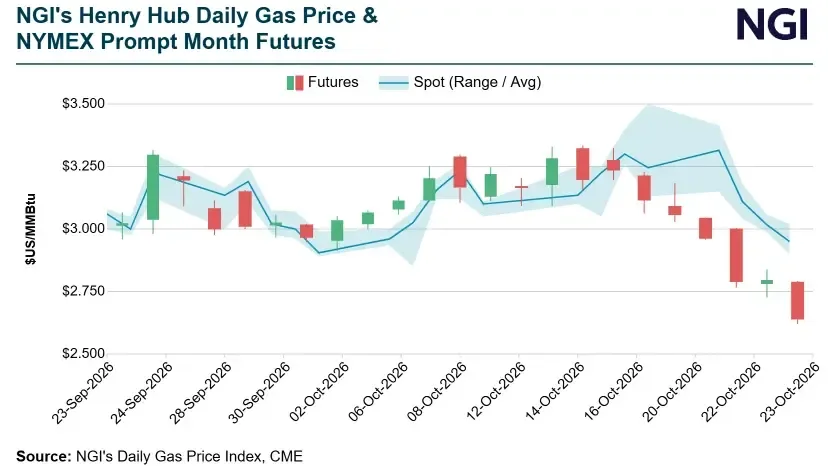
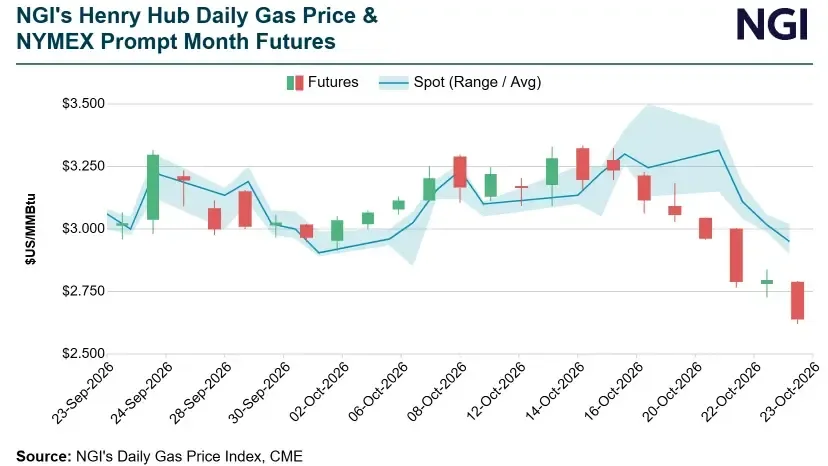
November natural gas futures capped a punishing week on Friday, extending their sharp sell-off as increasingly warm weather forecasts pointed toward sluggish heating demand and a potentially growing supply cushion that could keep prices under heavy downward pressure as the market transitions deeper into the winter injection and withdrawal cycle.
The latest session losses underscore a broader sentiment shift across energy markets, where macroeconomic fundamentals, inventory builds, and medium-range meteorological models have combined to weaken the bullish thesis that traders often rely on as the calendar turns toward late autumn. As market participants evaluated the updated weather outlooks heading into the weekend, the persistent lack of early-season heating degree days weighed heavily on the NYMEX prompt month and broader natural gas price indices.
The downward momentum observed on Friday reflects a continuation of market dynamics that have been building throughout the autumn shoulder season. Mild temperatures expected across major population centers in the United States signal that residential and commercial demand for natural gas will likely remain muted in the near term. Without an early surge in heating consumption, utilities and midstream operators face fewer incentives to draw down storage inventories aggressively, leaving storage deficits or surpluses on a trajectory that favors well-supplied domestic markets.
Market analysts note that the psychological impact of weather forecasts carrying above-normal temperatures into late October and early November often triggers long liquidation and speculative selling. Energy traders monitoring the prompt-month contracts adjust their positions rapidly when weather models persistently trend warmer than 30-year climate normals. This dynamic was visibly reflected in recent trading ranges, where spot prices at Henry Hub and futures contracts across the forward curve experienced broad-based downward pressure.
The growing supply cushion has become a central focal point for market participants tracking the weekly storage reports issued by the U.S. Energy Information Administration. Robust domestic production, combined with mild injection-season weather patterns earlier in the year, has allowed storage inventories to build comfortably relative to historical averages. If warmer-than-average conditions persist through November and into the early winter months, the surplus of natural gas in underground storage facilities could expand further, removing any immediate fear of winter scarcity and keeping price volatility anchored to the downside.
This expanding supply buffer acts as a stabilizing force against sudden price spikes, but it also depresses the baseline valuation of natural gas futures during periods when weather-driven demand fails to materialize. Producers and marketers navigating the current pricing environment must contend with a market that remains highly sensitive to meteorological shifts. Even minor adjustments in six-to-ten-day and eight-to-fourteen-day weather outlooks can provoke outsized reactions among algorithmic and speculative traders, amplifying intraday price swings.
The week-ending sell-off also reverberates through physical spot markets, where daily pricing points across major U.S. basins and market hubs continue to reflect regional supply gluts and constrained takeaway capacity in certain producing regions. While regional constraints can occasionally cause localized price blowouts or deep discounts, the overarching national benchmark is governed primarily by the macroeconomic balance between total domestic supply—comprising production and Canadian imports—and total demand, which encompasses domestic consumption, pipeline exports to Mexico, and feedgas deliveries to liquefied natural gas export terminals.
Liquefied natural gas export demand remains a critical pillar of support for the domestic natural gas market, absorbing significant volumes of gas and helping to balance the domestic supply-demand equation. However, even robust international demand and steady feedgas flows to Gulf Coast export facilities have not been entirely sufficient to offset the domestic bearishness introduced by mild weather forecasts and comfortable storage inventories. When domestic heating demand stalls out due to unseasonably warm conditions, the export sector must work exceptionally hard to absorb excess molecules that would otherwise back up into storage reservoirs.
As the market looks ahead to the remainder of the autumn shoulder season and the official kickoff of the winter withdrawal season, attention will remain laser-focused on upcoming weather runs and weekly inventory data. Market participants will be parsing every update from meteorological agencies to determine whether a sudden shift toward colder patterns is on the horizon or if the current mild regime will persist. Until a definitive weather catalyst emerges to alter the supply-demand balance, natural gas futures are expected to remain vulnerable to further downside pressure, with traders closely monitoring key technical support levels to gauge whether the recent sell-off has fully priced in the current fundamental outlook.
| Source | : | Finance Poetry |
| Author | : | rifanmuazin |
| Editor | : | Finance Poetry Editorial Team |