
Natural Gas Spot Prices Tumble Ahead of Weekend Amid Sluggish Autumn Demand and Rebounding Production
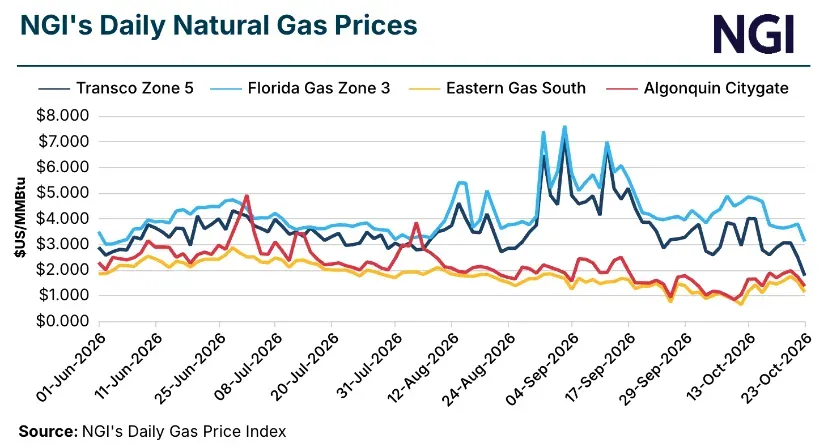
Natural gas spot prices suffered a sharp downturn on Friday, dragged lower by a combination of recovering domestic production and stubbornly sluggish seasonal demand as the market headed into the weekend. The broad-based retreat affected trading hubs across the United States, though the most severe downward pressure and steepest losses were heavily concentrated in the Southeast and the Appalachian region.
Physical natural gas markets found themselves struggling to locate any meaningful buying support as traders evaluated the dual headwinds of rising output from key supply basins and a quiet autumn weather pattern that failed to ignite substantial heating or cooling loads. With mild temperatures prevailing across large swathes of the country, regional utilities and industrial consumers largely stayed on the sidelines, leaving physical spot markets vulnerable to quick downward adjustments.
The late-week sell-off highlights the delicate balance currently governing regional gas balances. As upstream operators continue to restore production volumes following previous maintenance events and localized freeze-offs or infrastructure constraints, the incremental supply is quickly colliding with a shoulder-season demand lull. Without weather-driven extremes to absorb the extra volumes, regional pipeline grids experienced loose supply conditions, forcing sellers to slash prices to clear physical transactions before the weekend closure.
At a Glance:
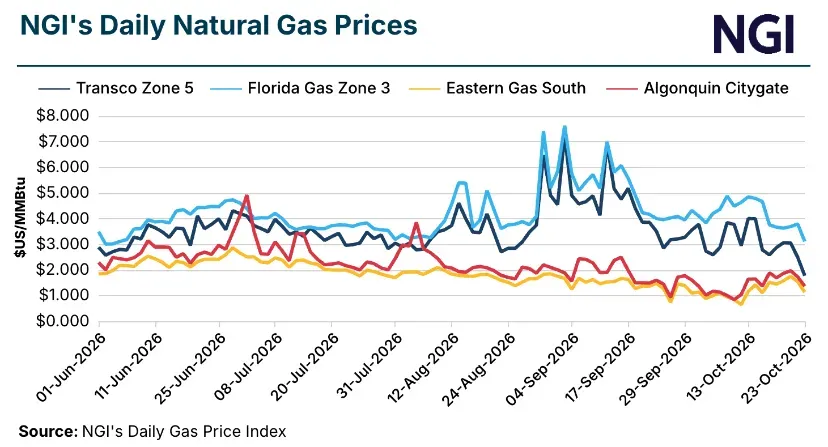
Regional hubs heavily tied to Appalachian supply and Southeast distribution channels bore the brunt of the selling pressure. Markets such as Transco Zone 5, Florida Gas Zone 3, Eastern Gas South, and the Algonquin Citygate all reflected the broader sentiment shift, as physical quotes adjusted downward to mirror the looser fundamental picture.
In Appalachia, the rapid normalization and growth of local production have continually tested the takeaway capacity of regional pipelines. When seasonal demand dips between the peak summer air-conditioning season and the onset of winter heating requirements, the abundant local output frequently becomes trapped or heavily discounted within the basin, pulling down regional benchmarks. Similarly, Southeast markets facing mild autumn weather saw little urgency from power generators or local distribution companies to secure incremental supplies for the immediate weekend burn.
Market observers noted that Friday’s price action was characteristic of a market caught in transition. The shoulder season inherently lacks the strong directional catalysts provided by intense summer heatwaves or deep winter polar vortexes. Consequently, marginal shifts in daily production figures or minor deviations in short-term weather forecasts can trigger magnified pricing responses across physical trading hubs.
As market participants wrapped up the trading week, the overarching narrative remained defined by ample near-term availability and a lack of aggressive consumption. While market analysts continue to look ahead to the winter strip for potential volatility and price support, the immediate physical landscape underscores a market well-supplied and in search of a more durable demand signal.
| Source | : | Finance Poetry |
| Author | : | rifanmuazin |
| Editor | : | Finance Poetry Editorial Team |