
November Natural Gas Futures Find Relief From Short Covering and Rebounding LNG Demand Ahead of Expiration
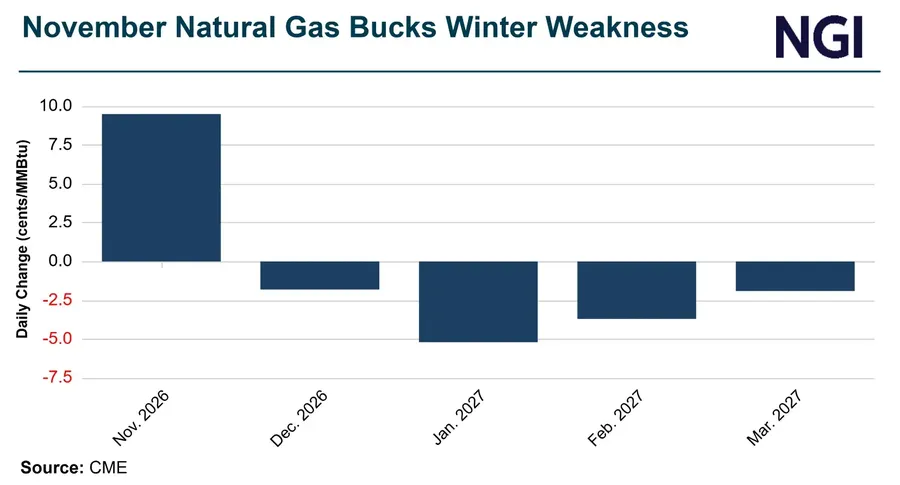
Natural gas futures found a measure of relief on Tuesday, managing to claw back some ground following a steep and punishing selloff. The upward pressure came primarily from short covering ahead of the November contract’s expiration, alongside modestly cooler weather model revisions and a welcome rebound in liquefied natural gas (LNG) feedgas demand.
The market dynamics on Tuesday highlighted the high-stakes positioning typical of a front-month contract rolling off the board. Traders holding short positions moved to cover their commitments, triggering a corrective bounce after days of downward momentum. Compounding this technical recovery were shifting weather forecasts that hinted at slightly cooler temperatures on the horizon, raising expectations for upcoming heating demand as the shoulder season transitions toward winter. Additionally, a steady recovery in LNG feedgas deliveries provided fundamental support, signaling that robust international demand continues to pull vital volumes toward export terminals along the Gulf Coast and elsewhere.
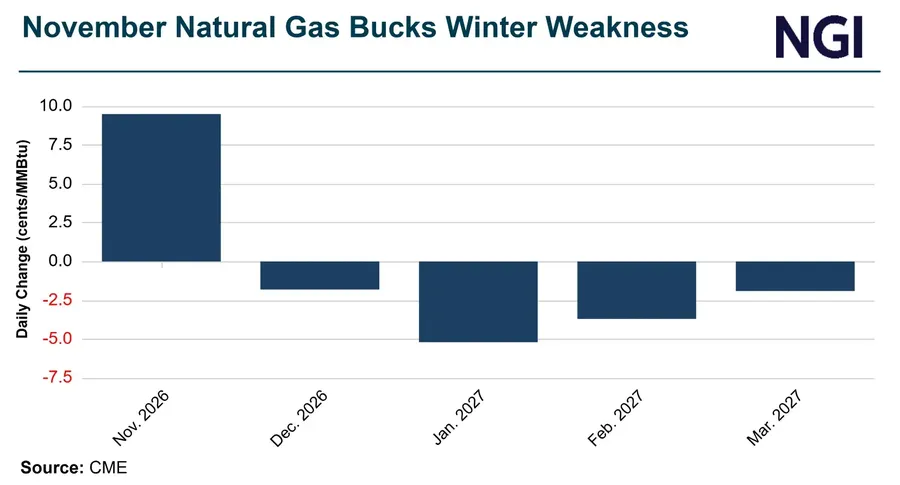
Market watchers and industry participants closely tracked the CME data, which illustrated a bifurcated pricing environment across the futures curve. While the expiring front-month contract experienced a late-stage rally driven by prompt-cycle mechanics, the broader forward curve told a more cautionary tale. Contracts spanning from December through March faced continued downward pressure, reflecting underlying market perceptions that early-winter weather risks have yet to materialize in a way that warrants sustained bullish exuberance across the broader heating season.
At a Glance:
The session underscored the delicate balance currently governing North American natural gas markets. On one hand, robust production levels and comfortable storage inventories relative to historical averages have kept long-term bears in control of the winter strip. On the other hand, the day-to-day volatility of prompt-month trading—exacerbated by expiration logistics, weather model fluctuations, and the dynamic pulse of export facility demand—frequently introduces sharp, tactical rallies that can catch unprepared market participants off guard.
The interplay between domestic supply fundamentals and international export requirements remains a critical narrative for energy markets. LNG feedgas demand has historically acted as a reliable floor for prices during periods of domestic oversupply, as global buyers continue to absorb substantial volumes of U.S. natural gas to fuel international energy needs. When feedgas flows dip due to facility maintenance or pipeline constraints, the domestic market often feels the bearish impact immediately. Conversely, any swift recovery in these volumes—as observed heading into Tuesday’s trade—tends to provide immediate psychological and physical relief to a market eager for demand-side catalysts.
At the same time, weather forecasting models continue to serve as the ultimate wild card for natural gas traders. Minor adjustments in temperature projections, particularly those shifting toward cooler anomalies in key population centers, can rapidly alter heating degree day calculations. While Tuesday’s weather revisions were described as modest, they were nonetheless sufficient to align with short-covering incentives and reinforce the day’s positive price correction.
As the market turns its attention past the November expiration, participants will continue to monitor the progression of storage injections, production trends out of major shale basins, and the evolving weather outlooks for the peak winter heating months. The divergence between the front-month contract and the rest of the winter strip underscores a market that is simultaneously grappling with immediate prompt-cycle tightness and a more comfortable supply outlook looking further down the road.
| Source | : | Finance Poetry |
| Author | : | rifanmuazin |
| Editor | : | Finance Poetry Editorial Team |