
Nvidia Reports Strong Third-Quarter Earnings and Raises Fiscal 2028 Guidance Despite Leadership Upheaval and New U.S. Export Controls
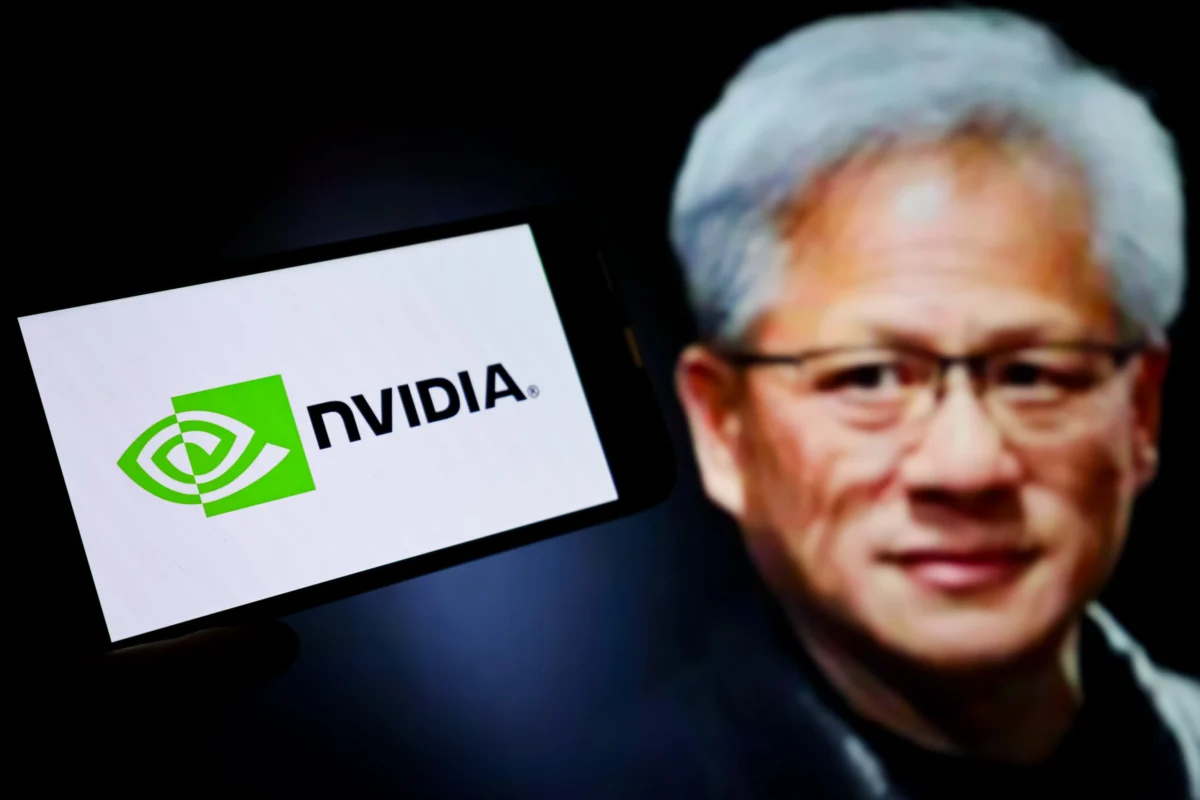
Analysts expect uncertainty around Nvidia’s future to linger despite another impressive earnings beat, noting that much of the third quarter was already locked in before the turmoil that peaked in Jensen Huang’s resignation as chief executive officer.
The chipmaking giant reported third-quarter revenue of $115.84 billion, sailing past the average Wall Street expectations of $109.10 billion by more than $6 billion. Furthermore, Nvidia issued a fourth-quarter revenue guidance of $130 billion, easily topping the $125.1 billion consensus projected by analysts, according to data from LSEG.
Part of that sequential increase reflects an extra week included in the fiscal fourth quarter calendar. According to estimates from Melius Research, this additional week accounts for roughly $9 billion to $10 billion of the bump. Demonstrating immense confidence in its ongoing business trajectory, the company also lifted its fiscal 2028 growth forecast to 75% up from its previous 70% target, even while operating with China entirely excluded from its data center compute revenue outlook.
Market observers were quick to praise the company’s resilience in the face of executive changes. Josh Gilbert, lead analyst for Asia Pacific and the Middle East at eToro, noted that the numbers reflect a collective workforce operating at full throttle rather than a company merely trying to steady the ship. He added that the performance acts as a clear signal from management that next year can run smoothly even without Jensen Huang at the helm.
Still, even with the quarterly financial results that he described as nothing short of astonishing, Gilbert cautioned that investors will still be left with the underlying uncertainty of who and what comes next for the corporate leadership.
In his first public statement since resigning from his post last week, Huang stated prior to the earnings release that he remained open to returning to the company under the right circumstances. However, during the subsequent earnings call, the chair of Nvidia’s board, Harvey Jones, explicitly stated that the board does not intend to reinstate him as chief executive officer.

The stellar financial results should help ease some of the immediate concerns created by Nvidia’s recent leadership turmoil, according to Morningstar senior equity analyst Brian Colello. Colello described the figures as solid and broadly in line with his firm’s expectations. He expressed continued confidence that the broader artificial intelligence infrastructure buildout remains real, pointing specifically to Nvidia’s hardware shipments holding steady throughout the third quarter.
Michael Wilson, chief investment officer and chief U.S. equity strategist at Morgan Stanley, echoed similar sentiments during an appearance on CNBC TV, telling viewers that the results were somewhat expected. Wilson noted that no major drop-off in Nvidia’s core business was anticipated in the near term and that management’s forward guidance remained pretty constructive.
Wilson added that artificial intelligence remains a highly desirable investment asset class, with no slowdown in spending observed or expected from major hyperscalers or newer cloud providers built around AI computing, known as neoclods. However, he qualified that investment momentum may not continue racing forward at the blistering pace that investors had anticipated six months prior.
Nvidia continues to be widely regarded as the primary bellwether for the broader artificial intelligence industry and its underlying corporate spending trends.
Gilbert shared that perspective, suggesting that the broader artificial intelligence trade can finally let out a small sigh of relief after holding its breath for several weeks. He noted that Nvidia had been firing on all cylinders prior to Huang’s departure and that its fundamental operations remained remarkably intact.
As tangible proof of this strength, Gilbert pointed to Nvidia’s forward supply commitments, which jumped significantly to $390 billion from $279 billion over the span of just three months. He also highlighted the company’s upcoming Vera Rubin platform, which has already pulled in $20 billion in early commitments. Taken together, Gilbert said it is the clearest sign yet that the artificial intelligence boom still has plenty of fuel left in the tank.
Following the earnings announcement, Nvidia shares rose by more than 5% in after-hours trading. Despite the positive market reaction, Gilbert warned that any sustained stock rally is widely expected to encounter strong resistance and plenty of volatility in the coming weeks, especially with the search for a permanent chief executive officer only just getting underway and various regulatory investigations still playing out.

Adding another wrinkle to the corporate landscape are the new U.S. export restrictions announced earlier in the week. The Department of Commerce announced that it will soon require formal government licenses for shipments of advanced artificial intelligence chips to Singapore, Malaysia, Indonesia, Thailand, and Brazil, citing growing risks that these semiconductors could be illicitly diverted to China.
Gilbert noted that the direct impact of these new rules on Nvidia’s immediate financial forecasts appears relatively limited. This is because the company’s existing guidance had already assumed zero data center revenue coming from China, while direct sales to China accounted for only about 2% of total revenue during the reported quarter. However, he warned that implementing new licensing requirements for shipments directed at hubs like Singapore and Malaysia could temporarily slow down some regional neocloud infrastructure build-outs.
Melius Research analyst Ben Reitzes suggested that fiscal 2028 is the timeframe when direct sales to countries impacted by these new restrictions would typically be expected to feel a downward pinch. Even so, Reitzes interpreted Nvidia’s ambitious long-term forecast as an indication that major hyperscalers will quickly snap up whatever supply becomes available elsewhere in the global market.
Nvidia management stated that the company is still actively reviewing and studying the newly minted Commerce Department regulations but remains entirely confident in its ability to achieve its newly elevated 75% growth target.
Looking past the immediate regulatory hurdles, Colello pointed to longer-term risks surrounding shifting government policies, international sales channels, and major hyperscalers attempting to develop their own proprietary chips in-house. Even with these challenges, he emphasized that Nvidia should remain a critically important player as the entire market continues to expand.
Colello explained that investors will now be looking for the company to consistently reaffirm its long-term strategic outlook and demonstrate that it can execute effectively throughout the ongoing leadership transition.
We are currently at a point of peak uncertainty because investors still do not know what Nvidia’s long-term leadership structure will look like, Colello added. He noted that while Jensen Huang’s departure could create some near-term organizational disruption, establishing a credible and transparent succession plan should go a long way toward steadying the ship. The next chief executive will undoubtedly have big shoes to fill, but Nvidia’s long-term market opportunity does not hinge on a single person.
| Source | : | Finance Poetry |
| Author | : | rifanmuazin |
| Editor | : | Finance Poetry Editorial Team |