
Oxford Sustainable Finance Group Launches AI Beliefs Tool as Blockbuster Anthropic IPO Looms
As global markets brace for the upcoming blockbuster initial public offering (IPO) of artificial intelligence pioneer Anthropic, institutional investors are facing a critical strategic reckoning. The landmark market entry will soon grant a vastly broader pool of investors a direct equity stake in one of the world’s most advanced AI model developers. Yet, according to leading sustainable finance experts, this milestone exposes a glaring vulnerability across major portfolios: an acute lack of articulated investment beliefs regarding the trajectory, safety, and societal impact of artificial intelligence.
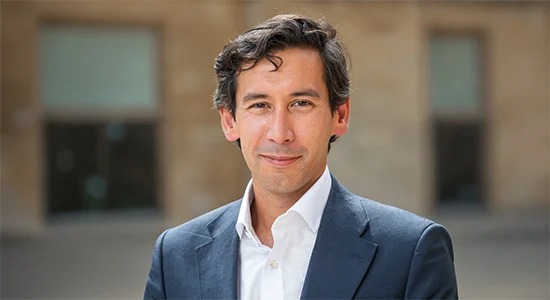
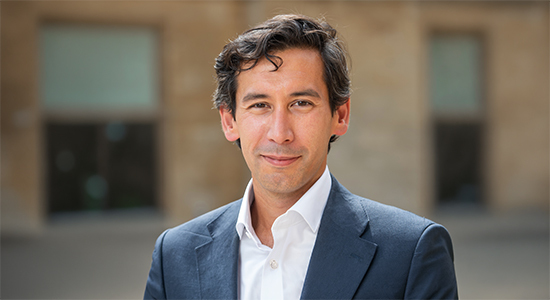
Ben Caldecott, founding director of the Oxford Sustainable Finance Group and associate professor of sustainable finance at the University of Oxford, warns that investors acquiring these shares must confront a fundamental question before deploying capital—what are their core AI investment beliefs?
The urgency behind this question stems from the stark philosophical and operational divides separating major industry players. Anthropic, widely recognized for its frontier model development, has systematically established positions on controversial industry matters where reasonable investors can, and frequently do, disagree. The company actively advocates for mandatory safety testing for all sufficiently capable AI models, whether open-source or proprietary, and maintains that governments should retain the authority to block the deployment of high-risk models. Furthermore, Anthropic backs strict export and purchase controls on advanced semiconductors, deliberately restricts the deployment of its technology for certain legal military applications, and insists that its models should possess the capability to safely disobey instructions from commercial users, consumers, and even Anthropic itself.
These corporate governance and safety stances stand in sharp contrast to the approaches favored by many of Anthropic’s primary commercial peers. Competitors including OpenAI, Google, and SpaceXAI have adopted permissive frameworks, entering into agreements that permit the Pentagon and other defense agencies to utilize their AI models for any lawful purpose. OpenAI, for instance, operates under guidelines instructing its models never to decline a user request unless constrained by the company’s internal safety policies or the specific instructions of the application developer. Simultaneously, virtually all major players in the sector, including Anthropic, align on the practice of training their foundational models on copyrighted works and creator materials without explicit prior consent.
For global institutional portfolios, these diverging corporate philosophies are no longer theoretical concerns confined to the tech sector. Mega-cap technology firms such as Alphabet, Amazon, Broadcom, Meta, Microsoft, Nvidia, and SpaceXAI now constitute approximately one-fifth of the entire MSCI World index. Despite this massive concentration of portfolio weight, very few institutional investors have formulated, let alone formally documented, a coherent philosophy regarding where they stand on these complex ethical, safety, and geopolitical fault lines.
Clear investment beliefs serve a foundational purpose in modern asset management. They help dictate what fiduciary questions an investor directs toward portfolio companies, guide proxy voting behavior, and provide a framework for excluding companies that violate core principles. More broadly, well-defined beliefs are essential for shaping strategic asset allocation, selecting external fund managers, and designing mandate parameters that align with the long-term interests of asset owners and underlying beneficiaries.
The evolving regulatory and social landscape further amplifies these financial stakes. How society ultimately reacts to artificial intelligence through legislative politics, judicial rulings, and regulatory enforcement will directly determine the underlying valuations of AI enterprises. Investors operating without clearly defined AI investment beliefs are fundamentally unequipped to comprehensively understand and price the material risks that societal pushback creates for their equity holdings. Because these risks are undeniably material, institutional investors carry a clear fiduciary duty to undertake this rigorous foundational work.
This strategic gap was on prominent display at the recent PRI in Person conference in Amsterdam, where industry participants frequently called for generalized AI policies and enhanced corporate oversight, yet offered vanishingly few concrete proposals regarding what those specific policies should entail.
To help bridge this widening divide between soaring market exposure and corporate governance readiness, Silicon Boundaries—a joint initiative of the Oxford Sustainable Finance Group and Theia Finance Labs—has published a comprehensive research note alongside an interactive diagnostic tool. Titled What do you believe about AI?, the new publication establishes 15 core questions covering contested issues across the artificial intelligence ecosystem.
The framework divides these dilemmas into three distinct categories. Five questions focus directly on the technology’s frontier, addressing issues such as whether the pace of model development should be intentionally slowed. Three questions center on systemic power dynamics, including whether antitrust and competition authorities should intervene to prevent the industry from concentrating tightly within a handful of powerful alliances linking labs and cloud computing providers. The remaining seven questions examine downstream deployment and utilization, ranging from military contracting ethics to consent frameworks for training data.
Because each of the 15 questions presents two contrasting positions, theoretical combinations yield more than 32,700 distinct belief profiles. In practice, however, market opinions naturally coalesce into recognizable strategic bundles. Recognizing these patterns, researchers have synthesized the debate into seven distinct archetypes, each prioritizing a specific risk category: safety first, which fears catastrophe at the frontier; security first, focused on preventing rival geopolitical powers from gaining a decisive technological lead; fairness first, prioritizing harms already impacting workers, children, and data center host communities; growth first, guarding against the risk of forgoing economic benefits; power spread, addressing concerns over excessive market concentration; self-reliance, mitigating dependence on foreign models, chips, and cloud infrastructure; and capital discipline, targeting the widening gap between massive capital expenditure and actual financial returns.
Recognizing that few institutional portfolios will fit neatly into a single predefined box, the accompanying online beliefs tool enables investors to input their organizational perspectives and identify which archetypes align most closely with their operational and philosophical stance in roughly five minutes.
In practice, many financial institutions are already inadvertently acting on implicit views regarding how artificial intelligence should develop, often without having formalized those positions in writing. A portfolio manager who maintains an overweight position in physical data center infrastructure is effectively endorsing the proposition that AI development should proceed unhindered by precautionary slowdowns. Such implicit bets are frequently made without the explicit awareness or consent of institutional boards or ultimate asset beneficiaries.
Establishing written investment beliefs brings these operational discrepancies out into the open. An asset owner equipped with documented beliefs can rigorously integrate them into manager selection processes and mandate design. Institutions can audit portfolio managers to determine which holdings rely on specific trajectories of AI development, cross-reference those exposures against institutional values, and incorporate explicit risk limits into mandates where divergences appear.
A frequent objection raised by market participants is that artificial intelligence is evolving at a pace too rapid for institutional beliefs to remain static. Rather than invalidating the exercise, this velocity underscores the importance of recording the specific empirical evidence that would trigger a reassessment of each belief, ensuring that investment frameworks are systematically reviewed and updated. Furthermore, as a critical mass of investors begins aligning their proxy votes, corporate engagement strategies, portfolio mandates, and exclusion lists around shared beliefs, they can collectively influence the responsible development of the technology itself.
This dynamic closely mirrors the evolution of sustainable finance frameworks addressing climate change. Much like climate risk, artificial intelligence introduces profound uncertainties sitting alongside measurable exposures, impacts entire portfolios indiscriminately, and offers investors a tangible mechanism to influence real-world outcomes. Over the coming years, artificial intelligence is projected to carry at least as much weight within institutional portfolios as climate considerations. Investors who have already articulated their climate philosophies are now urged to establish parallel frameworks for artificial intelligence.
As institutional beneficiaries and asset owners increasingly demand accountability regarding technology exposures, market leaders are advised to proactively establish their positions. The release of the Silicon Boundaries research and diagnostic tool provides a timely starting point for financial institutions seeking to navigate the complex intersection of fiduciary duty and artificial intelligence.
| Source | : | Finance Poetry |
| Author | : | rifanmuazin |
| Editor | : | Finance Poetry Editorial Team |