
Putin says EU is losing industry, falling behind competition, ahead of meeting with Trump and Xi
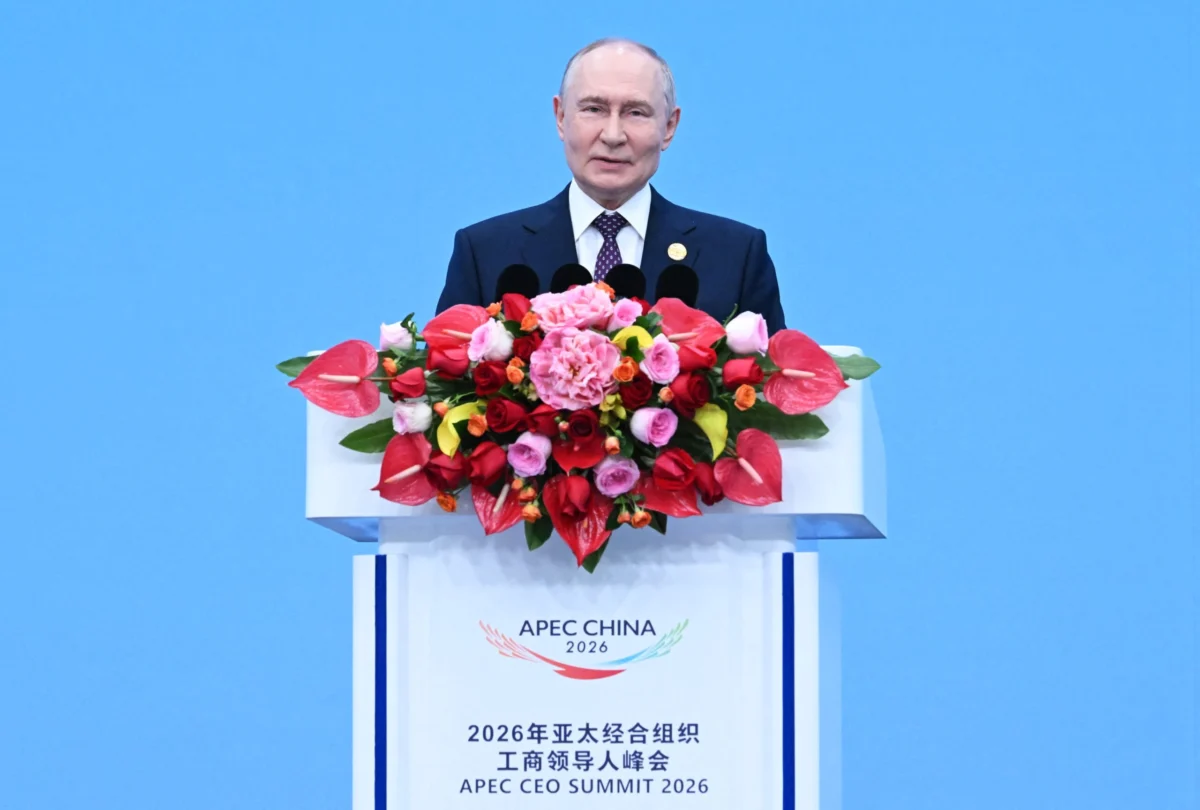
Speaking in Shenzhen in China’s southern Guangdong Province, Putin addressed regional business leaders and heads of state ahead of the broader APEC summit. According to an official English translation of his remarks, the Russian leader did not hold back in his assessment of Europe’s current economic trajectory.
"The EU is now losing its industrial capacity and it’s losing in the competition," Putin told the summit audience, pointing to what he perceives as structural weaknesses within the European economic model.
The speech served as a dual messaging opportunity for the Kremlin. Beyond criticizing Western economies, Putin sought to project an image of robust economic resilience at home, emphasizing that Russia has successfully weathered severe Western sanctions—particularly those spearheaded by the United States and its European allies. He highlighted Moscow’s ability to withstand a dramatic, structural drop in transactions denominated in U.S. dollars and euros, framing the forced pivot as a catalyst for greater self-reliance and the redirection of trade toward willing partners in Asia and the Global South.
Furthermore, Putin used his address to court prospective business partners within the APEC bloc, playing up lucrative investment and commercial opportunities available in Russia. He specifically highlighted sectors ranging from cutting-edge technology to large-scale economic development projects, inviting regional corporations to deepen their economic engagement with Moscow. Looking far into the future, the Russian leader also used his platform to urge member economies to support Russia’s bid to host the APEC summit in 2035.
Putin’s address followed speeches by other major regional figures at the CEO summit. He was the third APEC leader to take the podium, speaking after remarks delivered by Chinese President Xi Jinping and Malaysian Prime Minister Anwar Ibrahim, underscoring the summit’s significance as a diplomatic and economic crossroads for Asia-Pacific and Eurasian powers.
The venue and timing of Putin’s appearance in Shenzhen set the stage for a series of high-stakes diplomatic encounters on the sidelines of the gathering. Following his speech, Russian state media reported that Putin held bilateral talks with Chinese President Xi Jinping on Wednesday, reinforcing the "no limits" partnership between Beijing and Moscow amidst ongoing geopolitical friction with the West.
The diplomatic momentum is scheduled to continue on Thursday, when Putin is slated to participate in a historic and closely watched series of meetings involving both Xi and U.S. President Donald Trump. Analysts and international observers expect the discussions to touch upon an expansive and sensitive range of global issues, including nuclear non-proliferation and potentially the grinding, multi-year war in Ukraine.
Ahead of these high-level talks, Russian presidential aide Yuri Ushakov noted last week that the Shenzhen meetings would advance diplomatic efforts aimed at exploring pathways toward a negotiated settlement regarding the conflict in Ukraine, according to reports from state-controlled local media outlet Russia Today.
Despite the heavy diplomatic agenda and the intense global interest surrounding the gathering, some geopolitical analysts remain skeptical about whether the summit will yield immediate breakthroughs. David Roche, a seasoned strategist at Quantum Strategy, offered a pragmatic assessment of the proceedings in an interview with CNBC earlier this week. Roche suggested that while the diplomatic optics are powerful, the summit will likely result in few concrete policy outcomes. Instead, he described the event as an "almost 100% photo op" that serves to elevate China’s geopolitical status and project its growing power from the top table of international diplomacy.
As the summit proceeds in Shenzhen, the juxtaposition of Putin’s pointed critique of the European Union, his pitch for Eurasian economic integration, and the impending trilateral diplomatic footprint underscore a shifting global economic and political landscape.
| Source | : | Finance Poetry |
| Author | : | rifanmuazin |
| Editor | : | Finance Poetry Editorial Team |