
Autumn Budget 2026: What Small Businesses Need to Know as John Healey Prepares First Major Fiscal Statement

The Autumn Budget 2026 has been officially scheduled for October 28, bringing forward the crucial fiscal event by roughly a month compared to last year’s schedule. This upcoming address marks the first major budget delivery for newly appointed Chancellor John Healey, who stepped into the role following an appointment by Prime Minister Andy Burnham.
As the date approaches, the business community is preparing for a challenging economic climate. Recent figures from the Office for National Statistics (ONS) show that the UK economy grew by a modest 0.7 per cent in the three months leading up to August. However, this growth has been tempered by a notable rise in inflation, which climbed to 3.1 per cent largely driven by escalating fuel and energy prices. Economists and financial experts widely anticipate that economic growth will slow down further in the coming months as these elevated costs continue to place mounting pressure on both household budgets and commercial balance sheets.
The turbulent economic landscape is already leaving a tangible footprint on the British labor market. Data released for the three months leading up to September indicates that job vacancies fell by 21,000, bringing the total down to 691,000 nationwide. According to the ONS, rising recruitment costs have become a primary catalyst forcing smaller businesses to scale back their hiring plans and exercise heightened caution regarding expansion.
Despite the high stakes for the small business sector, details surrounding the upcoming fiscal announcements remain remarkably scarce. Observers have noted a distinct lack of pre-budget leaks compared to previous years, leaving business owners, tax professionals, and industry bodies waiting anxiously for October 28 to understand the full scope of the government’s plans.
What Could Happen in the Autumn Budget 2026?
As speculation mounts across the financial sector, attention is turning toward potential tax adjustments, structural reforms, and targeted relief packages. While comprehensive measures are still under wraps, a few key areas have emerged as focal points for the upcoming budget statement.
Business Rates Cut and Structural Overhauls
The most significant and concrete measure confirmed for the small business sector thus far is a targeted reduction in business rates. Chancellor John Healey has announced that pubs, clubs, and live music venues will receive a 20 per cent reduction on their business rates liabilities starting from April 2027. This sector-specific relief is designed to throw a lifeline to hospitality and entertainment venues that have struggled to recover fully from successive economic shocks over recent years. Further details regarding the implementation of this discount are expected to be unveiled at the end of October.
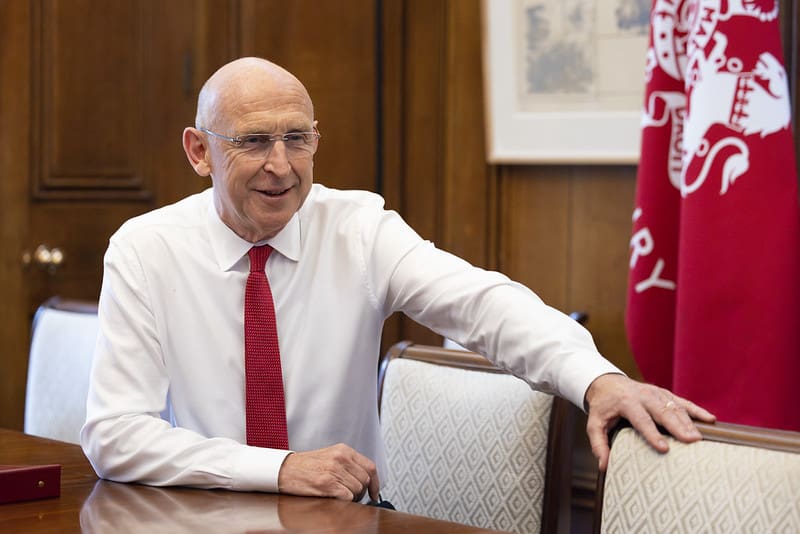
Alongside this targeted reduction, broader structural reforms to the business rates system are reportedly on the cards. Among the rumored changes is a potential recalibration that could result in larger business rates bills for large-scale warehouses and logistics hubs, reflecting a shift in how commercial property values and economic contributions are assessed across different industries.
Capital Gains Tax and Corporate Taxation
In the weeks leading up to the budget, intense speculation circulated regarding potential changes to capital gains tax, with rumors suggesting the government might consider aligning capital gains tax rates with standard income tax rates. However, Chancellor Healey has since put those concerns to rest by confirming that there will be no increase to Capital Gains Tax in this fiscal statement.
Uncertainty also surrounds other major corporate levies. The Labour Party’s 2024 general election manifesto explicitly promised that corporation tax would remain capped at 25 per cent throughout the parliamentary term, and that full expensing alongside the annual investment allowance would be retained. While these commitments provide a baseline of predictability, the increasingly uncertain economic backdrop has fueled ongoing discussions among economists about whether tax policies could face unexpected adjustments.
Another area drawing significant scrutiny from property owners and industry advocates involves holiday lets. Speculation has persisted that the government may move to tax furnished holiday lets as standard second homes rather than as active commercial businesses. Representatives from the sector, including the chairman of the Professional Association of Self-Caterers, have warned that such a policy shift could impose heavy financial penalties on small operators, potentially costing individual owners between £1,000 and £3,000 annually.
Making Tax Digital Timelines
While the budget statement itself addresses immediate fiscal measures, business owners are also being reminded to keep a close eye on upcoming compliance milestones, notably Making Tax Digital (MTD). Small businesses and sole traders with earnings exceeding £30,000 will be required to comply with Making Tax Digital regulations starting from April 2027. Meanwhile, smaller enterprises and individuals earning over £20,000 have been given a slightly extended timeline, with compliance mandatory by April 2028. As the tax landscape continues to digitize, small firms are being urged to evaluate their accounting software and administrative processes well in advance of these deadlines to avoid costly penalties.
| Source | : | Finance Poetry |
| Author | : | rifanmuazin |
| Editor | : | Finance Poetry Editorial Team |