
The Proliferation of ARTEX: AI-Powered Offensive Security Tools Escape Initial Containment
The landscape of cyber warfare is undergoing a rapid, technology-driven transformation as autonomous, AI-powered offensive security tools begin to transcend their original, niche applications. Recent investigations into a framework known as ARTEX—an open-source, AI model-driven, autonomous penetration testing suite—reveal that its reach is expanding far beyond the initial, isolated campaigns that first brought it to the attention of global security researchers. What began as a GitHub project intended for legitimate security research has morphed into a versatile weapon for threat actors, signaling a broader trend of "democratized" AI-driven cyber attacks that require minimal human oversight.
ARTEX, which was initially released in July 2026 by a GitHub user operating under the handle "Autumn-27," was designed as an autonomous penetration testing framework. Built using the Go programming language and featuring an embedded Next.js web console, the tool provides an offensive command-and-control (C2) platform capable of integrating with various AI agents and large language models (LLMs). While the author publicly maintained that the project was intended solely for authorized security testing, the framework was quickly co-opted by malicious actors. By October 2026, the abuse of the tool had become so widespread that its creator took the drastic step of removing the original repository from GitHub. Despite this move, the software’s modular and open-source nature ensured its survival, as the code had already been propagated through community forks, localized variations like "ScopeWeaver," and even unauthorized commercial versions marketed as "ARTEX PRO."
ARTEX’s Growing Footprint in Global Cyber Campaigns
The transition of ARTEX from a research tool to a weapon of choice for cybercriminals was marked by a series of high-profile incidents throughout the autumn of 2026. Security firms began documenting its use in sophisticated campaigns, linking the framework to both financially motivated cybercrime and state-aligned espionage operations.
In early October, researchers at CrowdStrike identified ARTEX as a primary component in a campaign targeting financial institutions in South Korea. The attackers, who were assessed with moderate confidence to be Chinese-speaking and financially motivated, leveraged the framework alongside Anthropic’s Claude AI model. This integration allowed the threat actors to automate certain stages of their intrusion process, highlighting the dangerous synergy between commercially available LLMs and autonomous offensive frameworks.
Later that same month, Microsoft released findings linking ARTEX to a massive, large-scale compromise of customer tenants managed by ConnectWise, a major IT management software provider. The scope of this incident was significant enough that ConnectWise was forced to take several of its cloud services offline to mitigate the fallout. Microsoft attributed the operation to a state-aligned actor known as Storm-0940—also tracked under the monikers CovertNetwork-1658 and ORB07—further demonstrating that the tool had been adopted by sophisticated, well-resourced threat groups.
The threat continued to evolve into November, when the Indian Computer Emergency Response Team (CERT-In) issued a formal warning to financial and cryptocurrency organizations regarding a group dubbed "Crafty Falcon." This entity was observed conducting successive, aggressive attacks using a suite of AI-powered tools, with ARTEX serving as a foundational element. Research from Check Point has since shed light on the efficacy of these campaigns, demonstrating that the AI agents embedded within ARTEX control panels can execute large-scale attacks with remarkably little human intervention. While these autonomous agents are not infallible—often prone to "hallucinating" successful outcomes or failing to achieve their objectives—the low barrier to entry, with some attacks costing only a few hundred dollars to initiate, makes them an attractive option for a wide array of threat actors.
Censys Uncovers a Global Network of ARTEX Infrastructure
The true extent of the ARTEX threat was brought into sharp focus on November 5, 2026, when Silas Cutler, a principal security researcher at the Censys Advanced Research Collective (ARC), published a comprehensive report on the tool’s global infrastructure. By leveraging internet traffic scanning, Censys was able to map the footprint of ARTEX across the public internet, revealing that its usage was far more systemic than previously estimated.

The research identified 1,465 hosts worldwide that were actively exposing an ARTEX console to the internet. While a portion of these—roughly 650—were clustered within two specific blocks of identically configured hosting infrastructure, the remaining 815 deployments appeared as distinct, independent systems. This geographical and technical diversity suggests that ARTEX is not being utilized by a single monolithic group, but is instead being adopted by a broad and disparate array of operators worldwide.
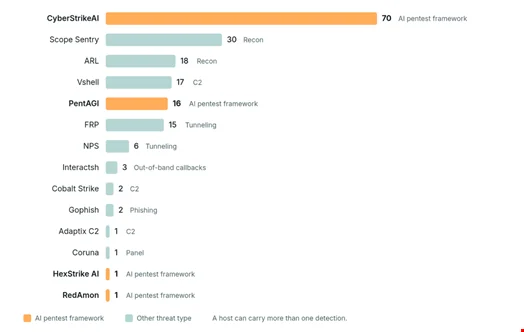
The infrastructure analysis conducted by Censys also revealed a concerning trend: the "stacking" of malicious tools. Of the internet-exposed ARTEX hosts, approximately 10.6% were found to be running at least one other identified threat artefact. These included traditional C2 servers such as Cobalt Strike, Vshell, and Adaptix, as well as newer AI-driven frameworks and tunneling tools. Furthermore, an asset-discovery and vulnerability-scanning platform known as "ScopeSentry," which is maintained by the original creator of ARTEX, was also identified as a common threat artefact, suggesting that the ecosystem surrounding these tools is becoming increasingly integrated.
Perhaps most revealing is the tendency of operators to deploy multiple AI-powered frameworks on the same host. Censys observed ARTEX frequently co-existing with tools like CyberStrikeAI, PentAGI, HexStrike AI, and RedAmon. On 70 of the identified hosts, CyberStrikeAI and ARTEX were found running side-by-side, which Cutler suggested indicates that operators are actively testing and using multiple agentic frameworks in tandem to increase the success rate of their operations.
The Emerging Infrastructure of AI-Powered Offense
The evidence gathered by security researchers points to a maturing "offensive infrastructure stack" where AI is no longer just a gimmick, but a functional necessity for modern cyber attacks. Beyond the core penetration testing frameworks, the infrastructure supporting these campaigns now frequently includes specialized components designed to facilitate AI operations.
Censys discovered that 43 of the identified ARTEX hosts were running self-hosted LLM gateway or reseller software. This indicates that attackers are moving beyond the reliance on public-facing AI interfaces and are instead building their own localized conduits to large language models. By hosting their own gateways, threat actors can bypass the usage policies and safety guardrails that mainstream AI providers have implemented to prevent the misuse of their models in cyber-offensive operations.
Furthermore, the discovery of 32 ARTEX hosts with publicly accessible directories containing post-exploitation kits, stagers, and implants suggests that these servers are serving as central hubs for various stages of the attack lifecycle. By housing these toolsets alongside autonomous AI agents, threat actors are creating self-contained, automated environments that can conduct everything from initial reconnaissance to the final stages of data exfiltration or system compromise.
The proliferation of ARTEX and its peers represents a significant shift in the cybersecurity paradigm. As these frameworks continue to evolve and spread via community forks and underground marketplaces, the ability for defenders to track and neutralize them becomes increasingly complex. The ease with which these tools can be deployed, combined with their ability to leverage powerful LLMs, suggests that the cycle of AI-driven cyber attacks will only intensify. Security organizations and critical infrastructure providers are now tasked with the difficult challenge of monitoring not just traditional malware signatures, but the emergence of autonomous, adaptive agents that can alter their tactics in real-time, often without the explicit input of a human operator. As the lines between legitimate penetration testing and malicious exploitation continue to blur, the security community remains on high alert for the next iteration of agentic offensive frameworks.
| Source | : | Finance Poetry |
| Author | : | rifanmuazin |
| Editor | : | Finance Poetry Editorial Team |