
The Rise of the "Chip Dollar": Semiconductors Overtake Oil in Global Export Value Amid Historic Market Volatility
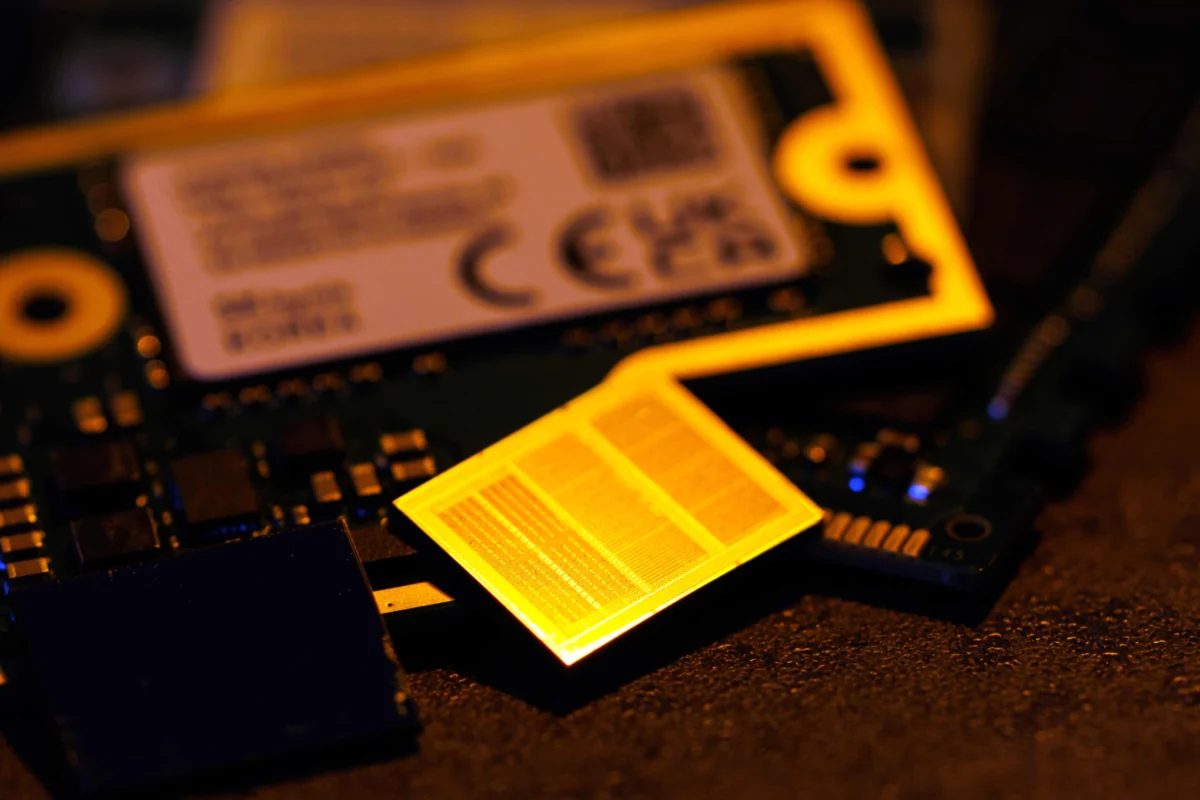
The relentless global boom in artificial intelligence has officially reshaped the architecture of international trade, pushing semiconductors past oil and gas in total global export value for the very first time. According to a comprehensive macroeconomic analysis by Deutsche Bank utilizing International Trade Centre data, the historic transition underscores the staggering economic weight of computer processors, advanced memory systems, and data center infrastructure in the modern global economy.
Yet, this monumental milestone has arrived at an extraordinarily precarious and turbulent moment for financial markets. The achievement coincides with a sharp, anxious reassessment by investors regarding the near-term outlook for artificial intelligence capital expenditures, a reassessment that has driven semiconductor equity valuations down through violent swings. Last week, prior to a breathtaking market reversal on Monday, the global semiconductor sector suffered its worst weekly loss in a quarter century.
The damage across major chip equities was swift and severe. The PHLX Semiconductor Index, widely watched as a primary gauge of industry health, plummeted nearly 11% in a single session last Friday alone, capping a devastating weekly decline exceeding 17%. The downward pressure reflected mounting concerns over whether the hundreds of billions of dollars being poured into artificial intelligence infrastructure will generate sufficient and timely returns.
The subsequent market action highlighted the extreme volatility gripping the sector. Nvidia, the undisputed bellwether and leading architect of artificial intelligence chips, soared more than 31% on Monday. That explosive rebound came immediately after the stock had endured a brutal seven-week losing streak, during which it shed 46% of its market value. However, the relief was short-lived, as Nvidia shares tumbled once again, dropping almost 10% across Tuesday and Wednesday.
Other major industry players fared little better during the rout. Advanced Micro Devices suffered a staggering 20% loss over the course of just two days last Thursday and Friday, while Micron Technology sank 27% across the seven-day period ending last Friday. These violent oscillations have increasingly made South Korea’s stock market—home to memory giants like SK Hynix Inc. and Samsung Electronics Co.—a primary bellwether for global AI sentiment, as investors grapple with leveraged chip bets and shifting market liquidity.
Amid this turbulence, the underlying structural shift in global trade remains profound. "For decades we’ve talked about the petrodollar. Perhaps increasingly we need to think about the chip dollar," wrote Jim Reid, global head of macro and thematic research at Deutsche Bank, in a recent report.
According to the Deutsche Bank analysis, semiconductor exports officially overtook oil and gas for the first time during the January-March quarter of 2026. Measured using four-quarter rolling totals, semiconductor exports reached approximately $1.61 trillion, compared to $1.53 trillion for oil and gas.
The gap widened significantly in the second quarter of 2026. During that period, semiconductor exports held steady at about $1.60 trillion, while global oil and gas exports retreated to approximately $1.47 trillion. This widening margin was exacerbated by sudden, severe disruptions to global energy supplies through the Strait of Hormuz in the wake of the Iran war. Daily oil flows through the critical maritime choke point collapsed by nearly 77%, plunging from 21.6 million barrels per day in the fourth quarter of 2025 down to just 4.9 million barrels per day in the second quarter of 2026, according to data from the U.S. Energy Information Administration.
AI Driven Demand
Despite the severe financial market turbulence and investor skittishness, actual commercial demand for advanced semiconductors has proven remarkably insatiable. This insatiable appetite is being driven by an unprecedented wave of global data center construction, designed to supply the massive computational power required to train and run complex artificial intelligence models.
Investment banks and financial institutions emphasize that the physical components driving this digital transformation are becoming the new foundational commodities of the global economy. In a research report published last Thursday, Rothschild & Co. Redburn noted that hundreds of billions of dollars continue to flow into orders for graphics processing units and hyper-scale data centers aimed at securing AI computing capabilities.
"Compute will be the new commodity fueling this transformation on a global scale," said Rothschild analyst Cara Thomson, highlighting the structural nature of the demand that persists beneath the crashing equity valuations.
This fundamental pivot from fossil fuels to silicon carries profound macroeconomic implications that mirror the structural shifts triggered by the oil trade explosion during the 1970s. During the height of the petrodollar era, oil-exporting nations historically recycled much of their vast trade surpluses back into Western financial systems, purchasing U.S. Treasuries and other sovereign bonds. This recycling mechanism helped finance government deficits and underpinned sustained demand for public debt instruments around the world.
Deutsche Bank’s Jim Reid suggests that the emergence of the chip-dollar era could establish an entirely new framework for international financial flows. Because the primary nations running semiconductor trade surpluses in Asia maintain deep and intricate ties with major U.S. technology corporations, a significant portion of chip-export earnings is expected to flow directly back into U.S. technology equities, venture capital startups, and domestic data center development. Rather than exclusively funding sovereign debt, these capital flows could further fuel and sustain the broader artificial intelligence investment cycle.
These shifting dynamics in global commerce are poised to redraw the map of international finance. As the semiconductor industry solidifies its position at the pinnacle of global trade, economists and market strategists alike are forecasting an economic landscape defined by the new parameters of the chip-dollar era—one characterized by potentially accelerated growth, heightened market excitement, increased volatility, and structurally higher yields across both corporate and government debt instruments.
| Source | : | Finance Poetry |
| Author | : | rifanmuazin |
| Editor | : | Finance Poetry Editorial Team |