
Trump Meets Putin and Xi in Shenzhen Ahead of High-Stakes Trilateral APEC Summit
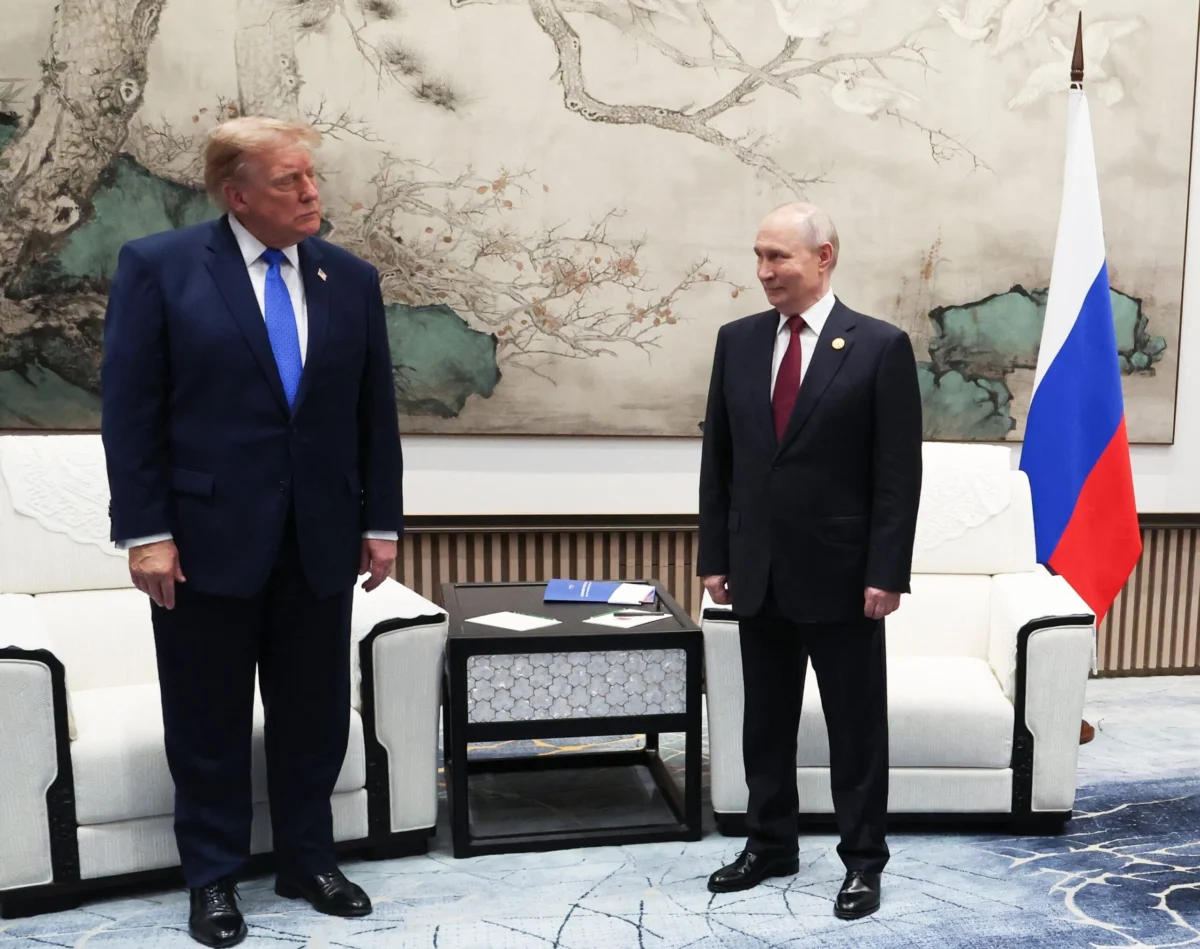
SHENZHEN, China — U.S. President Donald Trump held high-stakes individual meetings with Russian President Vladimir Putin and Chinese President Xi Jinping on Thursday, laying the groundwork for a scheduled trilateral gathering between the three world leaders on the sidelines of the Asia-Pacific Economic Cooperation (APEC) Summit in China’s southern Guangdong Province.
The diplomatic flurry in Shenzhen brought together three of the world’s most influential leaders against a backdrop of complex geopolitical tensions, ranging from the ongoing war in Ukraine to global artificial intelligence governance and international trade dynamics.
Greeting the Russian president earlier in the day, Trump remarked that he maintained a "great relationship" with Putin, noting that the two leaders had known each other for a long time. The U.S. president expressed optimism that their dialogue could yield productive outcomes, stating his hope that "a lot of wonderful things can come out of this, or at least start."
The encounter marked the first face-to-face meeting between Trump and Putin since their high-profile summit in Alaska in August of the previous year, which had concluded without a definitive diplomatic breakthrough regarding the conflict in Eastern Europe.
Following Thursday’s 40-minute bilateral session, Russian presidential aide Yuri Ushakov reported that Putin departed the meeting venue in "an excellent mood," according to Russian state news agency Ria Novosti. Ushakov confirmed that Russia’s full-scale invasion of Ukraine served as a central topic of discussion, alongside preparations for the subsequent trilateral summit involving China’s Xi Jinping.
In a separate bilateral meeting held earlier, Trump engaged with President Xi to address the protracted conflict in Ukraine, emphasizing the need for international cooperation to bring hostilities to a close. According to pool notes and statements cited by Reuters, Trump asserted that both the United States and China should work collaboratively to help resolve the crisis. "We’re looking to both help with respect to the war with Russia and Ukraine," Trump said, adding, "I’d like to see it ended."
President Xi, shifting the focus of the bilateral discourse toward bilateral economic and technological challenges, emphasized that Beijing and Washington should enhance cooperation to mitigate artificial intelligence safety risks. Xi also called for strengthened communication on trade matters, according to reports from Chinese state media.
The bilateral discussions unfolded alongside the broader activities of the APEC summit, where leaders and delegates from across the region gathered for official proceedings. Trump and Xi made a notable entrance into the main summit room, walking in side by side ahead of the morning plenary session.
During the summit’s opening remarks, Xi announced that China would commit $20 million to support broader APEC cooperation initiatives. Furthermore, the Chinese leader revealed plans to establish a "Center for Asia-Pacific Community Studies in Shenzhen" dedicated to conducting policy research, facilitating regional exchanges, and providing intellectual support for member economies.
As the morning session progressed, Trump took the floor to outline his administration’s perspective on emerging technologies, voicing strong opposition to heavy-handed artificial intelligence regulations which he argued would "stifle" innovation and industry growth. Reaffirming America’s enduring commitment to the region, Trump told the assembly, "The United States has been a Pacific power for hundreds of years, and we continue to work to promote growth and stability, sovereignty, prosperity, and peace throughout this region."
Ahead of the meetings, U.S. officials clarified that President Trump did not intend to raise specific controversies during his diplomatic engagements, indicating that topics such as Nvidia CEO Jensen Huang and allegations concerning a Chinese spy would not form part of the official agenda.
The selection of Shenzhen as the host city for this year’s APEC summit provided a symbolic backdrop for discussions centered on technology, trade, and economic might. Michael Hart, President of the American Chamber of Commerce in China (AmCham China), observed that the venue selection allowed Beijing to highlight one of its premier economic engines.
"By hosting APEC in Shenzhen, China took the opportunity to showcase another of its economic powerhouse cities, this time one that is home to some of the country’s leading technology companies and innovators," Hart stated.
Reflecting on the sentiment within the international business community, Hart noted that the scale of China’s economic and technological ambitions remains starkly apparent to American enterprises operating in the region. "They recognize the importance of the Chinese market, but also understand that they need to remain competitive, innovative, and prepared to compete in an increasingly sophisticated business environment," he added.
| Source | : | Finance Poetry |
| Author | : | rifanmuazin |
| Editor | : | Finance Poetry Editorial Team |