
UN Experts Condemn French Police Crackdown on Nationwide Student and Cost-of-Living Protests
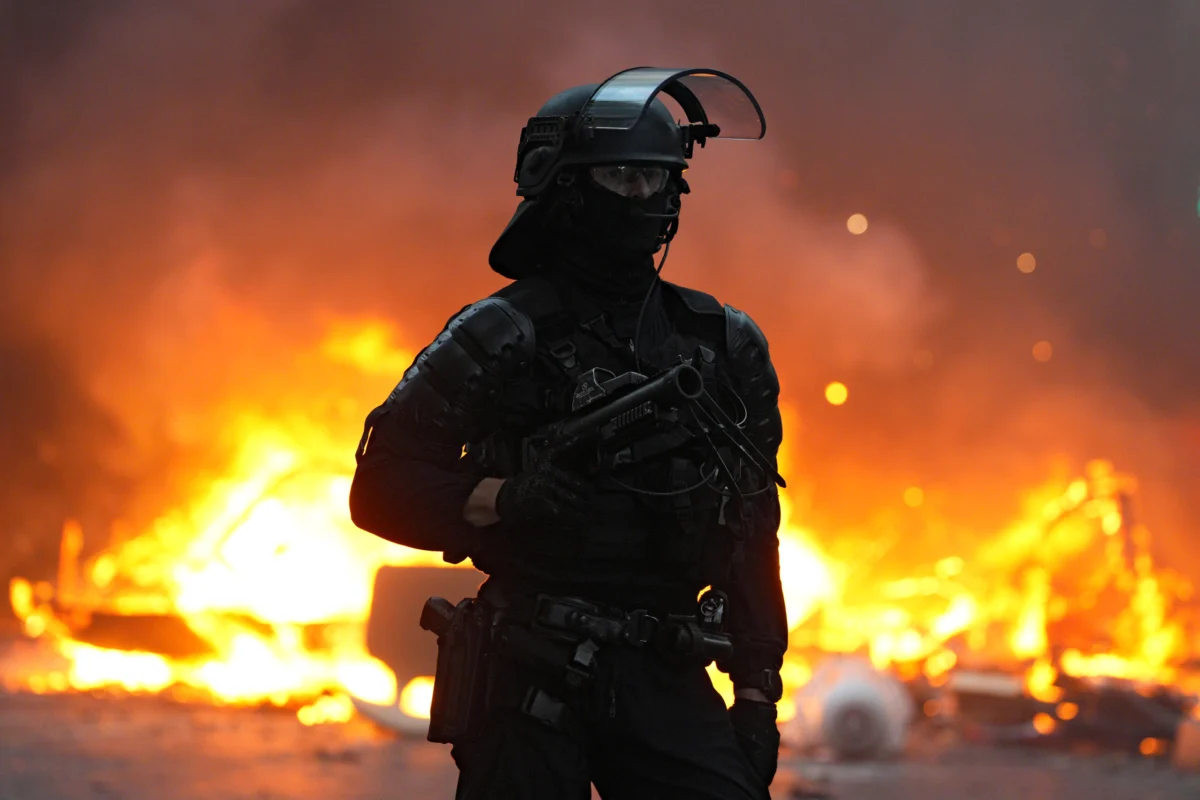
United Nations human rights experts have voiced deep alarm over what they described as the "excessive use of force" by French law enforcement agencies in dispersing a wave of nationwide student and labor demonstrations. The condemnation comes as France grapples with weeks of social unrest driven by deteriorating educational infrastructure, a mounting cost-of-living crisis, and widespread public resentment against the economic policies of President Emmanuel Macron’s administration.
In a sharply worded statement released on Wednesday, a panel of four independent experts mandated by the UN Human Rights Council criticized the heavy-handed security tactics deployed across the country. They pointed specifically to the staggering volume of arrests and detentions, which have impacted several thousand individuals, a significant proportion of whom are minors.
"The scale of the arrests and detention, affecting several thousand people, mainly minors, appears disproportionate and deters demonstrators from exercising their freedoms of expression and peaceful assembly," the UN experts stated.
The panel included Gina Romero, the UN special rapporteur on the freedom of peaceful assembly and of association, and Farida Shaheed, the UN special rapporteur in the field of cultural rights. The experts acknowledged that the French government had initiated various dialogue efforts in October aimed at addressing student grievances. However, they argued that these initiatives were ultimately undermined by an overarching reliance on security-focused containment.
According to the experts, the state’s primary focus on maintaining public order through aggressive policing has relegated the root causes of the widespread social mobilization to the background, preventing any meaningful, long-term resolution to the grievances fueling the unrest.
The current wave of demonstrations began in mid-September, originating primarily within high schools where students staged walkouts and occupied buildings to protest against worsening conditions. Young demonstrators voiced bitter complaints about deteriorating school infrastructure, severely overcrowded classrooms, and chronic teacher absences that left many classes without instruction for extended periods.
As September bled into October, these localized educational grievances merged with broader nationwide demonstrations. Students joined forces with labor unions and revivalist factions of the "Yellow Vest" movement to protest the soaring cost of living, inflation, and shrinking purchasing power. While the vast majority of participants engaged in peaceful marches, the fringes of the protests saw outbreaks of rioting, property damage, and opportunistic looting.
The state’s response has been massive and uncompromising. During nationwide demonstrations on a single Saturday, the French Interior Ministry deployed approximately 70,000 security forces onto the streets. The heavy police presence resulted in the arrest of roughly 1,000 people during a day of action that drew an estimated 410,000 protesters nationwide.

The weekend crackdown followed an even more volatile week of unrest that saw public buildings vandalized, hundreds of businesses looted, and a staggering 2,700 arrests. In the wake of that chaos, Interior Minister Laurent Nunez vowed to adopt an attitude of extreme vigilance and firmness to quell future unrest and prevent further destruction of public and private property.
The government’s hardline approach, however, has only served to inflame tensions on the ground. Critics and youth leaders argue that the heavy-handed tactics reflect a broader disconnect between the executive branch and the everyday realities faced by ordinary citizens.
Alice Cohen-Morzadec, a spokesperson for the student union Union Etudiante, spoke to reporters about the deepening alienation felt by the younger generation. "What we are seeing right now is a general outburst of resentment against [French President Emmanuel] Macron and his policies that have destroyed our rights, destroyed our living conditions," Cohen-Morzadec told Al Jazeera.
Analysts observing the crisis note that the French government has found itself severely constrained in its ability to meet student demands. A combination of a severe fiscal crisis and planned national budget cuts has resulted in significant reductions to public spending, notably impacting the country’s education budget. With financial resources tight, the administration has struggled to offer concrete financial solutions or infrastructural investments to appease the protesting students, leaving security forces as the primary instrument of state management.
Police Response to Protests
The operational methods employed by French security forces have drawn fierce criticism from civil liberties groups, human rights advocates, and now international bodies. Concerns over police brutality were sharply highlighted during clashes in the northern city of Lille, where a teenage demonstrator suffered catastrophic injuries, losing a hand when a police grenade exploded during confrontations between students and law enforcement.
The UN rapporteurs specifically addressed these incidents, branding the physical toll on young protesters as completely unacceptable. "The serious and, in some cases, irreversible injuries sustained by underage demonstrators during law enforcement operations are unacceptable and unjustifiable," the experts emphasized in their statement.
The panel also referenced prior dialogues and past recommendations directed at French authorities, urging the government to initiate a comprehensive, critical review of its policing strategies and crowd control practices. They argued that reform is urgently needed to create an environment where demonstrators can safely voice their concerns, thereby facilitating a peaceful, institutional resolution to ongoing social conflicts rather than escalating them through confrontation.
Despite the mounting domestic criticism and international pressure, the standoff between the state and the protest movement shows little sign of immediate de-escalation. The UN experts confirmed that they remain in active communication with French authorities regarding the deteriorating human rights situation and the need for restraint, as the country braces for what promises to be a prolonged and contentious political struggle over resources, rights, and the future of public services.
| Source | : | Finance Poetry |
| Author | : | rifanmuazin |
| Editor | : | Finance Poetry Editorial Team |