
Witness: The Fight to Revive Mosul’s Shattered History Through Art, Music, and Memory
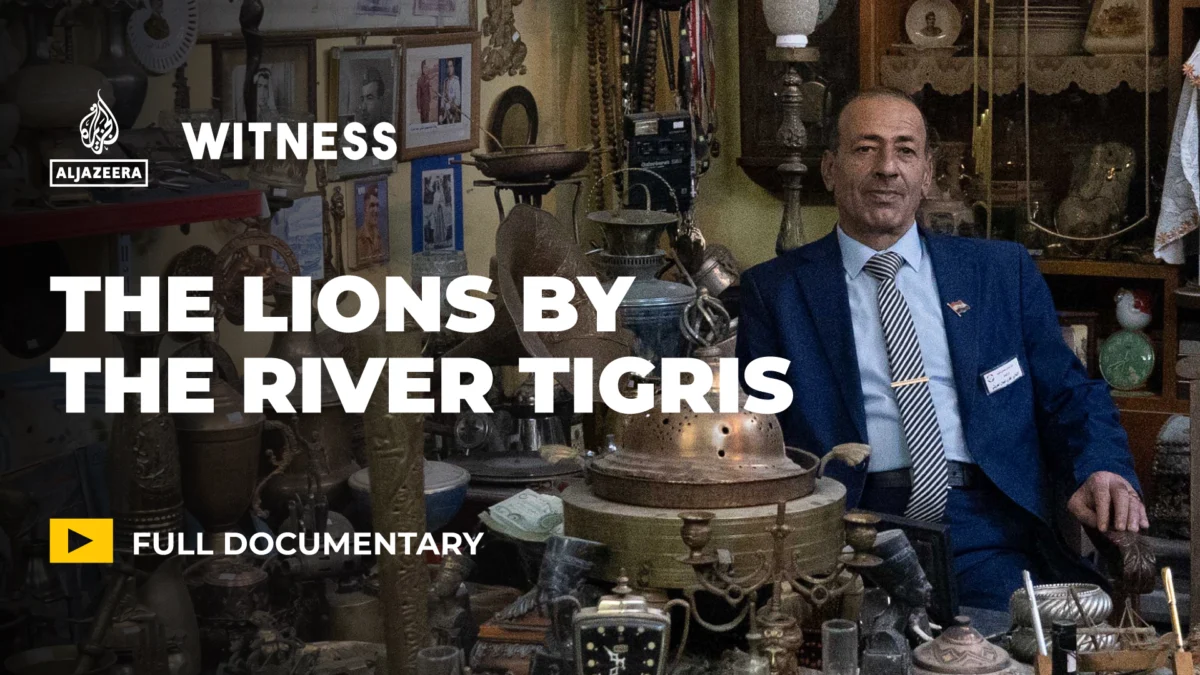
Nearly a decade after the ancient Iraqi city of Mosul was devastated by the grueling battle to liberate it from the grip of ISIL, also known as ISIS, its physical wounds remain visible across the urban landscape. Amid the grey expanses of rubble and the ongoing struggle for structural reconstruction, a quiet and profound cultural revival is taking place. At the heart of this movement are three local men whose lives, choices, and passions intersect around a singular piece of surviving antiquity: a pair of ancient carved lions standing as a fragile link to a shattered past.
Their stories, captured in the documentary film The Lions by the River Tigris by director Zaradasht Ahmed, offer a deeply human lens into the complexities of post-war recovery. While international headlines often focus on the politics of rebuilding infrastructure, paving roads, and restoring government services, this narrative explores the intangible elements of a city: its heritage, its music, its collective memory, and the immense human cost of preserving history.
Guarding the Gate to the Past
For Bashar, a local fisherman whose livelihood depends on the rhythms of the Tigris River, the destruction of war is not an abstract concept. During the ferocious military campaign to drive ISIL out of Mosul, Bashar lost his once-grand family home, a place filled with generational memories and architectural beauty. In the wake of the bombardment, virtually nothing of the family estate survived, save for a solitary marble gate crowned with two intricately carved stone lions.
Today, this lone gate stands like a sentinel amidst the surrounding emptiness, and Bashar fiercely guards it. To him, the lions are not merely decorative stones or historical relics; they are the last physical embodiment of his family’s heritage and the city’s endurance. Every day, as he navigates his traditional fishing routines along the river, he remains tethered to this monument, protecting it from further decay, theft, or the relentless march of modern development that threatens to bulldoze the remaining fragments of old Mosul. The lions have become his ward, a daily reminder of what was lost and what must be remembered.
The Collector and the Musician
A short distance away, another man is fighting a different kind of battle for Mosul’s soul. Fakhri is a devoted collector whose single-minded mission is to salvage and preserve the remnants of the city’s rich history before they are lost forever to time or debris. Witnessing the systematic erasure of cultural artifacts during the years of extremist occupation, Fakhri developed an intense determination to rescue whatever he could find.
His latest obsession is acquiring Bashar’s lions gate for an unofficial museum he is trying to curate—a grassroots effort to create a safe haven for Mosul’s scattered antiquities. Fakhri believes that without these tangible links to the past, future generations will be entirely disconnected from the city’s illustrious history. To him, rescuing artifacts is an urgent act of cultural salvage, a race against time to rescue the physical evidence of an 8,000-year-old civilization from the dust of history.
However, Fakhri’s singular focus on collecting objects brings him into conflict with his close friend Fadil, a talented local musician. Fadil’s story represents a different kind of survival. Under the brutal rule of ISIL, music was strictly forbidden, instruments were smashed, and artists were silenced under the threat of severe punishment. Fadil endured years of enforced quiet, his art suppressed and his creativity locked away.
When Fadil and Fakhri discuss the fate of the lions gate, the musician challenges the collector to look beyond the physical value of the stones. Fadil urges his friend to recognize the living, breathing human cost behind every rescued artefact. To the musician, history is not just found in cold marble and carved stone, but in the trauma, resilience, and living voices of the people who survived the occupation. While Fakhri seeks to preserve history in a museum, Fadil reminds him that the true heritage of Mosul resides in the hearts and experiences of its traumatized inhabitants who are trying to find their voice once again.
A City Built on Eight Millennia of Resilience
The tensions and harmonies between Bashar, Fakhri, and Fadil play out against the backdrop of a city attempting an unprecedented recovery. Mosul boasts an extraordinary 8,000-year history, having served as a vital crossroads of empires, cultures, and trade routes across the ancient Near East. This deep historical footprint is precisely what made the city a primary target for destruction by ISIL, which sought to erase pre-Islamic heritage and impose a uniform, desolate ideology.
As reconstruction efforts slowly move forward, the cultural revival documented in The Lions by the River Tigris demonstrates that a city’s recovery cannot be measured by concrete and steel alone. The resilience of Mosul is reflected in the fishermen casting their nets into the Tigris, the musicians tuning their instruments after years of mandated silence, and the passionate citizens who argue over how best to remember their ancestors.
Director Zaradasht Ahmed’s film captures these intimate struggles without offering easy resolutions. Instead, it presents a nuanced portrait of a community piecing itself back together. Through the watchful eyes of Bashar guarding his lions, the relentless collecting of Fakhri, and the soul-searching inquiries of Fadil, the documentary underscores a universal truth: that in the aftermath of devastation, reclaiming one’s history is an essential part of reclaiming one’s humanity.
| Source | : | Finance Poetry |
| Author | : | rifanmuazin |
| Editor | : | Finance Poetry Editorial Team |