
Decoding Costco’s Price Tags: What the Cents and Asterisks Really Mean for Your Wallet
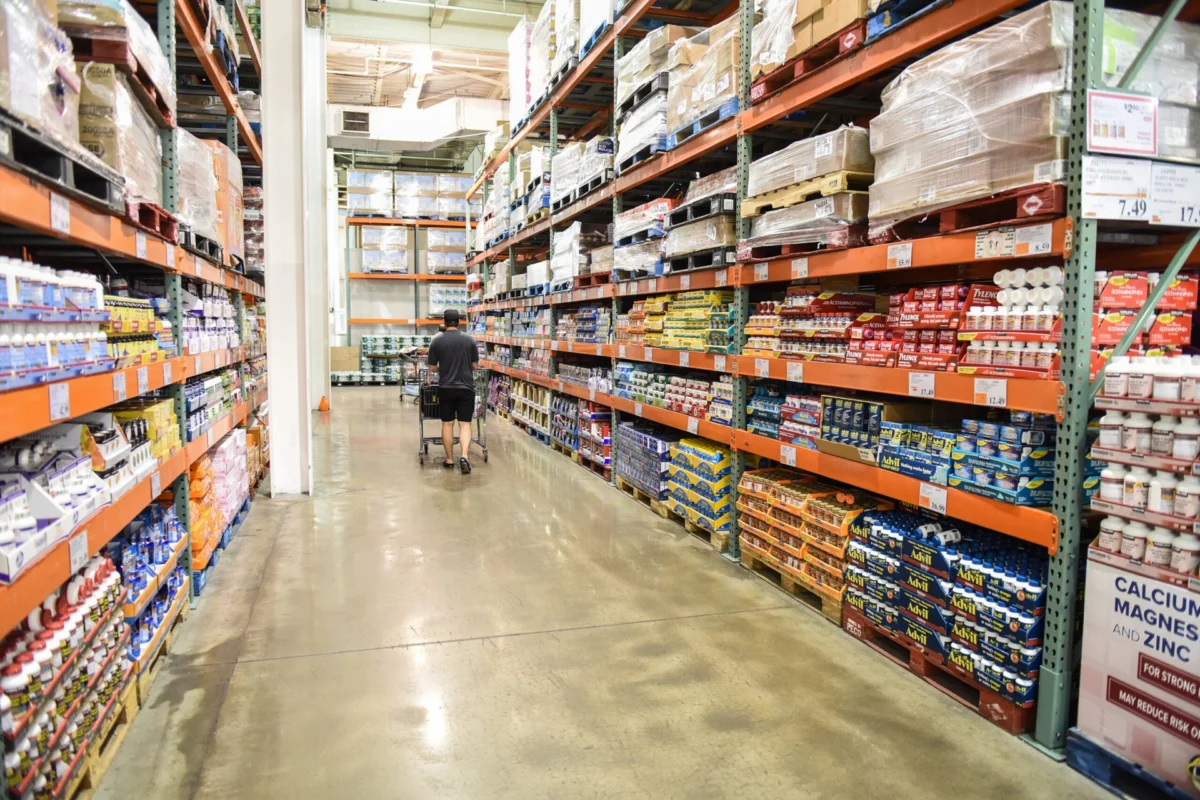
For decades, millions of shoppers have navigated the towering aisles of Costco warehouses, loading flatbed carts with everything from bulk paper towels to flat-screen televisions. Yet, many loyal members remain entirely unaware that the warehouse club’s price signs are communicating directly with them in a subtle, standardized language.
The final digits of a price, accompanied by a tiny star tucked into the corner of a sign, hold the key to understanding whether a shopper is paying full freight, benefiting from a markdown, or looking at their absolute final opportunity to purchase a beloved product.
Despite the wealth of consumer speculation surrounding these markings, Costco has never advertised the system as a promotional tool for shoppers. Back in 2014, the company’s then-Chief Financial Officer, Richard Galanti, explained in an interview with Reuters that while the pricing codes do exist, they were originally designed strictly to help warehouse employees manage and move merchandise efficiently. In his words, the system involves "no sort of secret agent stuff."
Fair enough. But the operational utility of these codes for employees does not mean savvy consumers cannot put them to work for their own benefit. Understanding how the system functions can transform an ordinary Saturday grocery run into a masterclass in strategic retail savings.
Start with the star
If a shopper has time to learn only one visual indicator on a Costco price sign, retail experts and veteran members agree it should be a small asterisk located in the upper-right corner.
In the internal lexicon of the warehouse, that subtle star signifies that the store is not reordering that specific item. When current stock is depleted, it is gone for good. Among bargain hunters and online communities, the symbol has earned the dramatic moniker of the "death star." When this symbol appears on a household staple or a favorite grocery item, it serves as an immediate cue for shoppers to stock up before the shelf is permanently cleared.
This administrative reality is also the underlying reason why so many consumers are routinely surprised when a favorite product abruptly vanishes from the warehouse floor. While the sudden disappearance often feels abrupt, the warning was printed plainly on the sign all along.
Then read the cents
Interpreting the rest of the price tag requires a bit of nuance and realistic expectations. The primary catch for consumers is that nobody outside of Costco maintains an official, universal decoder ring. Shoppers, retail bloggers, and warehouse enthusiasts frequently debate the finer details of the pricing structure, and the specific application of these codes can occasionally vary from one warehouse location to another. Consequently, shoppers are advised to treat these numbers as strong clues rather than absolute guarantees.
A reliable rule of thumb among experienced members is to view the star as an indicator of time and the cents as an indicator of value. The star tells a customer how long they have to make a decision, while the cents reveal how aggressive the markdown might be. For instance, a clearance price ending in specific digits, when paired with the asterisk, often represents one of the strongest buy signals available on the warehouse floor.
The staff lingo you might overhear
Behind the scenes, Costco employees maintain their own distinct professional vocabulary to manage the massive volume of inventory flowing through each location. While the vast majority of this internal terminology is designed for logistics and will not directly impact a shopper’s final receipt total, a few terms are occasionally overheard by customers and are worth understanding as part of the broader warehouse environment.
Employees often use specific shorthand to describe pallet placements, end-cap strategies, and inventory turnover rates. Knowing that these operational terms exist reinforces the idea that every sign, number, and placement in the warehouse serves a specific logistical purpose designed to keep the massive retail machine running smoothly.
One more money move: Watch the price after you buy
Beyond decoding the numbers on the overhead signs, there is another fundamental practice that can yield substantial savings for warehouse members. Costco maintains a consumer-friendly policy stating that if the price of an item a member has already purchased drops within 30 days, the customer can request a price adjustment to receive the difference back.
On high-ticket items such as televisions, premium mattresses, or a complete set of tires, a retroactive price drop is no small matter and can easily translate to significant cash returned to the buyer’s pocket. To claim the difference, members can bring their original receipt or membership card directly to the returns counter for in-warehouse purchases, or utilize the dedicated request form found within their online account for orders placed through the company’s website.
Shoppers must keep in mind, however, that warehouse prices and online prices operate as entirely separate entities. A customer cannot claim a lower online price for an item purchased inside a physical store, nor can they apply a warehouse markdown to an order placed digitally.
Bottom line
Navigating the vast expanse of a Costco warehouse ultimately comes down to paying attention to the small details. Look for the star when an item is essential or irreplaceable, look closely at the trailing cents when evaluating the strength of a deal, and hold onto your receipts for 30 days to protect against subsequent price drops.
None of it involves secret agent tactics or complicated financial engineering. But for the everyday shopper, it represents real money left in the pocket where it belongs.
| Source | : | Finance Poetry |
| Author | : | rifanmuazin |
| Editor | : | Finance Poetry Editorial Team |