
Natural Gas Spot Prices Retreat Across the U.S. as Mild November Weather Forecasts Weigh on Markets
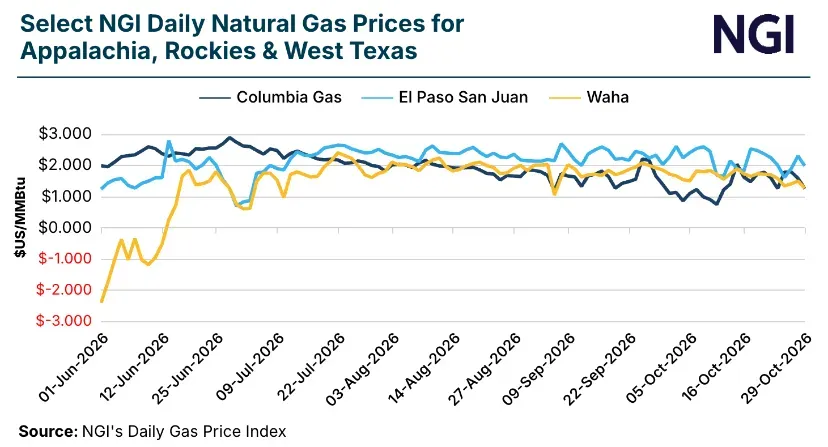
Natural gas spot prices retreated across most of the country, with Appalachia and West Texas among the hardest-hit markets, as persistently mild weather forecasts offered little encouragement for heating demand heading into November. The latest market data underscores a challenging environment for near-term spot pricing as autumn transitions into the early winter heating season without the supportive meteorological catalysts that market participants typically look for during this time of year.
The broad-based downward pressure on cash prices reflects a dominant theme in contemporary energy markets: unseasonably warm temperature outlooks across key consuming regions of the United States. Without sustained residential and commercial heating demand, utility buyers and industrial consumers have little incentive to bid up prices in the physical spot market. Consequently, production regions characterized by robust output and constrained takeaway capacity, such as the prolific Appalachian basin and the supply-heavy Permian Basin in West Texas, bore the brunt of the selling pressure.
At a Glance:
The overarching market dynamic centers on the disconnect between robust domestic natural gas production and subdued near-term consumption forecasts. As meteorologists update their medium- and long-range weather models, indications point toward above-average temperatures lingering across major population centers well into November. This meteorological profile reduces the anticipated withdrawal rates from underground storage facilities, leaving storage inventories in a relatively healthy position compared to historical averages and dampening any sense of immediate supply urgency.
In regional trading hubs, the impact of these mild forecasts was immediately visible. In Appalachia, where prolific shale gas extraction continues to yield massive volumes of dry gas, local spot prices faced steep declines as pipeline bottlenecks and regional oversupply left excess molecules searching for a home. Similarly, in West Texas, associated gas production tied to crude oil extraction in the Permian Basin continued to pump robust volumes into the midstream network. With local demand limited and outbound pipeline capacity fully utilized or facing routine maintenance, excess supplies in West Texas frequently result in sharp downward corrections in cash pricing, occasionally dipping into nominal or deeply discounted territory depending on immediate local balancing conditions.
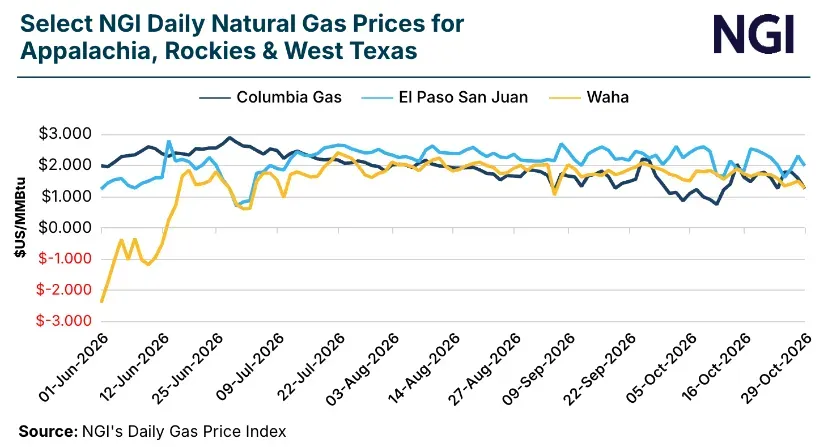
The broader implications of these spot market movements extend beyond regional trading posts, influencing the overarching sentiment captured in daily price indices and regional pricing benchmarks. Market observers tracking major delivery points—such as Columbia Gas, El Paso San Juan, and Waha—have noted heightened volatility throughout the late summer and autumn shoulder months. While summer cooling demand provided intermittent support earlier in the season, the shoulder period leading into November has traditionally been a time when market participants recalibrate their portfolios in anticipation of winter heating requirements. However, with winter weather looking increasingly delayed or muted, the expected seasonal price appreciation has been slow to materialize.
Energy analysts note that while prompt-month futures contracts and longer-dated strips often factor in winter weather risk premiums well in advance, the physical spot market remains acutely sensitive to day-to-day weather realizations and immediate pipeline nominations. When forecasts stubbornly refuse to cooperate with bullish market narratives, spot prices frequently adjust downward to clear excess physical volumes, discouraging overproduction and encouraging storage injections where capacity permits.
The current pricing environment also highlights the ongoing resilience of U.S. natural gas supply. Despite various macroeconomic headwinds, regulatory pressures, and fluctuating rig counts over recent quarters, domestic producers have demonstrated an ability to maintain high utilization rates and efficient extraction methodologies. This sustained output means that any shortfall in weather-driven demand is quickly magnified in regional pricing hubs, as surplus gas has fewer domestic markets to absorb it absent robust liquefied natural gas (LNG) feedgas demand or heavy power burn.
Speaking on the broader market conditions, industry reporting and analyses from major energy reporting agencies emphasize that market participants are closely monitoring both meteorological updates and storage injection reports published by the U.S. Energy Information Administration. These reports serve as critical barometers for the health of the supply-demand balance as the industry navigates the final weeks of the injection season and looks toward the official commencement of the heating season on November 1.
As trading activity continues across domestic hubs, the focus remains fixed on whether upcoming weather models will introduce any sudden shifts toward colder conditions or if the current mild pattern will persist, keeping a tight lid on natural gas spot prices across Appalachia, West Texas, and the wider national landscape.
| Source | : | Finance Poetry |
| Author | : | rifanmuazin |
| Editor | : | Finance Poetry Editorial Team |