
Visa Secures Approval from China’s Central Bank to Establish Domestic Bank Card Clearing Business
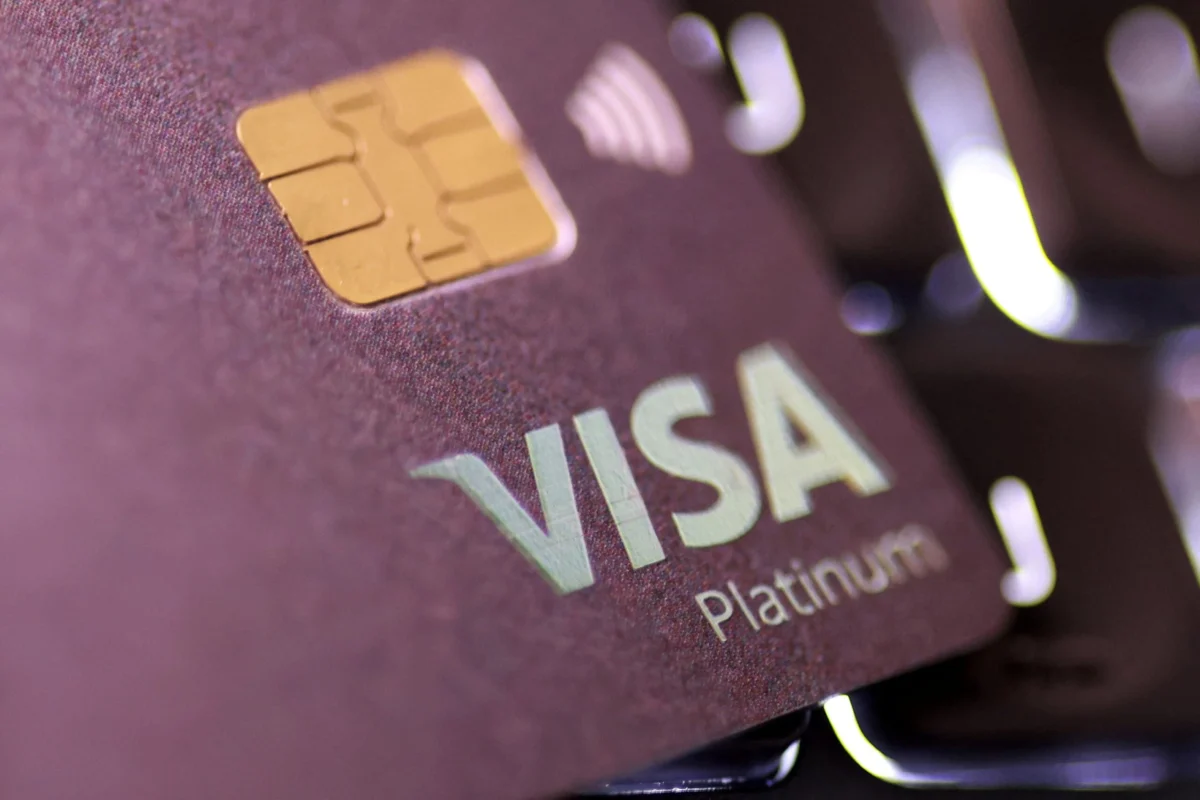
BEIJING — U.S. credit card giant Visa announced Tuesday that it has received official approval from the People’s Bank of China (PBOC) to set up a domestic bank card clearing business in the country. The landmark decision opens the door for the global payments leader to finally compete directly within the world’s second-largest economy, marking a significant shift in a historically tightly guarded financial sector.
The high-stakes announcement arrives as U.S. and Chinese political leaders prepare for their third high-level bilateral meeting of the year. The timing has drawn intense scrutiny from geopolitical analysts and trade experts, who view the regulatory green light as a calculated gesture from Beijing to signal economic cooperation and goodwill ahead of upcoming diplomatic summits.
"This marks an important milestone toward the company serving China’s domestic payments market," Visa said in an official statement addressing the development.
The approval represents the culmination of years of persistent diplomatic and corporate engagement. Visa first formally applied with the PBOC in May 2020 to operate a bank card clearing institution, entering a multi-year administrative process navigating China’s complex financial regulatory framework.
"For more than 40 years, Visa has been an active contributor to China’s dynamic payments landscape," Visa CEO Ryan McInerney said following the announcement. "We look forward to taking the necessary steps in the process, pursuant to the PBOC’s regulations, to begin operating domestically in China."
McInerney’s leadership has played an instrumental role in advancing the company’s strategic ambitions in the region. The Visa chief executive joined U.S. President Donald Trump’s high-profile business delegation to Beijing in May, an engagement that brought corporate heavyweights directly into diplomatic discussions regarding bilateral trade and market access barriers. Shortly after the May delegation, McInerney assumed the role of chair of the U.S.-China Business Council in June, further cementing his position as a central figure in commercial relations between the two economic superpowers. Demonstrating continued commitment to the region, the Visa CEO also led an annual board delegation trip to Beijing in early September.
Industry observers note that the alignment of corporate milestones with major diplomatic events is rarely coincidental.
"The timing is notable," said George Chen, partner and chair of digital practice at The Asia Group. "Beijing chose to approve Visa’s license just ahead of the APEC Leaders’ Meeting in Shenzhen next month, where Xi Jinping and Trump are expected to meet again. The move suggests that Beijing is keen to demonstrate tangible progress for American businesses before Trump’s next visit to China."
Political pressure from the highest levels of the U.S. government has historically accompanied these corporate aspirations. Following his diplomatic mission to Beijing in May, President Trump revealed to Fox News that he personally raised Visa’s pending request for market access during discussions with Chinese leadership. Subsequent momentum built during diplomatic channels, and after a major bilateral summit in September, Beijing publicly committed to approving applications from all qualified foreign financial institutions seeking to operate comprehensive financial services within the country.
Entering a Closed Market
Mainland China has long maintained a tight grip on its financial sector, historically favoring state-backed domestic players while heavily restricting cross-border capital flows and foreign participation in domestic currency clearing operations. For decades, foreign credit card networks faced significant structural and regulatory barriers that prevented them from directly processing transactions denominated in Chinese yuan within mainland borders.
Despite these historical limitations, Visa has maintained a continuous operational presence in China for over four decades, primarily through strategic partnerships with domestic financial institutions. The company has historically worked alongside Chinese banks to issue dual-branded cards. Under this framework, China’s dominant domestic network, UnionPay, processed transactions originating and settling domestically, while Visa handled overseas payments when cardholders traveled internationally. Continuing this collaborative evolution, Visa announced in January that mainland China-issued cards could be successfully linked to Apple Pay, providing domestic cardholders with a more secure and convenient payment experience when conducting international transactions.
With Tuesday’s PBOC approval, Visa joins a small, exclusive group of Western financial giants that have successfully breached China’s domestic clearing barrier. The company follows in the footsteps of its primary international rivals, which navigated the arduous regulatory pipeline years earlier.
Mastercard’s joint venture in China officially commenced processing domestic payments in 2024, following initial PBOC approval to begin bank card clearing preparations back in February 2020. Meanwhile, American Express achieved a historic milestone by becoming the very first foreign card network to secure clearing rights, receiving its formal processing license in June 2020 after obtaining initial regulatory clearance from the central bank in 2018.
Even as foreign network giants secure coveted clearing licenses, the competitive landscape they are entering inside mainland China differs dramatically from Western markets. Mobile payment ecosystems dominate daily consumer transactions across the country, fundamentally altering how everyday commerce is conducted. The domestic consumer payments market is overwhelmingly facilitated by massive homegrown digital platforms, primarily Tencent’s ubiquitous WeChat Pay and Alibaba-affiliate Ant Group’s Alipay. These mobile-first ecosystems have deeply ingrained themselves into the daily lives of hundreds of millions of consumers, presenting a unique competitive challenge for traditional card-based networks seeking to capture everyday domestic transaction volume.
| Source | : | Finance Poetry |
| Author | : | rifanmuazin |
| Editor | : | Finance Poetry Editorial Team |