
Ex-Palantir Engineers Emerge From Stealth With $17M From Andreessen Horowitz to Transform Architecture With AI
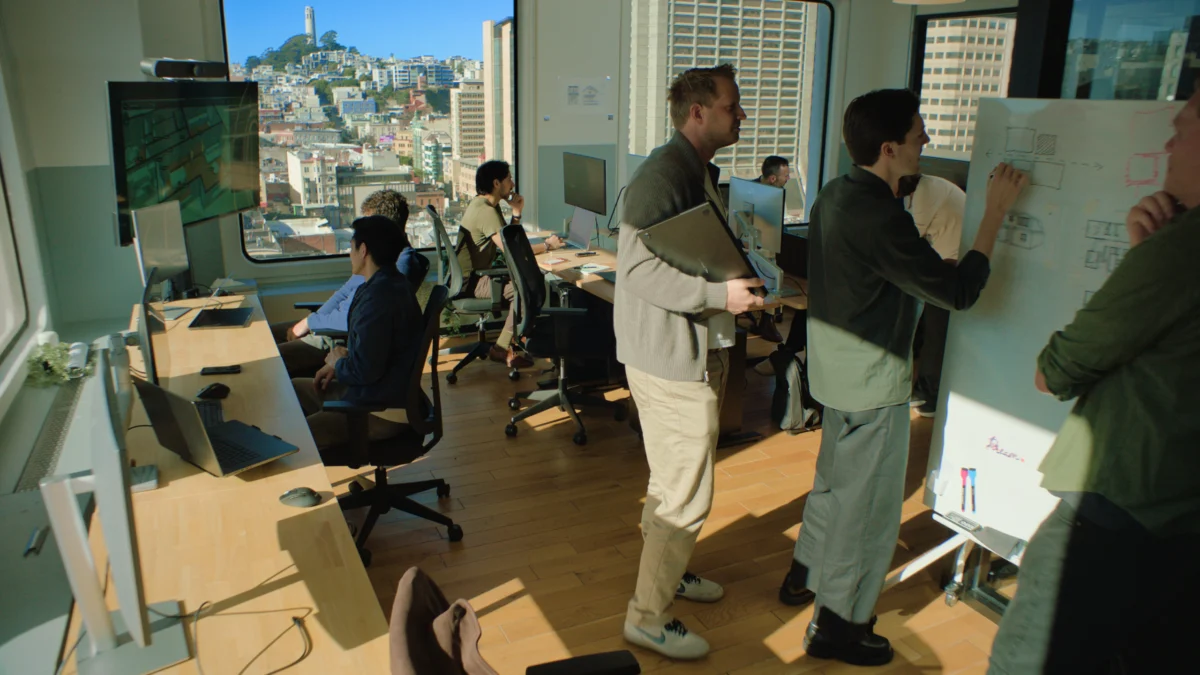
When Andy Elder and Arjun Mathur decided to build a startup early last year, the decision was practically second nature. The two founders had crossed paths years earlier as Stanford roommates studying computer science, a foundation that eventually propelled both of them into a decade-long tenure at Palantir. During their time at the prominent data analytics firm, Elder led product design for a massive team of 800 people building software tailored specifically for U.S. defense and intelligence agencies. Meanwhile, Mathur cut his teeth as a senior vice president, helping steer the company’s commercial practice.
Despite having no formal background in architecture or structural engineering, the longtime friends became increasingly fixated on a glaring economic and societal issue: fewer buildings are constructed in the United States today than a few decades ago, primarily driven by surging development costs and stagnating productivity within the physical construction sector.
"We’ve gone from dial-up internet to superintelligent AI, but our ability to build the physical world around us has actually decreased," Mathur told TechCrunch in a recent interview.
Driven by the conviction that artificial intelligence can finally unlock long-overdue productivity gains across the architecture, engineering, and construction (AEC) industry, the duo set out to build Dream. The startup is emerging from stealth today with $17 million in seed funding. The round was led by prominent venture capital firm Andreessen Horowitz, with participation from a roster of high-profile backers including SV Angel, XYZ, and Zigg Capital. The newly secured capital will fuel Dream’s mission to upend and ultimately replace cumbersome, decades-old software tools that have dominated the industry for generations, such as Autodesk’s AutoCAD and Revit.
To understand the core problem Dream is trying to solve, the founders point to the everyday workflows of modern architects and structural engineers. If you sit next to a designer in a modern architectural firm, you will quickly notice that they are still manually "drawing" every single component of their blueprints, piece by piece, on legacy software applications.
"AI really plays no role in that equation," Mathur noted, highlighting an industry ripe for disruption.
While off-the-shelf, general-purpose large language models like OpenAI’s ChatGPT can theoretically generate an eye-catching image of a building skyscraper or residential home, the resulting output is fundamentally superficial. It lacks structural integrity, engineering logic, and real-world compliance. Dream takes an entirely different approach. Its underlying system is deeply grounded in real physics, material science, and rigorous construction standards. Just as conventional LLMs learn patterns from vast libraries of text, Dream’s proprietary world model has been trained on more than 100 million square feet of actual building data, meticulously gathered from municipal permit archives spanning across the United States.
"Our model actually understands what’s within those walls," Elder explained. "What materials are used, what the beams are made of, and how much weight they can support."
The startup refers to this technical methodology as "structural cognition." Unlike standard generative design tools that merely draw shapes, Dream’s model generates structurally precise building designs that comprehensively account for complex internal elements, ranging from critical structural beams down to intricate plumbing and heating, ventilation, and air conditioning (HVAC) layouts.
Even at this early stage, Dream has transitioned from concept to commercial execution. The startup has already begun selling its software platform to AEC professionals and real estate developers. According to the founders, these early users are leveraging the model to rapidly conceptualize building designs and generate accurate overall cost estimations at a fraction of the time traditionally required. Thus far, the platform has been successfully deployed across 10 active development projects located in Texas and California, signaling early product-market fit in demanding real-world environments.
Dream is certainly not alone in recognizing the massive commercial opportunity of modernizing legacy AEC software with artificial intelligence. The market has seen a wave of venture-backed startups attempting to tackle various angles of the problem, including Motif, Snaptrude, and Arcol. However, Elder and Mathur maintain that Dream distinguishes itself as the only company that has successfully engineered a comprehensive world model capable of instantly designing entire, cohesive buildings from the ground up rather than focusing solely on isolated drafting features.
Kimberly Tan, a partner at Andreessen Horowitz, recalled that her firm first backed Dream over a year ago when the startup was little more than a visionary concept on paper. Watching the team execute over the months since has left her deeply impressed with their technical trajectory and velocity.
"I have not seen anybody take the technical approach," Tan said, emphasizing the startup’s unique architecture. "They’re doing everything based on their own models."
| Source | : | Finance Poetry |
| Author | : | rifanmuazin |
| Editor | : | Finance Poetry Editorial Team |