
Mild November Forecasts Drive National Natural Gas Spot Price Tumble, Yet Southern Transco Markets Defy Selloff
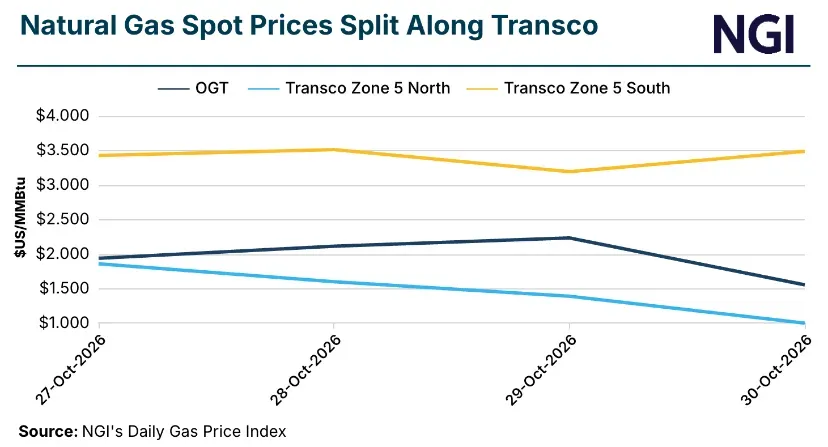
Natural gas spot prices tumbled across wide swaths of the United States on Friday, pressured downward by the heavy weight of exceptionally mild weather forecasts heading into the month of November. The widespread retreat in the commodities market affected numerous trading hubs, reflecting lower expected residential and commercial heating demand as unseasonably warm conditions threaten to linger across key consuming regions.
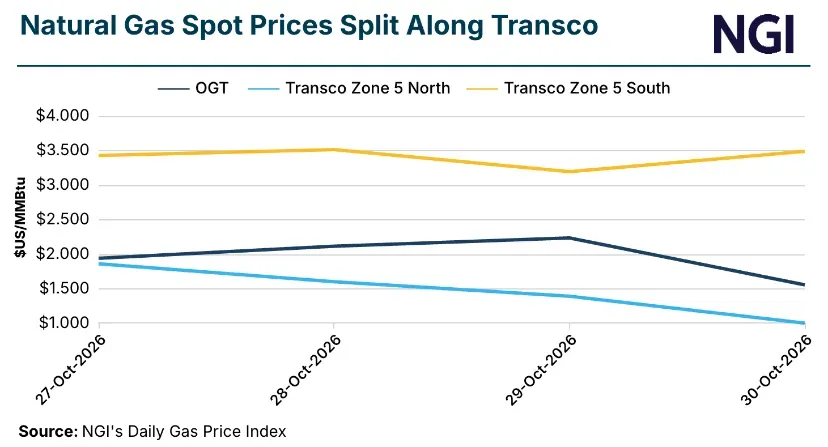
However, even as the broader market succumbed to selling pressure, regional dynamics provided a stark counter-narrative. Southern Transco markets notably bucked the widespread downward trend, maintaining their resilience and even strengthening in certain pockets. This divergence served to widen an already sharp price divide that has been developing between northern locations, which are more immediately sensitive to early-season heating trends, and southern supply corridors.
The latest market behavior underscores the complex interplay between macroeconomic weather forecasts and localized pipeline constraints. While traders in northern markets priced in the bearish impact of benign autumn temperatures, southern hubs experienced unique supply and demand fundamentals that insulated them from the national rout. The resulting price separation highlights the continuing logistical bottlenecks and regional market fragmentation that frequently characterize the North American natural gas transportation network during shoulder-month transitions.
At a Glance:
The sharp contrast in regional pricing comes during a critical juncture for energy markets as participants position themselves for the official onset of the winter withdrawal season. Market observers tracking regional benchmarks have noted that while overall liquidity remains robust, regional volatility is increasingly driven by localized weather deviations and pipeline maintenance schedules rather than unified national supply trends.
In particular, trading hubs situated along the Transco corridor have exhibited distinct behaviors depending on zone-specific delivery points. While northern zones mirror the broader national descent driven by mild forecasts, southern delivery points have maintained firm valuations. This dynamic emphasizes the growing bifurcation in regional pricing indices, offering a complex landscape for marketers, utilities, and industrial consumers alike who must navigate divergent cost structures depending on their geographic footprint.
As the industry looks ahead to upcoming weather model runs and inventory reports, the persistence of these regional spreads will likely remain a focal point for market participants. The interplay between prevailing mild meteorological conditions and localized pipeline capacity constraints continues to shape short-term trading strategies across major U.S. natural gas basins.
| Source | : | Finance Poetry |
| Author | : | rifanmuazin |
| Editor | : | Finance Poetry Editorial Team |