
Natural Gas Futures Extend Losses Below $2.900 Following Unexpected EIA Storage Build
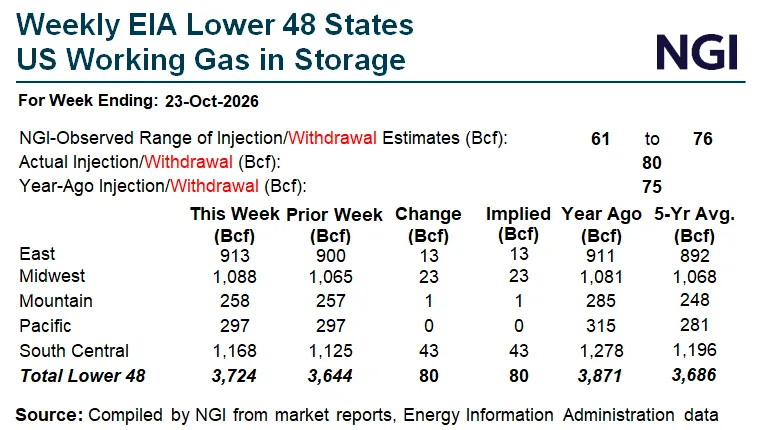
Natural gas futures extended their losses during Thursday’s trading session, weighed down by a surprisingly robust storage injection that abruptly shattered a prolonged summer and autumn trend of below-average inventory builds. The bearish data release triggered renewed selling pressure across the energy markets, driving the newly minted prompt December contract briefly below the psychological threshold of $2.900/MMBtu as traders reassessed the supply-demand balance heading toward the peak winter heating season.
The sharp downward correction in market pricing follows weeks of cautious stabilization driven by expectations that domestic inventories would remain relatively constrained ahead of colder weather. However, the latest figures released by federal regulators upended those assumptions, injecting a wave of bearish sentiment into the trading pits and prompting immediate technical selling from market participants who had built positions anticipating a tighter supply cushion.
At a Glance:
The unexpected inventory report served as the primary catalyst for Thursday’s sell-off, interrupting what had been a remarkably consistent 10-week streak of leaner-than-normal injection totals. For much of the late summer and early autumn, the market had found a measure of price support in weekly storage updates that consistently came in below historical averages and market expectations, reflecting robust domestic demand, steady liquefied natural gas (LNG) export feedgas volumes, and disciplined domestic production levels.
That narrative shifted dramatically with the latest government data release. The larger-than-expected injection signaled to market observers that domestic production may be outpacing earlier conservative estimates, or that mild seasonal weather patterns across key regional demand centers have temporarily sapped domestic heating and cooling loads, leaving more natural gas available to be locked away in underground storage caverns.
As the data hit trading terminals, algorithmic systems and speculative traders reacted swiftly, initiating sell orders that accelerated downward momentum. The December contract, which had recently taken over the prompt-month mantle, experienced particularly heavy selling pressure. Breaching the $2.900/MMBtu mark on the downside represented a notable technical breakdown, signaling to market technicians that short-term momentum had firmly shifted in favor of the bears.
Energy market analysts note that storage dynamics play an outsized role in shaping natural gas price trajectories during the shoulder months between autumn and true winter weather. When storage builds consistently lag behind normal historical benchmarks, the market tends to price in a tighter margin of safety for the upcoming winter heating season, offering a floor for futures prices. Conversely, an outsized injection—even if overall inventory totals remain within historically comfortable bands—can quickly undermine that risk premium, leading to swift downward price corrections as traders realize that supply cushions are healthier than previously thought.
The recent inventory data highlights a total U.S. working gas storage figure that stands at 3,724 Bcf for the week ended October 23, 2026, according to official data compiled by the U.S. Energy Information Administration (EIA). This robust inventory level provides the market with a substantial buffer as the domestic energy complex prepares for the winter weather draw season, which typically begins in earnest in November. While regional storage variations and pipeline constraints can still create localized price volatility, the national aggregate inventory picture has offered ample reassurance to utilities and industrial consumers that supplies are adequate to meet baseline seasonal demand.
Market participants will now turn their attention to upcoming weather forecasts to gauge whether the current bearish momentum will persist or if an early cold snap could quickly reverse the sentiment. Extended weather outlooks pointing toward sustained chilly temperatures across major population centers could easily spark a rebound in demand, drawing down storage inventories more rapidly and testing the resilience of the current price levels. Until then, however, the combination of an unexpected storage injection and technical selling has placed the market firmly on the defensive, leaving traders to navigate a more volatile and uncertain pricing environment as the winter heating season approaches.
| Source | : | Finance Poetry |
| Author | : | rifanmuazin |
| Editor | : | Finance Poetry Editorial Team |