
Five States Flip to Democrats in Midterm ‘Blue Wave’ as Housing Affordability Takes Center Stage
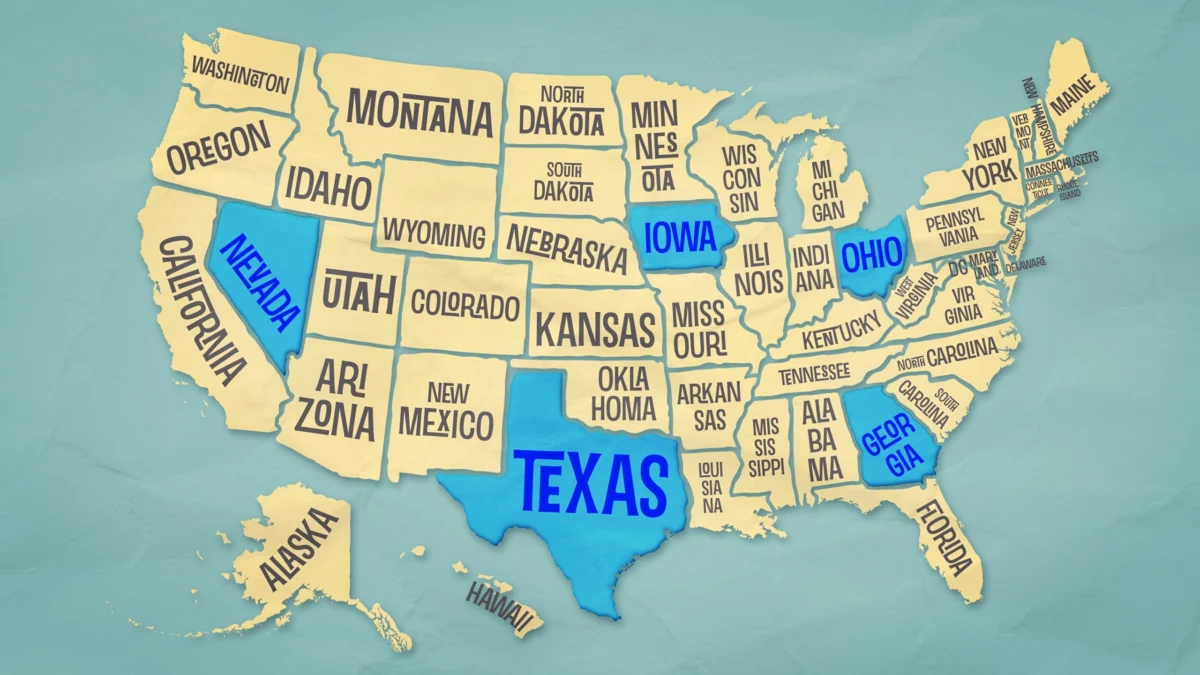
On Tuesday, the governor’s offices in five states were swept up by a notable "blue wave" as Democratic candidates secured victories to succeed outgoing Republican leadership. Across Iowa, Georgia, Nevada, Ohio, and Texas, voters turned out to flip gubernatorial seats from red to blue following campaigns heavily centered on the pressing issues of housing affordability and economic accessibility.
Of the five states that changed hands, four currently rank within the top 15 of the Realtor.com State Affordability and Homebuilding Report Cards for 2026, having made substantial strides to expand their housing supply under prior
Republican administrations.
The report cards evaluate states using a comprehensive points scale based on two foundational pillars: affordability, which measures the share of a state’s median income required to purchase its median-priced home, and homebuilding, which assesses whether state production levels are keeping pace with population growth and consumer demand.
With housing affordability remaining one of the most critical concerns for voters during this election cycle, the ability of the incoming Democratic administrations to improve—or at least successfully maintain—their respective housing markets will serve as a vital benchmark for evaluating their success in office.
Iowa
In Iowa, Democratic candidate Rob Sand secured an 11-point victory over Republican opponent Zach Lahn, earning the mandate of voters and preparing to take over the governor’s office from outgoing Republican Gov. Kim Reynolds.
Iowa earned a strong standing in the 2026 state report cards, capturing the No. 2 spot with a total score of 75.8 out of 100, translating to a grade of A. However, the state’s high ranking is primarily driven by its favorable performance in affordability rather than homebuilding.
The state’s median listing price sits at $282,886, requiring just 25.4% of the $75,991 median income, which yields a healthy Realtor Affordability Score of 0.96. Conversely, the state faces challenges in its homebuilding metrics. Iowa accounts for just 0.94% of the nation’s total issued building permits, a figure that closely mirrors its 0.95% share of the U.S. population. Yet, the state’s 56% new-construction premium signals that residential builders have focused heavily on larger, higher-priced properties rather than entry-level inventory and affordable builds.
Outlining his "Truer Better Agenda," Sand acknowledged that Iowa needs to construct an estimated 21,000 additional homes by 2030 to meaningfully address the ongoing housing shortage and enhance overall affordability. His platform emphasizes collaborating with the state legislature to ensure a broader variety of home types are developed.
"We need to cut the bureaucratic red tape that often stands in the way of that by simplifying the permitting and inspections process to reduce administrative time, redundant inspections, and costs for Iowa families," Sand’s agenda states.
Beyond boosting construction numbers, Sand’s platform features protections for renters against price gouging, alongside initiatives to eliminate interest from Iowa’s down payment and homebuyer assistance programs.
Jay Iverson, executive officer at the Home Builders Association of Iowa, noted that industry stakeholders have already initiated discussions with Sand to address the state’s regulatory framework, though the incoming governor will navigate a politically divided landscape.
"He’ll still have a Republican-led House and Senate, so they’re going to have to figure out a way to get along. We fight the regulatory issues all the time, code updates, and all of the things that add significant costs," Iverson told Realtor.com. "So we’re meeting with him even currently, before he’s sworn in, and hoping to deliver on that message of regulatory relief."
Iverson expressed optimism regarding Sand’s willingness to work across party lines. "It’s just going to be a different environment. He sold himself during the campaign on, ‘We should all be able to get along, let’s figure this out,’ and I think we’re going to hold him to that," Iverson said. "I’m looking forward to that part, just seeing what actually happens and how it works. It’s never easy."
Texas
Texas experienced a historic political shift on Tuesday, electing a Democratic governor for the first time since 1991. Gina Hinojosa secured a 7-point victory over incumbent Republican Gov. Greg Abbott, denying him a fourth term and making history as the first Latina elected governor of Texas.
Texas maintains a consistent position as a front-runner in the Realtor.com state report cards, landing at No. 4 in the 2026 rankings with a score of 71 out of 100 and a grade of A-.
The Lone Star State’s high standing is anchored by its status as the nation’s leading homebuilder, accounting for 14.6% of all building permits issued nationwide. This volume comfortably outpaces any other state and exceeds Texas’ 9.3% share of the national population. Furthermore, the state’s new-construction premium is a modest 7.6%, indicating that builders continue to inject competitively priced and affordable options into the housing market.
Despite these strengths, Texas faces some pressure regarding general affordability. The state’s median listing price of $364,749 consumes 32.5% of the median household income, resulting in a Realtor Affordability Score of 0.66.
Housing policy has long been central to Hinojosa’s political career. Since her election to the Texas House of Representatives in 2017, she has advocated for consumer protections against multinational corporations and predatory landlords, including authoring a 2025 bill designed to prevent institutional investors from acquiring more than 10 single-family homes. According to her campaign platform, she intends to maintain this focus as governor by challenging corporate investors and price gouging that place homeownership out of reach for working families.
The Texas Association of Builders has expressed a constructive outlook regarding Hinojosa’s upcoming administration and the prospect of continued bipartisan cooperation on housing affordability.
"She served on the Land and Resource Management Committee in the House this session and was very involved in a lot of the housing discussions and legislation on density, the need for more housing, and increasing housing supply, and was supportive of a number of these efforts during session," said Texas Association of Builders CEO Scott Norman. "She was campaigning on some of these affordability issues on housing, so we’re excited to work with her and her new team."
Norman also emphasized that the Texas Legislature has demonstrated a commitment to rebuilding the state’s skilled labor force through training programs spanning public schools, trade institutions, and higher education.
"To get more people into these jobs that are AI-proof and that are lifetime careers that people can make a great living and own their own business, that’s something that has been very bipartisan," Norman added.
Georgia
Georgia also saw a historic electoral outcome this week as Democrat Keisha Lance Bottoms won election, becoming both the state’s first Black governor and the nation’s first-ever Black female governor.
The former Atlanta mayor secured 54% of the vote against Republican challenger Rick Jackson, succeeding term-limited Republican Gov. Brian Kemp.
In the 2026 State Affordability & Homebuilding Report Card, Georgia earned the No. 12 spot, receiving a grade of B for a score of 63 out of 100.
Georgia’s affordability metrics lag behind those of states like Iowa, driven by a higher median listing price of $392,112 paired with a slightly lower median income of $75,118, yielding a Realtor Affordability Score of 0.68. However, the state’s homebuilding activity remains robust. Georgia accounts for 4.2% of the nation’s building permits—trailing only Texas, Florida, California, and North Carolina—which outpaces its 3.31% share of the total U.S. population.
During her tenure as mayor of Atlanta, Bottoms raised more than $700 million and facilitated the development or preservation of over 7,000 affordable housing units, according to her campaign platform. She also introduced the City of Atlanta Housing Affordability Action Plan to establish a strategic framework for increasing inventory.
As governor, Bottoms plans to launch a Georgia Housing Fast Track initiative to further streamline the permitting process, establish an affordable housing trust fund to support development, and expand down payment and renter assistance programs statewide.
Ohio
In Ohio, Democrat Amy Acton made history as the state’s first female governor, defeating Republican Vivek Ramaswamy by an 8-point margin to succeed term-limited Republican Gov. Mike DeWine.
Ohio earned the No. 15 position on the 2026 state affordability report card, receiving a grade of C+ with a score of 59.4 out of 100.
The state posts a solid Realtor Affordability Score of 0.88, aligning closely with leading states like Indiana at 0.89. Ohio’s median listing price of $277,348 remains reasonable relative to its median income of $70,196. Nationally, Ohio accounts for 2.32% of all U.S. building permits, trailing slightly behind its 3.48% share of the national population.
The primary obstacle to housing affordability in Ohio is an 84.6% premium on newly constructed homes compared to existing properties, suggesting that residential developers have largely targeted higher-end market segments rather than expanding affordable inventory.
Similar to incoming leaders in other states, Acton’s housing platform focuses on eliminating bureaucratic hurdles and streamlining local permitting procedures to facilitate both new construction and the rehabilitation of older housing stock. She has also outlined plans to expand the "Welcome Home Ohio" program—originally established by Governor DeWine to provide grants and tax cuts for property rehabilitation—while extending its reach to encourage new construction.
Additional priorities detailed in Acton’s platform include enacting restrictions on private equity firms and corporate entities purchasing residential real estate, alongside establishing support programs for first-time homebuyers.
Nevada
Standing apart from the other states in this group, Nevada presents a different housing landscape. While the rest of the states secured placements within the top 15 for affordability, Nevada ranks No. 34, receiving a grade of C- for a score of 45.8 out of 100.
Nevada accounts for 1.3% of the nation’s total building permits, tracking slightly above its 0.96% population share. Newly constructed homes in the state carry an 18.5% premium over existing homes, which remains relatively modest compared to broader national trends.
The state’s central challenge lies in affordability. Although Nevada’s median income of $74,855 is comparable to top-ranking Iowa, its median listing price towers at $491,936, resulting in a low Realtor Affordability Score of 0.52.
Incoming Governor Aaron D. Ford faces significant headwinds within the state’s housing sector. The former Nevada attorney general secured an 8-point victory over incumbent Republican Gov. Joe Lombardo to become the state’s first Black governor.
Ford has outlined several strategic initiatives aimed at improving housing accessibility for Nevada residents. His top priorities include eliminating regulatory delays and streamlining the permitting process, developing vacant and underused land within the Las Vegas Valley, and broadening assistance programs for first-time buyers.
Additionally, Ford has voiced strong opposition to recent federal tariffs implemented by the Trump administration, arguing that they have driven up the costs required to build and purchase homes.
"Nevada families are being forced to absorb higher costs caused by tariffs on essentials like aluminum, steel, lumber, and even basic fixtures like bathroom vanities," Ford stated in his campaign’s "Affordable Nevada" plan. "A $1,000 increase in the price of a new home pushes an estimated 115,000 households out of reach of homeownership—a price spike working families cannot afford."
| Source | : | Finance Poetry |
| Author | : | rifanmuazin |
| Editor | : | Finance Poetry Editorial Team |