
Malaysian court clears former PM Najib Razak for house arrest transfer
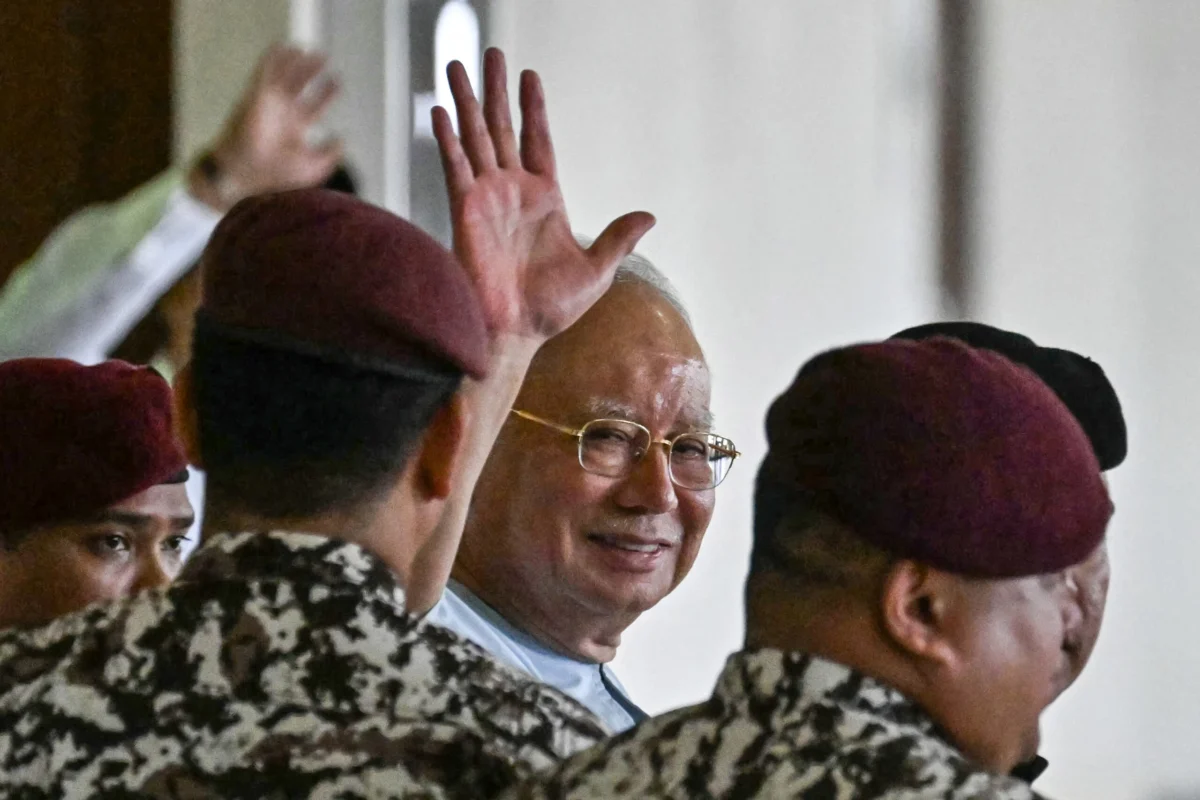
The decision, handed down on Tuesday by Kuala Lumpur High Court Judge Aslam Zainuddin, brings immediate resolution to a dramatic weekend of conflicting legal signals. "In accordance with the order of conditional pardon, the accused shall serve the remainder of the reduced sentence of six years’ imprisonment under house arrest," Judge
Zainuddin declared from the bench.
Najib, 73, has been serving time behind bars for his central role in one of the largest thefts of public funds ever recorded—the massive global plunder of the now-defunct state sovereign wealth fund, 1Malaysia Development Berhad, widely known as 1MDB. His imprisonment sent shockwaves through the Southeast Asian nation’s political establishment, marking a rare instance of a former head of government being held accountable for financial corruption on an international scale. However, the legal landscape surrounding his incarceration shifted dramatically when he was granted a conditional royal pardon in September, which concurrently reduced his initial prison term to six years and introduced the possibility of completing the remainder of his sentence outside the prison walls.
The momentum toward his release accelerated significantly when Najib’s political party paid a hefty $12 million fine on Friday. This financial transaction satisfied a key condition stipulated within the terms of the royal pardon, setting the stage for his immediate departure from prison. Yet, what was expected to be a straightforward administrative exit quickly devolved into a high-stakes constitutional drama. In a last-minute intervention that caught legal observers and defense teams off guard, the attorney general postponed Najib’s anticipated transfer to house arrest. The delay was triggered by sudden questions raised over the precise legal interpretation of the royal pardon and the exact wording of the court order that permitted Najib to leave his cell.
The sudden pushback from prosecutorial authorities drew a swift and sharp rebuke from the highest levels of Malaysia’s traditional monarchy. King Sultan Ibrahim issued a stern warning, making it explicitly clear that any attempt to challenge his royal decree—specifically his directive to let Najib leave jail and transition to house arrest—could amount to a direct defiance of his royal authority.
In Malaysia’s constitutional monarchy, the king occupies a position that is largely ceremonial, rotating among the nation’s nine regional hereditary sultans every five years. Despite the largely symbolic nature of the daily duties, the monarch retains significant discretionary powers enshrined within the federal constitution, most notably the authority to grant pardons, commutations, and reprieves to convicted individuals. The public warning from the throne underscored the absolute nature of these royal prerogatives and highlighted the friction that can occur when executive governance and royal decrees intersect.
Reporting from outside the heavily guarded courthouse in downtown Kuala Lumpur, Al Jazeera correspondent Rob McBride shed light on the broader implications of the standoff. "This has caused all manner of political and constitutional controversy in Malaysia," McBride reported. "The king made it plain he wasn’t happy with the interference of the attorney general over the weekend, and that it set a very difficult precedent." He added that the episode serves as a vivid reminder of the complicated, delicate, and often tense relationship that exists between the traditional monarchy, the formal judiciary, and the sitting government administration.
Despite the resolution of Tuesday’s court hearing, Najib’s legal troubles are far from over, and the house arrest order applies strictly to his very first conviction related to the multi-billion-dollar 1MDB scandal. The former prime minister still faces formidable legal hurdles that threaten to keep him entangled in the judicial system for years to come. Most notably, he faces an additional 15 years in prison after being found guilty last year in a separate, distinct 1MDB-linked corruption case. According to the current legal framework, that substantial secondary sentence is slated to begin immediately after his current stint under house arrest concludes.
Najib’s defense team has actively appealed the secondary conviction, continuing a protracted legal battle that has defined the twilight of his once-towering political career. In connection with these ongoing appeals, his legal representatives have formally requested that both the extended jail term and the accompanying financial penalties be halted or suspended. Their petitions have heavily cited Najib’s declining health and his documented inability to pay the steep fines demanded by the court, setting the stage for further legal maneuvers even as he prepares to transition from a prison cell to the confines of home detention.
| Source | : | Finance Poetry |
| Author | : | rifanmuazin |
| Editor | : | Finance Poetry Editorial Team |