
Your Home Is Where Your Money Goes: New Study Reveals the Surprising Dominance of Local Neighborhood Spending
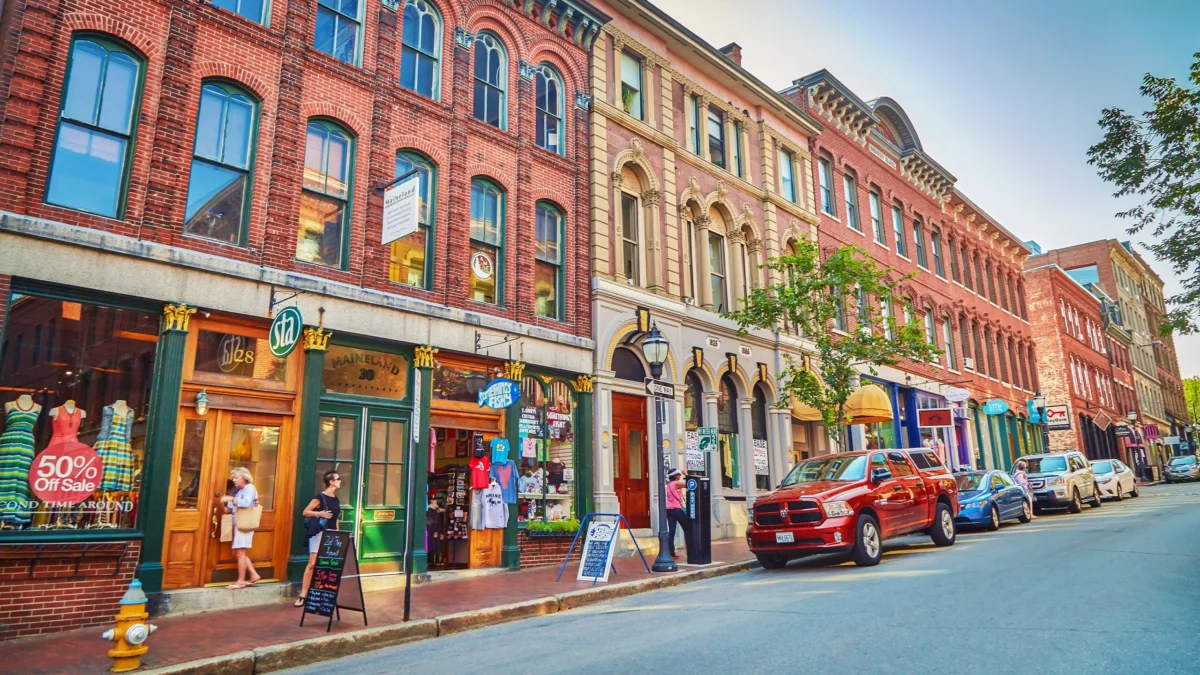
Your home isn’t just where you live; it’s also where you spend the vast majority of your money, a new study from financial technology platform Bilt has found.
The research sheds new light on modern consumer habits, revealing that despite the relentless growth of e-commerce, physical neighborhoods remain the beating heart of American spending. Bilt partnered with 451 Research and S&P Global on the comprehensive 2026 State of the Neighborhood survey, which was specifically designed to explore the nuances of everyday consumer spending habits across the country.
The findings challenge conventional narratives about the total supremacy of online shopping. According to the survey, around two-thirds of the 6,951 participants conduct at least 80 percent of their everyday spending within a tight 15-mile radius of their homes. Furthermore, an overwhelming 92 percent of those surveyed indicated that they planned on maintaining or even increasing their financial support for local businesses in the coming months.
This hyper-local focus is hardly surprising when viewed alongside recent real estate trends. A separate recent survey conducted by Re/Max found that 29 percent of prospective homeowners heavily value close proximity to grocery stores and shopping centers, while 20 percent stated that having neighborhood restaurants and cafes nearby is a top priority when choosing where to plant roots. Additionally, more than half of all survey respondents indicated that future neighborhood development—including new housing options or retail spaces—was "very important" in determining where they ultimately chose to buy a home.
The results of the Bilt survey spell exceptionally good news for small businesses operating in popular residential areas. The data strongly suggests that physical storefronts located close to dense residential neighborhoods will continue to thrive and remain resilient, even in an era defined by digital convenience and online shopping giants.
Ankur Jain, founder and CEO of Bilt, points out that there is a stark contrast between common cultural assumptions and actual economic behavior. The disconnect between what people talk about versus where people actually spend their money is quite significant. When looking at the broader economic statistics, all online shopping in the United States totals about $1.3 trillion a year. However, offline commerce—encompassing small- and medium-business local retail and food spending—accounts for a massive $6.6 trillion.
To put that in perspective, quarterly data from the U.S. Census Bureau showed that online spending reached $340.2 billion in the second quarter, accounting for roughly 17.1 percent of total consumer spending. The vast remainder of consumer dollars continues to flow through traditional, brick-and-mortar channels, particularly close to home.
Bilt’s study specifically highlighted the dominance of physical storefronts in everyday essentials, finding that 70 percent of all food and grocery spending still takes place entirely in person. On a monthly basis, consumers reported spending an average of $375 on in-person grocery shopping. They also shelled out an additional $175 on in-person dining and takeout, alongside another $175 on in-person general shopping. Beyond those categories, study participants reported spending an average of $50 each month on entertainment and recreation; health and personal care; and transportation costs.
This physical preference is backed by consumer sentiment. Sixty-six percent of survey respondents explicitly stated that they were actively looking to support local businesses over big-box and online retailers, noting that they were even willing to spend a little more to keep their dollars within the community.
Similar trends have been observed during peak shopping seasons. A recent report on consumer spending habits around the holidays from research firm Epsilon found that Generation Z, in particular, highly values in-store options when it comes to gift shopping. While online shopping retains an overall preference for gifts, the study revealed that consumers across all generations are conducting the majority of their food and decoration shopping in person. Moreover, holiday shoppers spent roughly equal amounts of their clothing budgets online and in physical stores.
One possible reason for the continued primacy of in-person shopping lies in consumers’ increasingly paradoxical relationship with artificial intelligence marketing and retail technology.
Research from McKinsey found that AI continues to drive sales, with AI-driven purchases climbing 70 percent year over year. However, younger and more tech-native shoppers tend to be noticeably more skeptical of AI on average. For instance, the McKinsey report found that 67 percent of American Gen Z AI users trust AI chat and search tools, which sits below the global average of 73 percent. This cautious approach to digital automation may help keep consumers anchored to familiar physical spaces where human interaction and tactile experiences still matter.
The release of the Bilt study coincides with the company’s rollout of a new AI-driven membership platform specifically built for local businesses. The platform is designed to help neighborhood merchants build long-term customer loyalty through localized rewards programs, bridging the gap between neighborhood commerce and modern technological tools.
The company is betting pretty big on the neighborhood versus online commerce dynamic. There is a huge gap between what the media and the Silicon Valley world talk about versus how real Americans are actually living their daily lives. People often talk about artificial intelligence primarily through the lens of how it will completely transform online commerce, replace coding jobs, and upend digital industries. But the truth is that the biggest beneficiaries of AI can actually be local mom-and-pop businesses. These local enterprises do not have the massive resources required to hire thousands of people to compete with giant online corporations like Walmart or Amazon. By leveraging smart technology locally, smaller businesses can level the playing field.
Everything is ultimately tied together in the modern economic ecosystem. The more a community can invest in its neighborhoods, the more overall value is created in housing. Conversely, the more sustainable housing availability a neighborhood has, the more capital and energy can be reinvested back into the local community.
| Source | : | Finance Poetry |
| Author | : | rifanmuazin |
| Editor | : | Finance Poetry Editorial Team |