
Iranian Authorities Contain Fire at South Pars Gas Field Platform as 17 Workers Are Safely Rescued
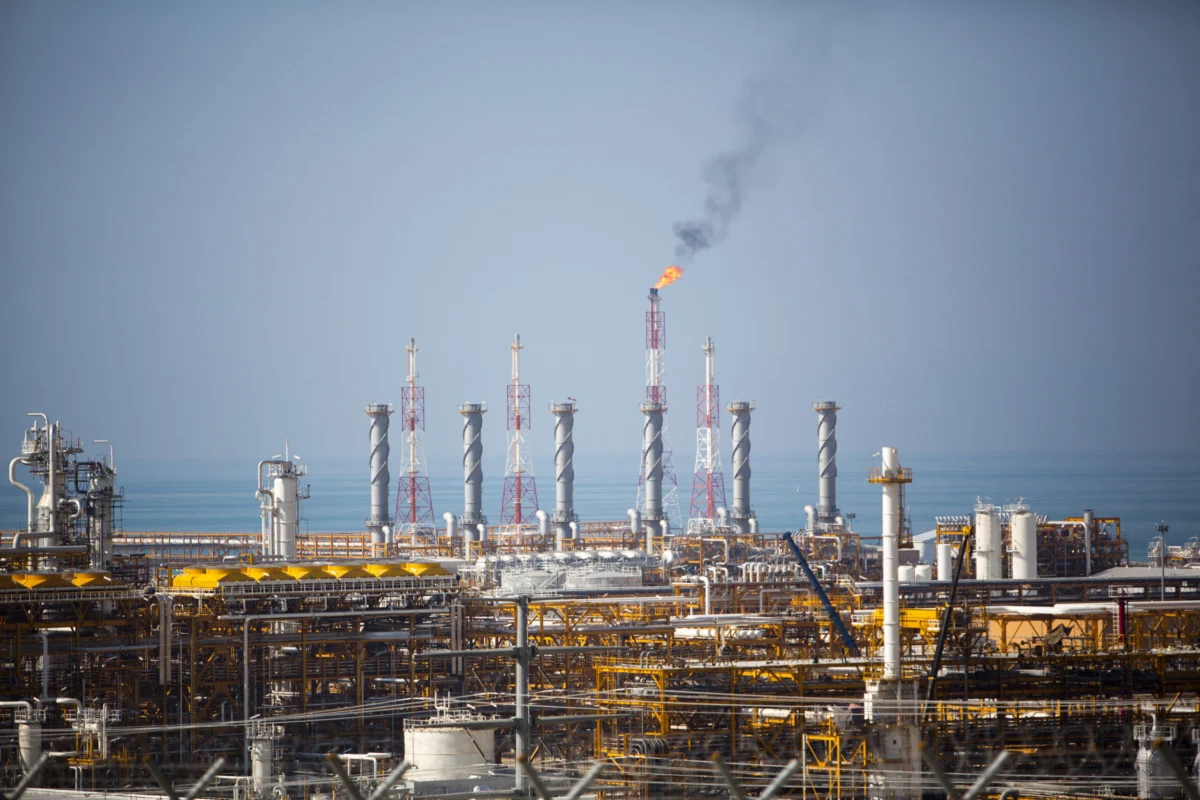
Iranian authorities have successfully contained and extinguished a fire that erupted on an offshore production platform within the South Pars gas field, recognized globally as the largest single natural gas reservoir on Earth. The incident, which prompted emergency evacuation procedures and a rapid response from regional maritime rescue coordination teams, occurred on Tuesday at Phase 14 of the expansive marine energy complex situated in the Persian Gulf.
According to statements released by the Pars Oil and Gas Company and reported by Iran’s semi-official Fars news agency, the blaze broke out unexpectedly on the gas platform before being brought under control and extinguished immediately by on-site safety and firefighting personnel. While the rapid intervention prevented a prolonged industrial catastrophe at the critical hydrocarbon facility, the sudden emergency forced personnel to take immediate measures to ensure their personal safety amidst the flames and dense smoke.
The emergency situation quickly escalated into a high-stakes maritime rescue operation when 17 workers stationed on the platform took the drastic step of jumping directly into the open sea in an urgent bid to save their lives from the spreading fire. Kourosh Dehghan, the director general of crisis management for Bushehr Province, spoke to the Fars news agency shortly after the initial reports emerged, confirming that a desperate search and rescue operation was immediately launched to locate and secure the workers who had plunged into the water.
"During the incident, 17 workers jumped into the sea to save their lives; rescue operations for them are currently underway," Dehghan stated during the early stages of the unfolding crisis. At the time, regional authorities acknowledged that comprehensive information regarding the full physical toll of the incident, the exact scale of the structural damage, and the precise medical condition of the personnel involved remained preliminary, promising that official updates would be provided as soon as verified intelligence became available from the offshore command center.
Fortunately, fears regarding the safety of the stranded personnel were swiftly alleviated within hours of the initial alert. Bushehr’s crisis management office issued a subsequent update confirming that all 17 workers were in good physical condition after successfully boarding lifeboats and dedicated marine rescue craft deployed to the area. To ensure their safe return to the mainland and to provide any necessary medical evaluations following the harrowing maritime ordeal, local authorities dispatched three heavy-duty rescue vessels directly to the platform location.
As operations transitioned from emergency rescue to damage assessment and remediation, technical experts and investigators began looking into the root causes behind the sudden industrial accident. Initial technical assessments and preliminary findings cited by Fars news agency indicated that officials are actively considering either an accidental gas leak or an unforeseen operational mishap as the most probable triggers for the fire that disabled a portion of the Phase 14 installations.
Despite the dramatic nature of the incident and the immediate threat posed to human life, economic and operational impacts on the broader national energy grid are anticipated to remain relatively contained. The affected platform accounts for a minor fraction of the massive extraction network operating within the marine basin, contributing approximately 14.5 million cubic metres of natural gas daily. This output stands in contrast to the total daily production capacity of the South Pars gas field, which routinely exceeds 700 million cubic metres of gas, supplying vital fuel for domestic consumption, power generation, and industrial feedstocks across Iran.
The South Pars field represents a cornerstone of Middle Eastern and global energy geopolitics. Iran shares the vast offshore hydrocarbon reservoir with the neighboring State of Qatar, a major global exporter of liquefied natural gas. While Iranian authorities designate their territorial sector of the maritime structure as South Pars, the Qatari government administers the contiguous northern extension of the geologic formation under the designation of the North Dome.
Geological surveys and international energy assessments estimate that the shared subterranean reservoir holds a staggering total of approximately 1,800 trillion cubic feet, equivalent to roughly 51 trillion cubic metres, of economically recoverable and usable natural gas. Industry analysts and energy economists note that this immense volume of clean-burning fossil fuel contains enough energy reserves to single-handedly supply the entire global demand for natural gas for a duration of roughly 13 years, underscoring the strategic and economic significance of maintaining uninterrupted, secure operations across all development phases of the South Pars and North Dome structures.
| Source | : | Finance Poetry |
| Author | : | rifanmuazin |
| Editor | : | Finance Poetry Editorial Team |