
Saudi-Led Coalition Intercepts Houthi Missile and Drone Flurry as UN Security Council Extends Sanctions
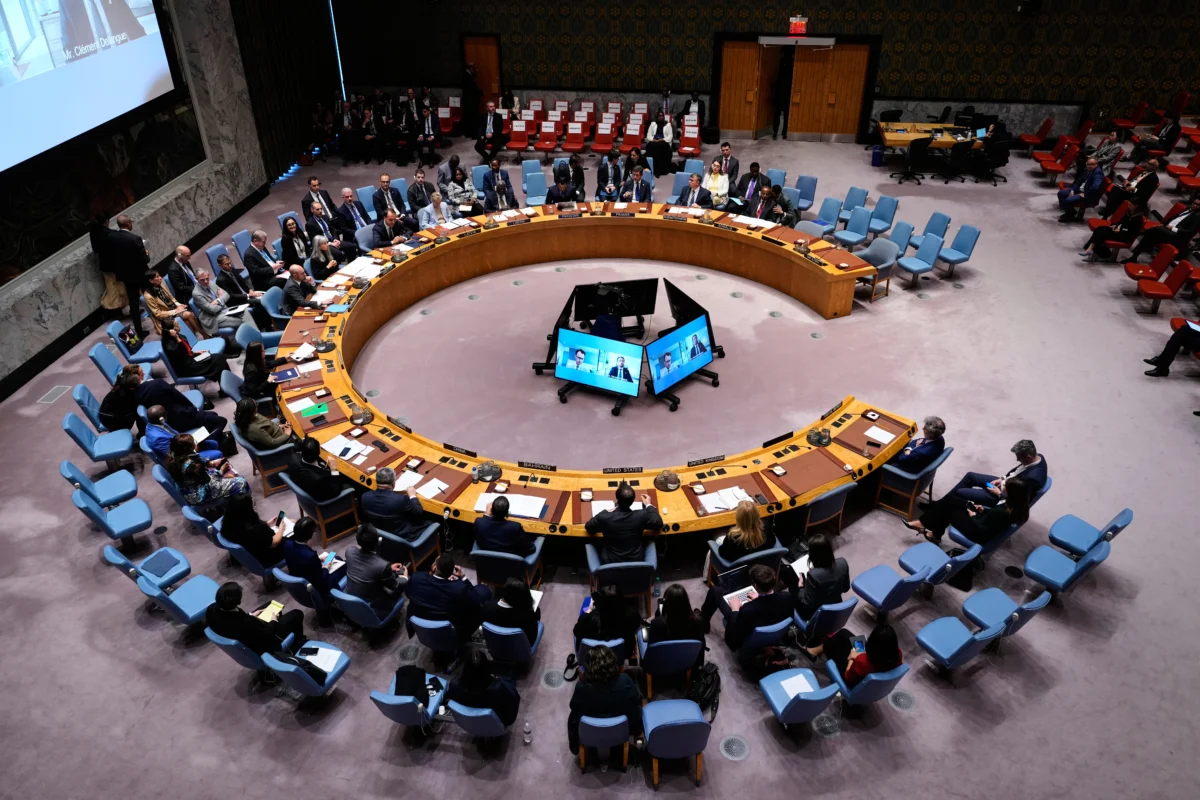
Saudi-led coalition forces have announced the successful interception of a flurry of suspected Houthi drones targeting critical energy and military infrastructure across the Kingdom. The aerial assaults, which targeted regions including Riyadh and the Eastern Province, coincided with a decisive diplomatic move at the United Nations, where the Security Council voted unanimously to extend international sanctions against the Iran-allied group.
Major General Turki al-Malki, the official spokesperson for the Saudi-led coalition, detailed the interceptions in a statement carried by the official Saudi Press Agency on Thursday. The attacks underscore the persistent cross-border threat facing the Kingdom amid a broader military escalation involving Houthi forces, the Saudi-backed coalition, and Yemen’s internationally recognised government.
The aerial campaign launched by the Houthi movement struck a wide geographical footprint, according to Houthi military spokesperson Yahya Saree. In televised statements, Saree claimed responsibility for targeting vital oil infrastructure and strategic military assets within Saudi territory. Among the stated targets was a pumping station along the critical East-West Pipeline, as well as the expansive Yanbu oil facility situated on the Red Sea coast.
Riyadh relies heavily on the East-West Pipeline to maintain its export capabilities, having rerouted approximately 4 million barrels of crude oil per day through the corridor to Yanbu—a volume equivalent to roughly four percent of total global petroleum supply. Protecting these strategic conduits remains a primary security priority for the coalition as energy markets remain sensitive to supply disruptions in the region.
Saree further asserted that Houthi forces deployed a drone against a military cargo transport plane stationed at Sharurah airport, located near the southern border with Yemen. In addition, he claimed that a ballistic missile fired toward the Khamis Mushait airbase achieved a direct hit. The Houthi spokesperson also stated that their forces targeted the corporate headquarters of Saudi Aramco in the capital city of Riyadh. However, Saree firmly rejected as a grave falsehood a separate Saudi assertion that the group had attempted to target the holy Mecca region on Wednesday.
On the ground in Yemen, the conflict continues to grind forward along multiple frontlines. Saudi-backed coalition forces operating on behalf of the internationally recognised Yemeni government reported ongoing clashes with Houthi fighters, actively targeting insurgent leadership, tactical vehicles, troop reinforcements, weapons caches, and fortified positions.
According to Yemen’s official pro-government Saba news agency, the country’s Defence Ministry, citing the Saudi-backed Presidential Leadership Council, declared that the ongoing military campaign is steadily advancing toward its desired objectives. Ministry officials convened a high-level strategic meeting in the Marib governorate to evaluate the progression of these military operations. Discussions centered heavily on enhancing operational coordination and military integration among the various armed units participating in the expansive "Dawn of Yemen" offensive.
Security Council Extends Sanctions
While military maneuvers intensified on multiple fronts, international diplomats moved to tighten financial and political pressure on the Houthi movement. On Thursday, the United Nations Security Council voted unanimously to adopt a resolution extending the existing regime of Yemen-related sanctions for an additional twelve-month period. The renewed measures maintain targeted asset freezes and international travel bans, while issuing a stern demand for an immediate halt to Houthi cross-border attacks against Saudi Arabia.
The resolution also formally extended the operational mandate of the UN Panel of Experts on Yemen, whose investigative findings and policy recommendations informed the council’s decision. Members of the Security Council urged all warring parties to pull back from escalatory actions, demanding that political differences and territorial disputes be resolved exclusively through good-faith negotiations. At the same time, the council reaffirmed its unwavering diplomatic backing for the sovereignty and territorial integrity of both Saudi Arabia and Yemen.
The official UNSC statement explicitly condemned the ongoing military escalation by the Houthi movement, highlighting their maritime operations, cross-border missile and drone strikes targeting Saudi infrastructure, and persistent threats directed against commercial shipping vessels navigating regional waters.
To mitigate the impact of the economic restrictions on the civilian population, the resolution incorporated explicit safeguards. It emphasized that measures enacted to maintain the sanctions regime shall not apply to humanitarian assistance deliveries, nor restrict the supply of basic necessities required by civilians, ensuring that legitimate commercial trade activities can proceed without undue administrative interference.
Ambassador Fu Cong, China’s permanent envoy to the United Nations, addressed the council following the vote, emphasizing that international punitive measures are merely tools rather than permanent solutions. He expressed hope that the security situation inside Yemen will de-escalate as rapidly as possible through renewed political dialogue.
333,000 Displaced Amid Mounting Humanitarian Crisis
As diplomatic and military battles persist, the humanitarian toll on the civilian population continues to mount at an alarming rate. On Thursday, the United Nations Office for the Coordination of Humanitarian Affairs reported that more than 333,000 people have been internally displaced across Yemen since the beginning of August. This total includes more than 24,000 individuals who were forced to flee their homes within just the preceding week.
Humanitarian agencies warn that civilians continue to bear the heaviest burden of the protracted conflict. Ongoing violence has caused extensive physical damage to critical health facilities, uprooted vulnerable families from their homes, and severely impeded the delivery of life-saving aid by humanitarian workers striving to reach isolated communities.
Concurrently, diplomatic maneuvering is taking place outside the immediate region. According to media reports citing sources familiar with the matter, Saudi Arabia is actively pressing European Union capitals to adopt a formal European Parliament resolution designating the Ansar Allah Houthi movement as a terrorist organization.
However, European diplomatic officials indicated to Reuters that the bloc remains hesitant. EU policymakers are reportedly concerned that taking such a definitive legal step could permanently close diplomatic channels and undermine the framework for any future peace process aimed at bringing a comprehensive political settlement to the war in Yemen.
Anouar El-Anouni, the chief foreign policy spokesperson for the European Union, stated that the bloc maintains regular diplomatic contact with Riyadh regarding unfolding regional developments. However, he declined to provide public commentary on specific ongoing discussions or potential legislative initiatives currently under consideration within European institutions.
| Source | : | Finance Poetry |
| Author | : | rifanmuazin |
| Editor | : | Finance Poetry Editorial Team |